Lawn Care Automation Lawn Care Automation
 🌾 Lawn care · plain English · no login to read
Five things decide what a lawn looks like. Browse them, tap what's bugging yours, and when you're ready we turn it into a plan that's saved to your account — seed, feeding, the windows, and when the mower goes back on.
🤖 Daily mowing & micro-clippings✂️ Mowing🥬 Fertilization🌿 Weed control🩺 Grass health
Pillar 1 of 5
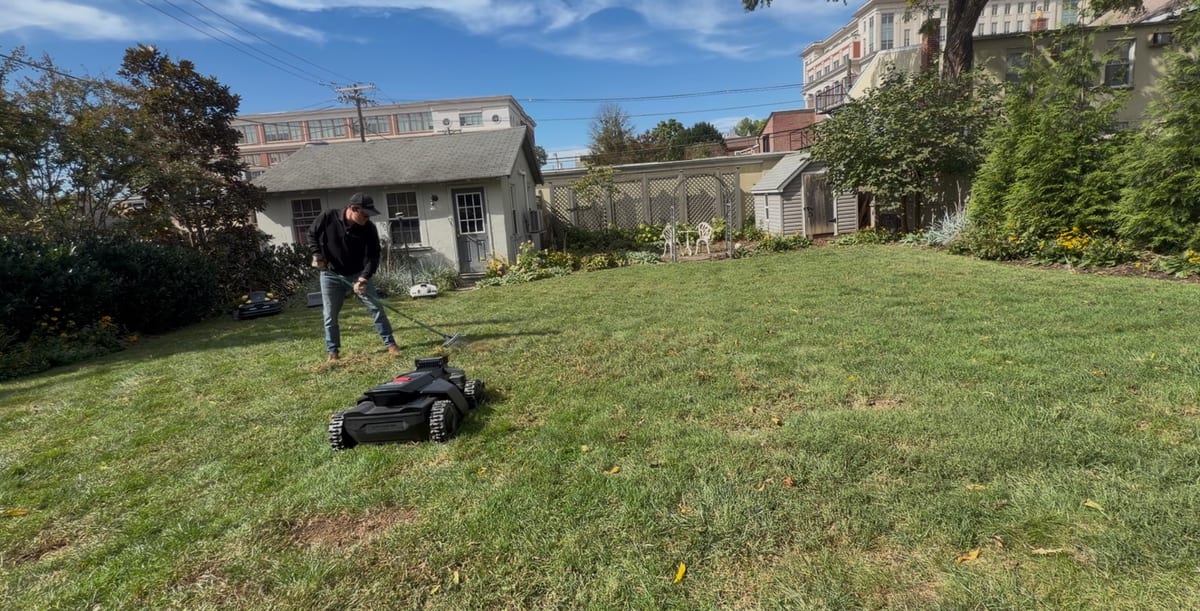
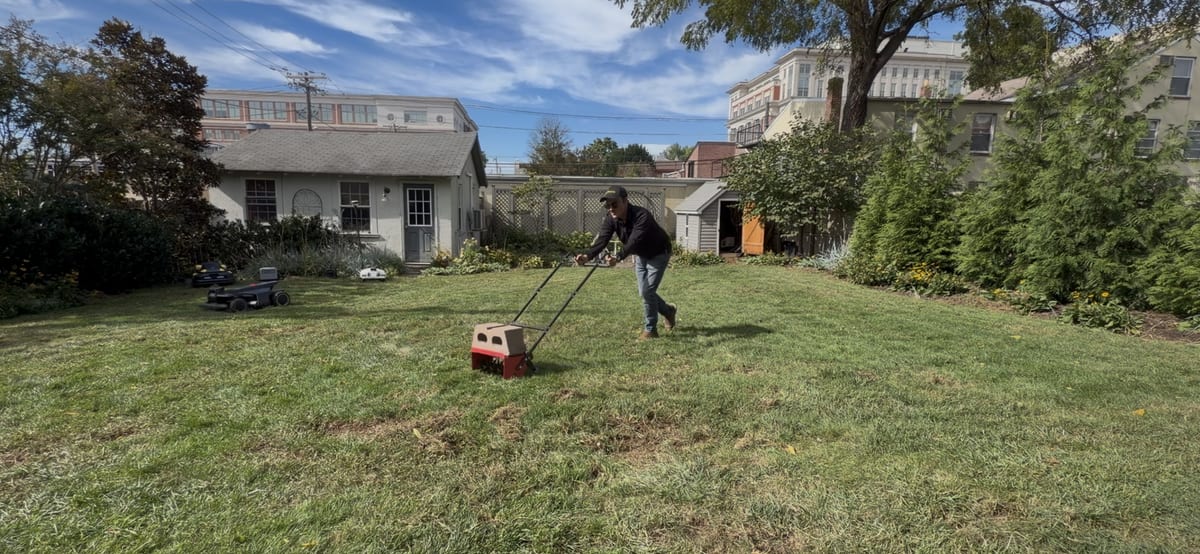
The part we do. A robot cuts a few millimetres every day or two instead of an inch once a week. The clippings are too small to see and break down in days, feeding the lawn back about a quarter of its nitrogen. The plant never loses enough blade to notice, and the canopy stays dense enough to shade out weed seed. Daily is the destination, not day one — new grass and sod get mowed late, high and lightly first.
Pillar 2 of 5
Height is the biggest lever you have, and it's free. Every grass has a range: ride the top of it in heat and in shade, the middle in peak growth, a notch lower for the last cuts of the year. Never take more than a third of the blade at once, and change the blades every four to six weeks — a torn tip goes white and then brown; a sliced one doesn't.
 Why does my lawn look brown after mowing? The ⅓ rule, dull blades, scalping — and the fix that's a new set of blades, not a product. Read →
 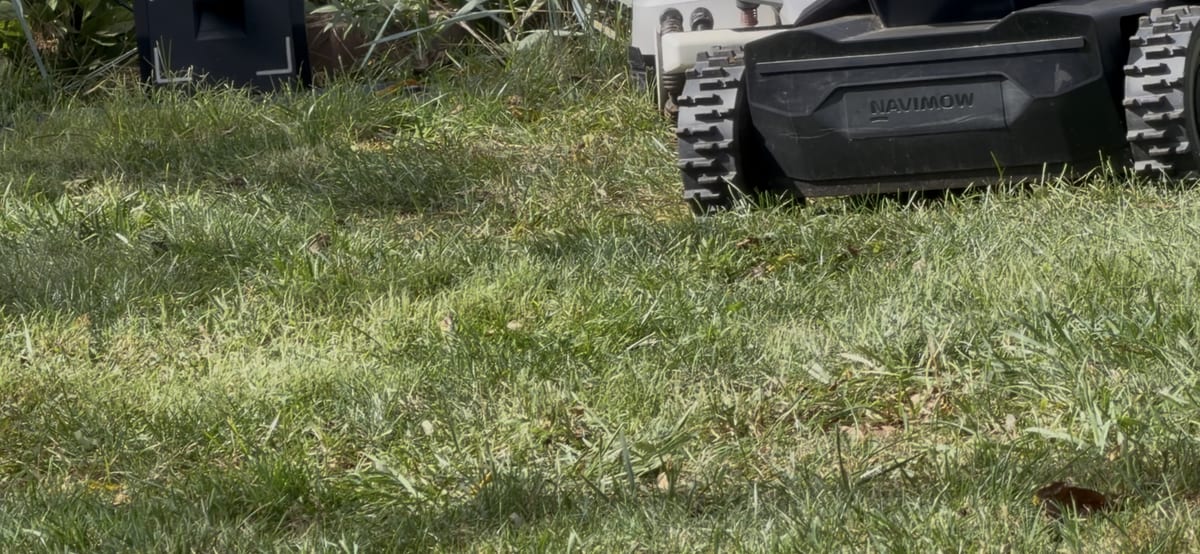 The schedule by season Month by month: the height, how often the robot runs, and what else the lawn wants that month. Read →
  The right height for your grass Every common grass, its range, and why — tall fescue to Bermuda, blends included. Read →
 Pillar 3 of 5
Feeding is measured in pounds of nitrogen per 1,000 square feet a year, and it depends on the grass: tall fescue wants two or three, Kentucky bluegrass three or four, centipede half a pound. Cool-season lawns eat in fall, warm-season lawns in summer, and feeding the wrong season feeds the weeds. Several states cap or black out lawn fertilizer — the plan prints your state's rule. The $15 soil test from your county extension office beats every bag.
Pillar 4 of 5
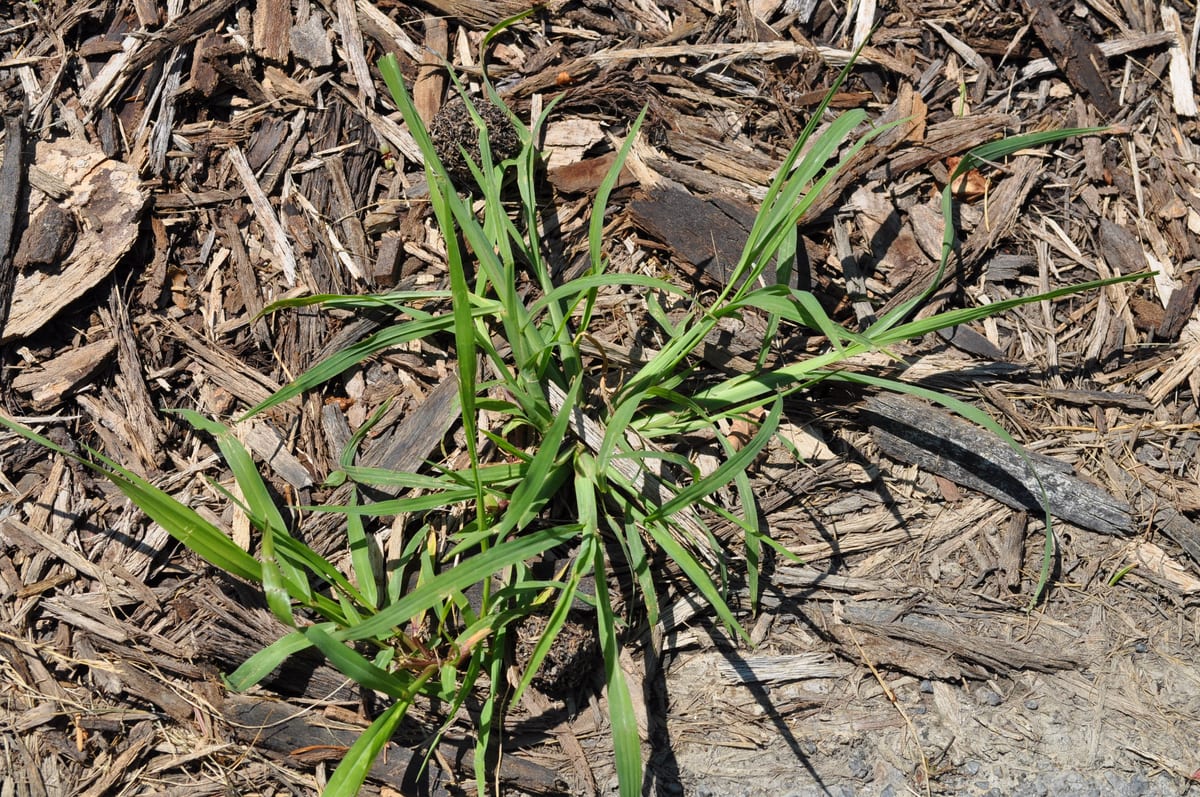
Weeds are a symptom. They move into gaps — a thin lawn, a scalped strip, a hungry corner — and a robot's daily cut beheads their seed heads the day they stand up. Broadleaf weeds die to a fall spot-treatment. Crabgrass is stopped in March by a date, not a product. Both lose, permanently, to a thick lawn cut high.
Pillar 5 of 5
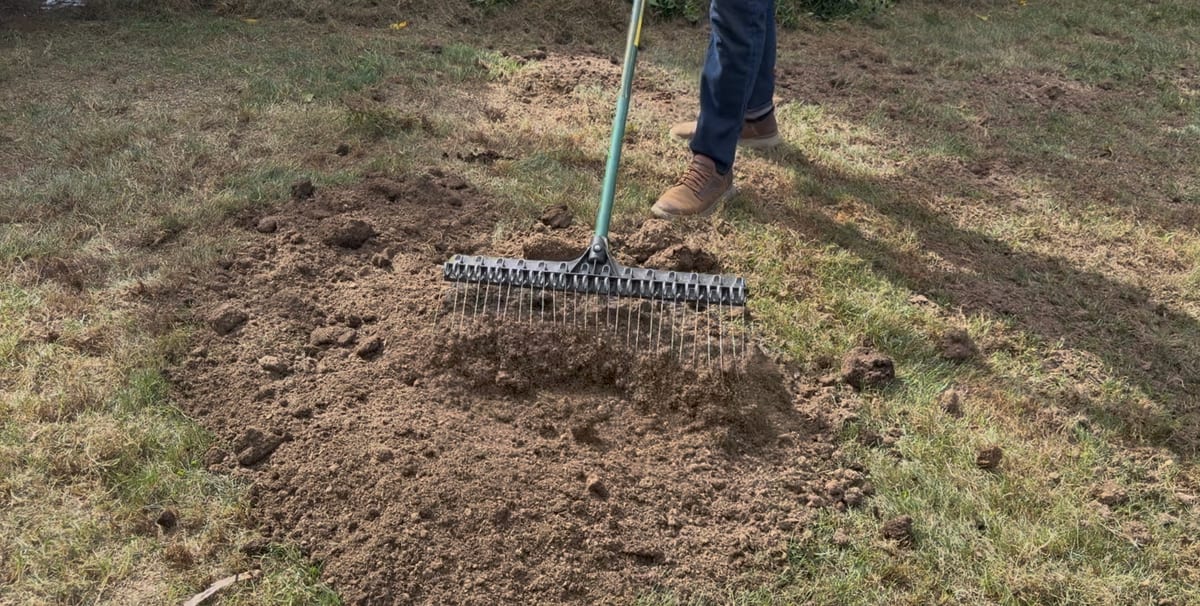
Most lawn problems look alike from the porch and different from a foot away. Bare spots that never fill, circles that widen after humid nights, turf that lifts like carpet, moss where the grass gave up, a sponge underfoot, footprints that stay pressed in — each has a cause, a ten-second test, and a fix in order. And when the fix is seed, there's a calculator for exactly that question.
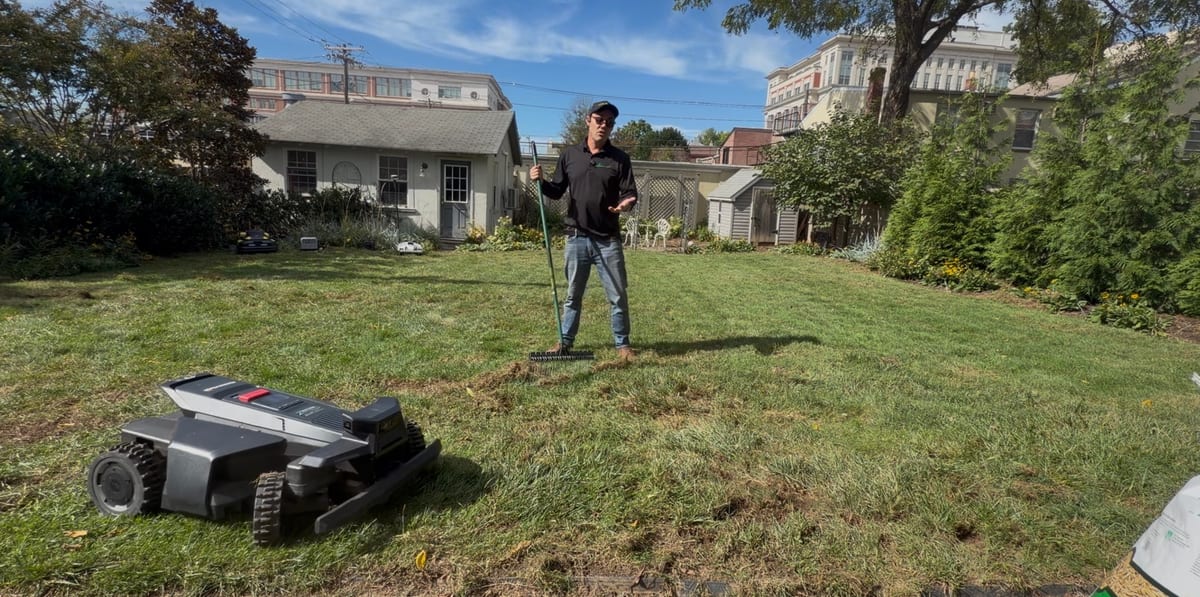 Why won't my lawn fill in? Bunch grasses, the four causes, the repair in order, and when the mower goes back on. Read →
 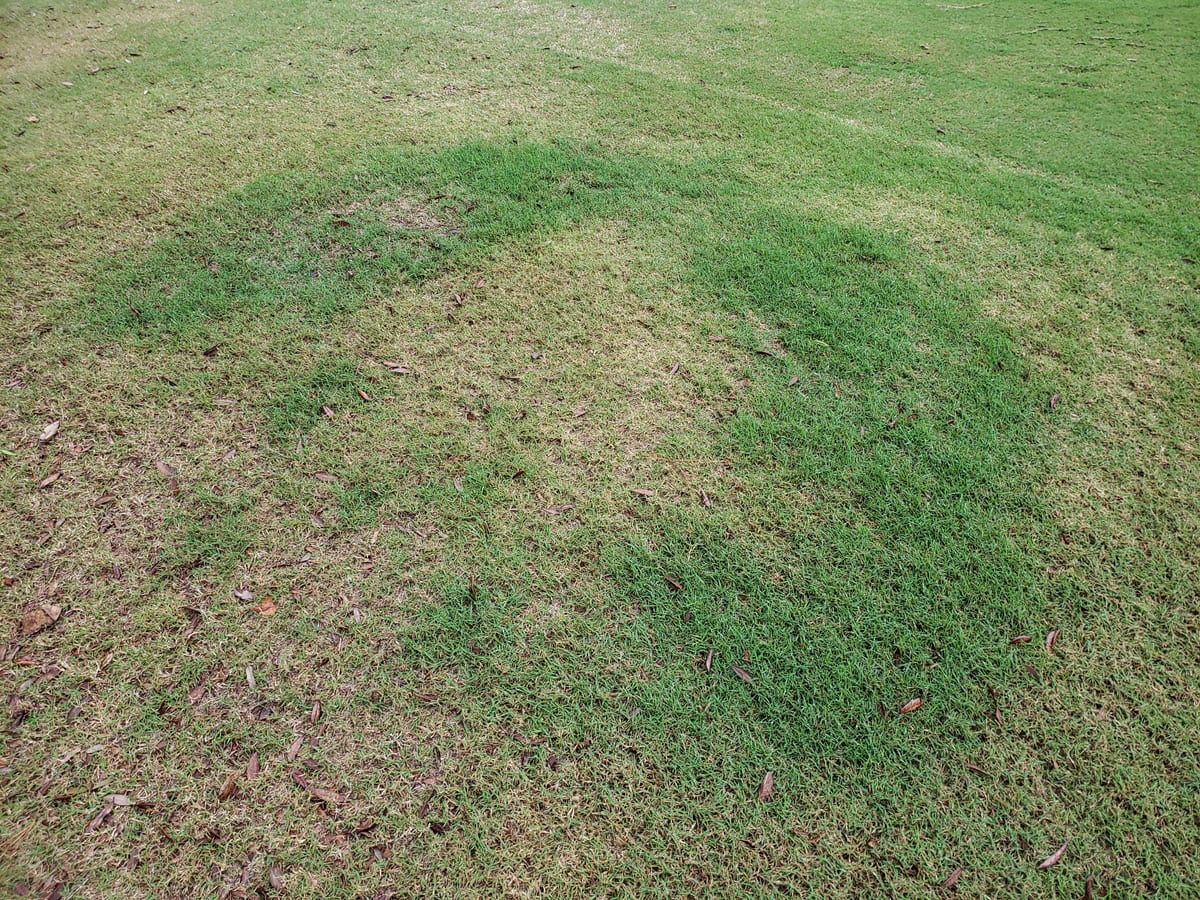 Brown circles in the lawn Brown patch, dollar spot, summer patch and fairy rings told apart, and the four habits that stop them. Read →
 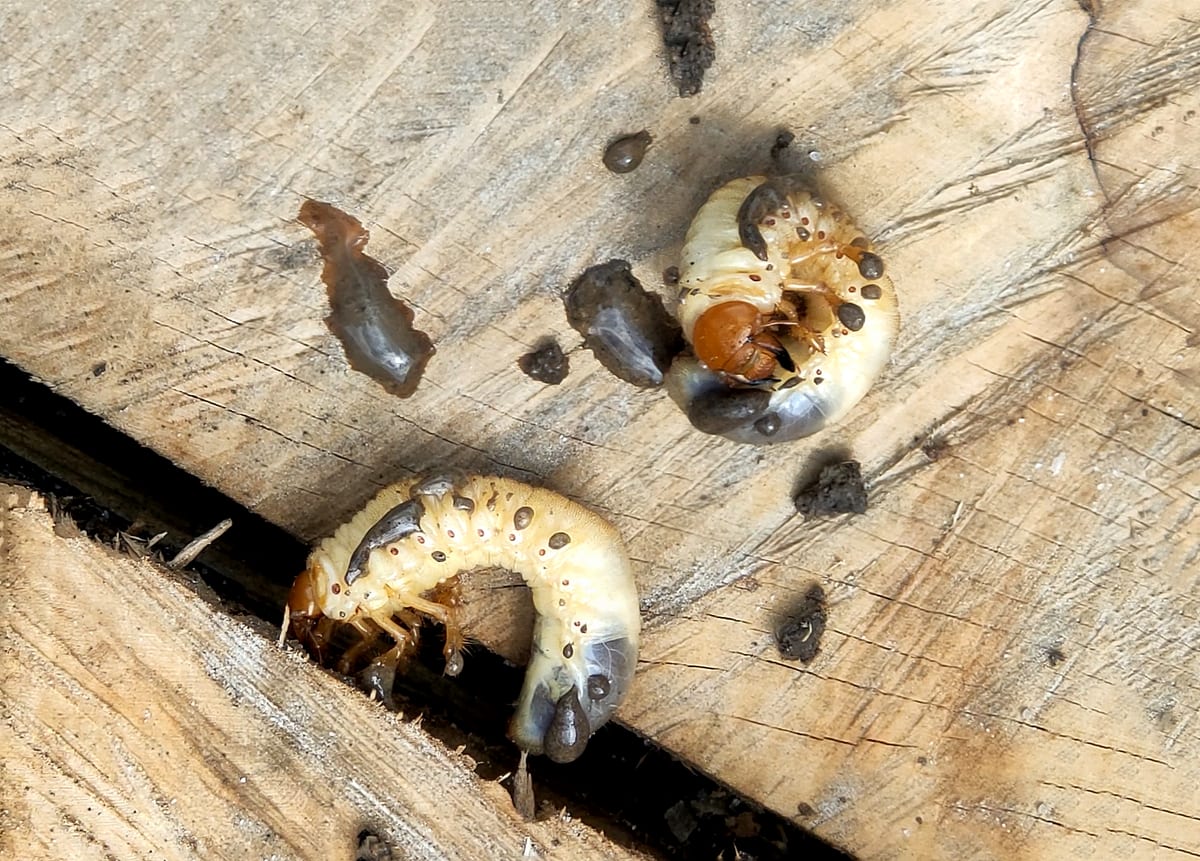 Something is digging up my lawn Grubs: count before you treat, the beetle year, the two windows, and the repair. Read →
 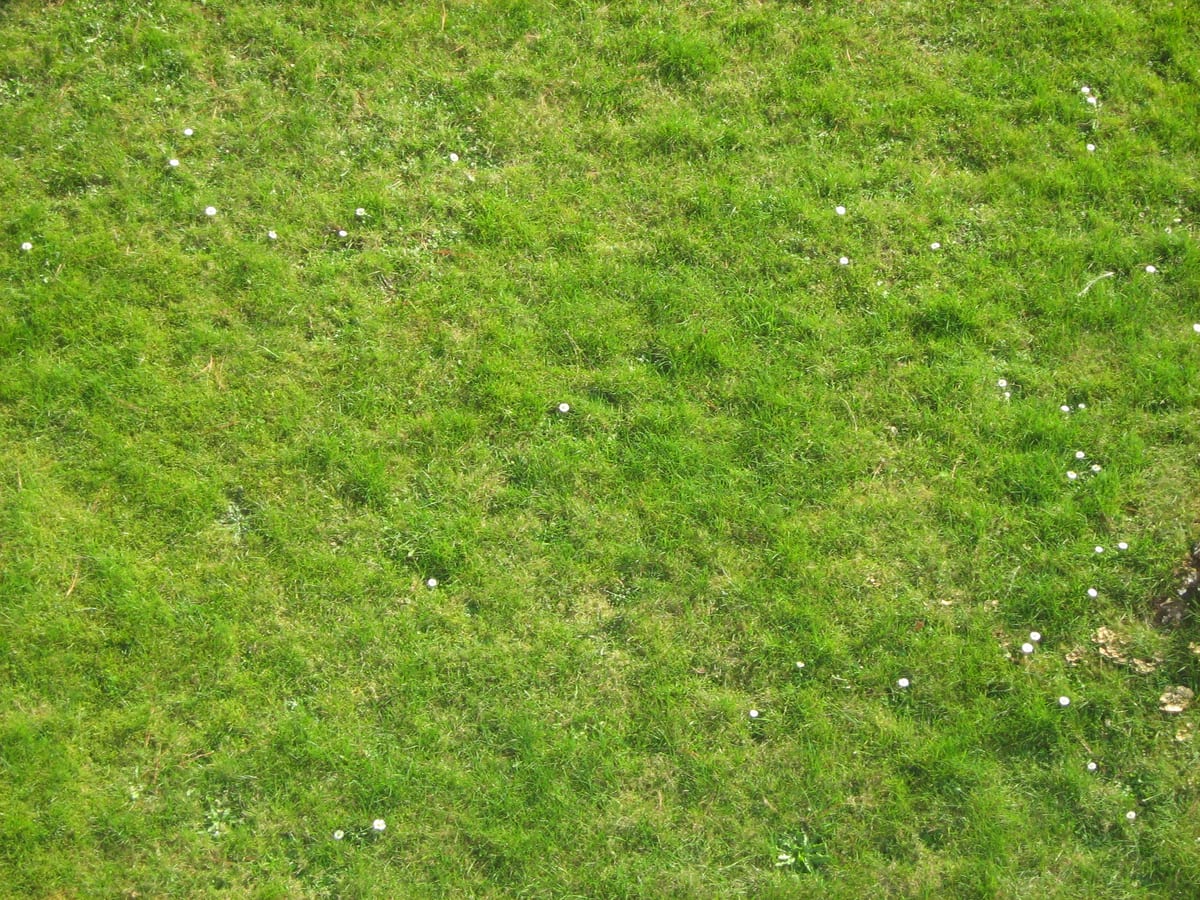 Moss and thin grass under trees How much light a lawn needs, the fine fescue that copes, and when to make it a bed. Read →
 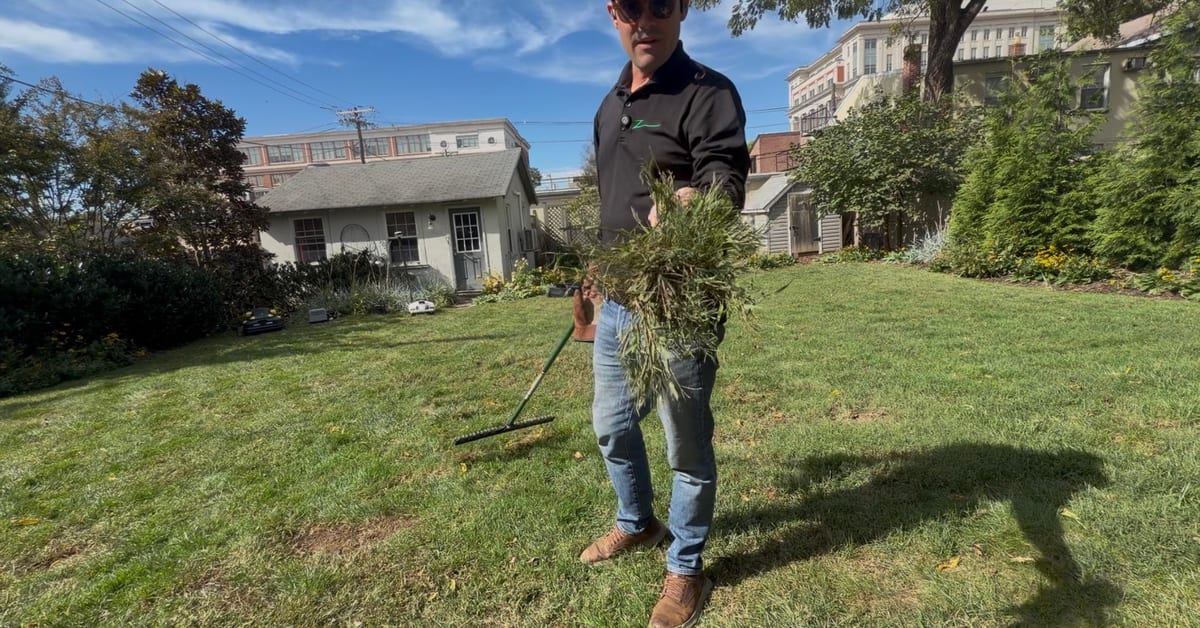 Spongy lawn, puddles after rain Thatch versus compaction, the two tests, cores not spikes, and seeding into the holes. Read →
 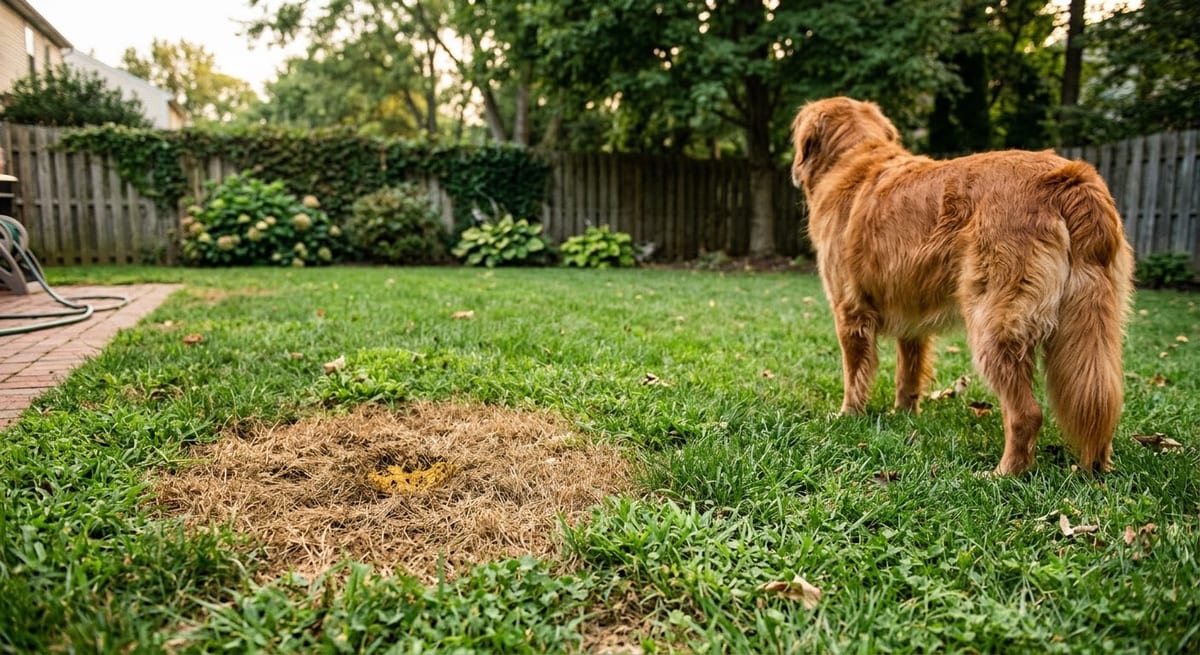 Dry lawn or dog spots? The inch-a-week rule, mornings only, dormancy is allowed, and how to fix each circle. Read →
 Start with what you see
The ten things people ask about most, in the order they ask. Each tap sets an answer in your plan — and the plan is honest about what a tap can't tell.
Photos: NY State IPM Program at Cornell University, CC BY 2.0 (Wikimedia Commons) · Scot Nelson, CC0 (Wikimedia Commons) — fairy rings on a golf green · Carapulov, CC BY 4.0 (Wikimedia Commons) · Eckehartl, CC BY-SA 3.0 (Wikimedia Commons)
Your first draft
That's the outline. The plan puts numbers on it — seed by the pound off your map, the feeding calendar for your grass and state, the windows for your climate, and the mowing plan — and remembers what you did.
Find out what's actually wrong. Most lawns have one or two problems that look like five: a thin lawn grows weeds, a scalped lawn goes brown, a hungry lawn goes pale and thin. Tap the tiles above for what you see and the plan writes the first draft — usually it starts with the cut height and the blades (free, today), then the seeding window (fall for most lawns), then feeding in the right season.
For a cool-season lawn: fix the mowing now (height up, fresh blades), pre-emergent in March if crabgrass is a problem, hold the nitrogen through summer, then the big weekend in September — aerate, overseed, starter feeding — and a winterizer in November. Warm-season lawns flip it: pre-emergent in February, everything else from May to August. The plan prints your order for your grass and state.
Every day or two on an established, growing lawn — a few millimetres a pass. Not at all for the first weeks of new grass or sod. Every other day and higher through a cool-season summer. Paused in dormancy. The mowing guides above cover the year by growth stage and by month.
Late August to October for fescue, bluegrass and rye (September onward in the transition zone), late spring once the soil holds 65–75°F for Bermuda, zoysia and centipede. The seed calculator sizes the pounds and bags for your grass and goal; the plan prints your window.
No. We sell, install and service robot mowers — we don't do lawn care, and the plan is free. It's educational and honest: it tells you what to buy and when, and it ends where we start, on when the mower goes back on. The one thing it does for you automatically is remember: what you did, when, and what's next.
Where the numbers come from: seeding and feeding rates are the ranges university extension services publish per 1,000 sq ft; state fertilizer rules follow each state's lawn-fertilizer law; germination and soil temperatures are seed-industry norms. Mowing heights are the same numbers the app prints for every grass.