
Spongy Lawn, Puddles After Rain: Aeration and Dethatching
The lawn feels like walking on a mattress. Or the opposite: it’s hard as a path, and after a storm the water sits on it in sheets. Both mean the roots aren’t getting what they need — one because a sponge of dead stems is holding everything on top, the other because the soil is packed too tight for anything to get in. Different problems, and the fixes have similar names, so here’s how to tell them apart.
Two problems, one feel
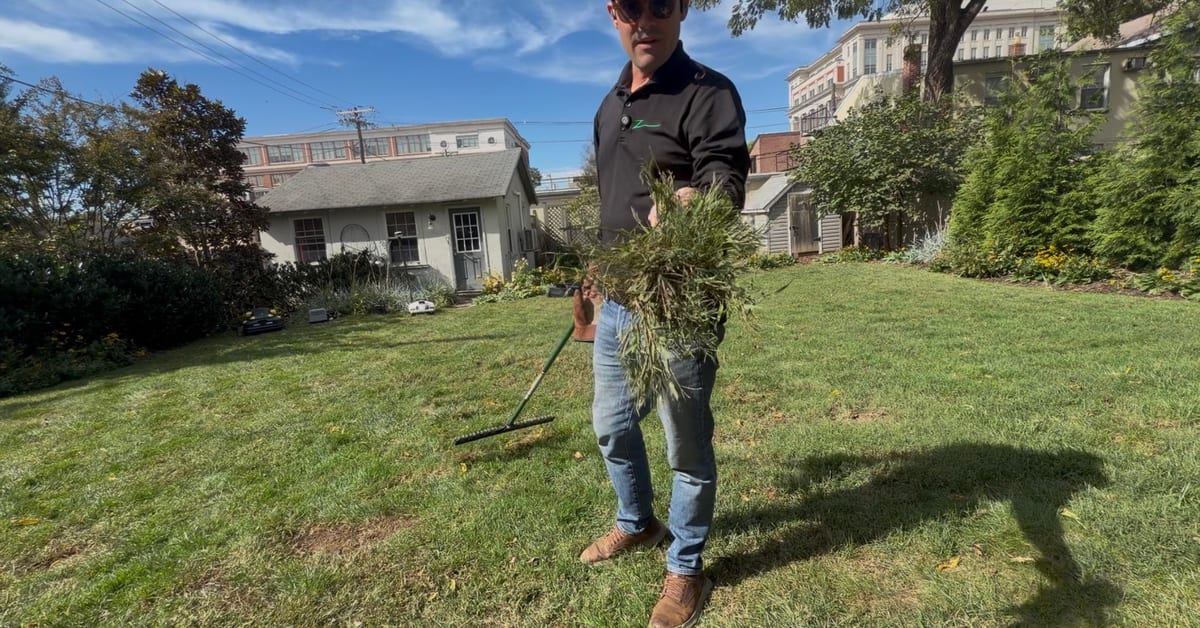
Thatch is the brown, spongy layer of dead stems and roots that builds up between the green blades and the soil. A little (under half an inch) is good — it cushions and insulates. Over half an inch, it starts holding water and fertilizer above the soil, the roots grow up into it instead of down, the lawn dries out fast, and fungus loves it. Kentucky bluegrass, Bermuda and zoysia build thatch; tall fescue and rye rarely do. Heavy nitrogen, shallow watering and compacted soil all speed it up. Clippings do not — they’re mostly water and break down in days. That one’s a myth.
Compaction is soil pressed so tight that air and water can’t move through it. Clay does it worst; foot traffic, play, construction and mowing the same path do it everywhere. Water puddles, roots stop shallow, and the weeds that like packed ground — plantain, goosegrass, knotweed — move in.
The check
Two tests, ten minutes.
- The screwdriver. Push a long screwdriver into the lawn a day after rain. It should go in six inches with moderate pressure. If it stops at an inch or two, that’s compaction.
- The wedge. Cut a wedge of turf with a trowel, three inches deep, and look at the cross-section. Measure the brown layer between the green and the soil. Under half an inch, fine. Over, that’s thatch. Over three-quarters, that’s a dethatching job.
Core aeration
A core aerator pulls plugs of soil two to three inches long out of the lawn — thousands of them — leaving holes that air, water, fertilizer and roots can move through. It fixes compaction directly and, done every year or two, keeps thatch from building. Rent one for an afternoon or hire it done; either way:
- Two passes, the second at right angles, so the holes are two to three inches apart.
- Moist soil, not wet — water the day before if it’s dry. A dry lawn gives you shallow plugs; a wet one clogs the tines.
- Leave the cores on the lawn. They crumble in two or three weeks and top-dress the surface with soil and the microbes that eat thatch.
- Spike aerators don’t count. Pushing spikes in compacts the soil around each hole. Cores or nothing.
Dethatching
A dethatcher (power rake, scarifier) drags vertical tines through the turf and rips the thatch layer out. It works, and it’s rough — the lawn looks beaten up afterward and the machine pulls out a startling volume of brown fluff. That’s why it’s only for a layer over half to three-quarters of an inch, and only in the seeding window so the lawn recovers fast. Rake up what it pulls out, then aerate, then overseed — a dethatched lawn has thin spots and wants seed.
For most lawns, yearly aeration is the whole thatch program; dethatching is the every-few-years reset for the grasses that build it.
When
The rule: only when the grass is growing hard enough to heal in a couple of weeks.
- Cool-season lawns: September to October, the same window as overseeding. Spring (April) is second-best and collides with pre-emergent.
- Warm-season lawns: late spring to early summer, once the lawn is fully green — May to June.
- Never in summer heat or in dormancy. An aerated lawn in August is a stressed lawn full of holes.
The transition zone follows the cool-season calendar, opening in September rather than August.
Seed into it
This is the reason to aerate the same day you overseed. Each core hole is a seed-sized pocket of bare soil that holds moisture; seed dropped after aeration lands in thousands of them and germinates at several times the rate of seed thrown onto turf. Aerate, then seed at the overseeding rate, then a starter fertilizer, then water light and often. The cores top-dress it as they break down. Repairing bare spots covers the rates and the watering.
The robot part
The robot can mow an aerated lawn the same day — set it a notch higher for a couple of weeks while the cores crumble. If you seeded into the holes, it stays off those zones until the new grass has rooted; the plan gives it the date. After a dethatching, treat the lawn as a reseed and give it the same gentle weeks. And one thing the robot fixes on its own: a daily micro-clipping cut returns clippings the soil can eat in days, which is nothing like the thatch a weekly scalping leaves. The sponge underfoot didn’t come from the mower.
Make it your plan
Map your lawn once, tap “Spongy or puddling” on the diagnosis tiles, and the Lawn Care Plan books the aeration in your climate zone’s window, adds the dethatching if you tell it the layer is thick, lines the overseeding up on the same day, and tells the robot when it’s back on. Or send a photo to the free lawn check-up — it can see a puddle and a patchy sponge, and it will say straight out that it can’t measure thatch from a picture. Cut the wedge.
Frequently asked
How do I know if my lawn needs aeration?
Two tests. Push a screwdriver into moist soil: if it stops at an inch or two, roots do too — that's compaction. Cut a wedge of turf and look at the brown spongy layer between the green blades and the soil: over half an inch is thatch. Other tells: water pooling after rain, a bouncy feel underfoot, the mower sinking in, plantain and goosegrass moving in, and a lawn that dries out fast despite watering.
What is the difference between aerating and dethatching?
Aerating pulls plugs of soil out of the ground so air, water and roots can move — it fixes compaction and, done yearly, keeps thatch in check. Dethatching (scarifying) rakes the thatch layer out from between the blades with vertical tines — it removes a thick thatch layer directly, and it's rough on the lawn. Most lawns need aeration every year or two; dethatching only when the layer is over half to three-quarters of an inch.
When should I aerate my lawn?
When the grass is growing hard enough to heal the holes in a couple of weeks: September to October for cool-season lawns (spring is second-best), May to June for warm-season lawns once they're fully green. Never in summer heat and never in dormancy. Do it the same day you overseed — the holes are where the seed takes.
Should I aerate before or after overseeding?
Before, and then seed straight into the holes the same day. A core aerator opens thousands of seed-sized pockets of bare soil across a lawn; seed dropped after aeration lands in them, holds moisture and germinates at several times the rate of seed thrown onto turf. Leave the cores on the lawn — they break down in two or three weeks and top-dress the seed.
Can I use a robot mower after aerating?
Yes, the same day, one notch higher, and the cores crumble under it within a couple of weeks. If you overseeded into the holes, the robot stays off those zones until the new grass has rooted — the plan tells it when. After dethatching, treat the lawn like a reseed: it's been roughed up and wants a few gentle weeks.
Keep reading
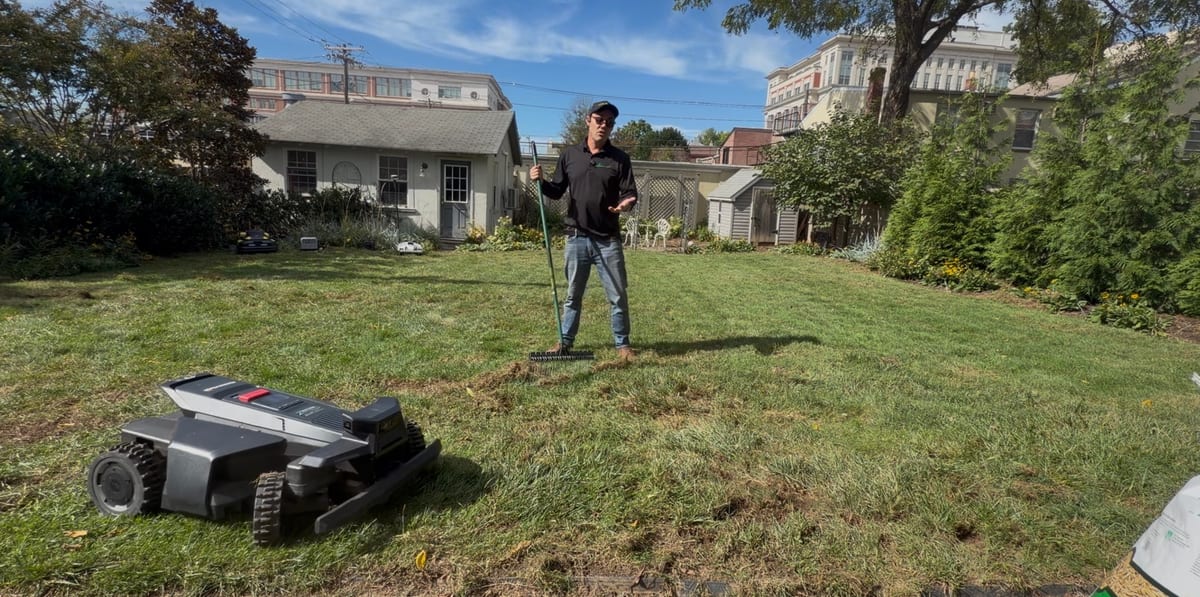 Lawn careWhy Won't My Lawn Fill In? Repairing Bare and Thin SpotsWhy bare spots never fill in (bunch grasses, shade, traffic, compaction), how much seed a patch needs, the repair in order, and when the mower goes back on.
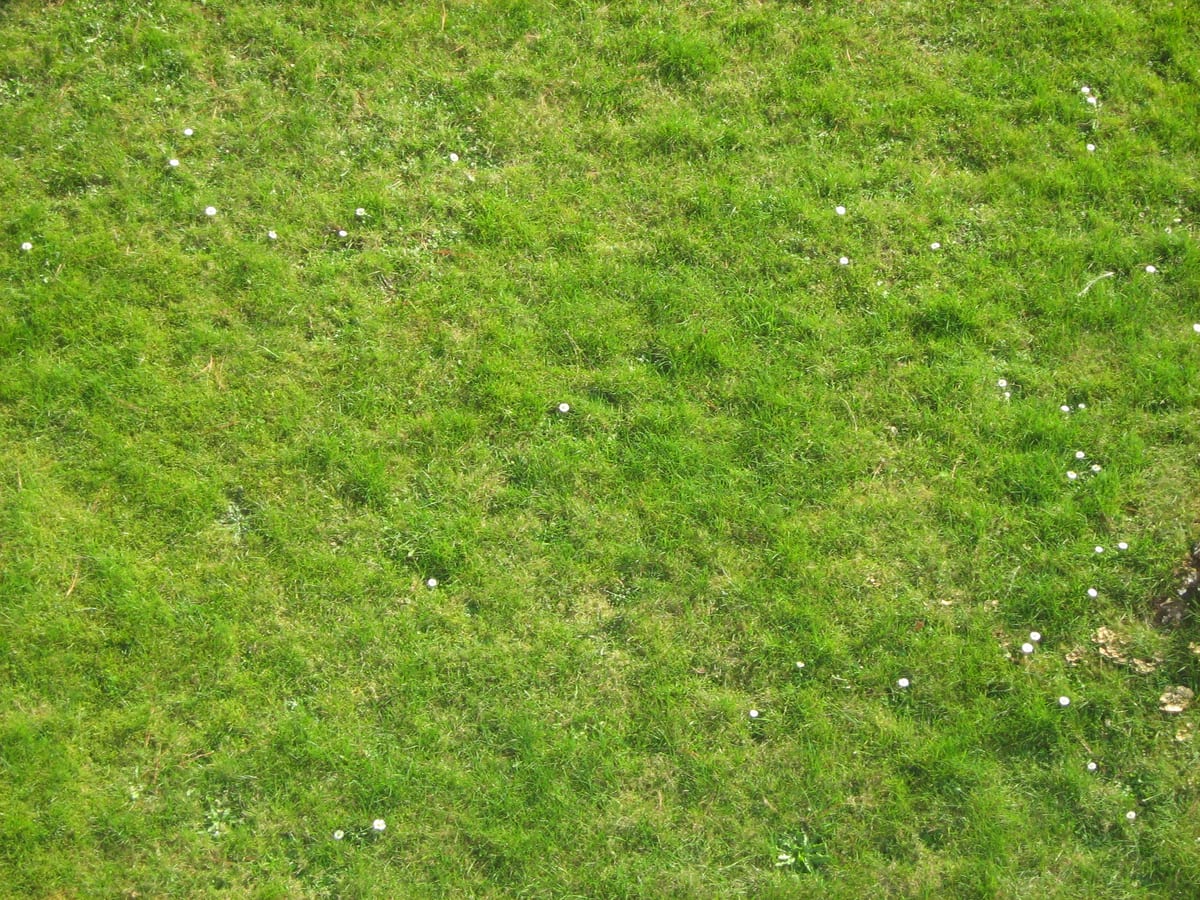 Lawn careMoss and Thin Grass Under Trees: How to Grow a Lawn in ShadeMoss grows where grass gave up on the light. How much sun a lawn needs, the fine fescue that copes, lifting the canopy, and when to make it a bed instead.
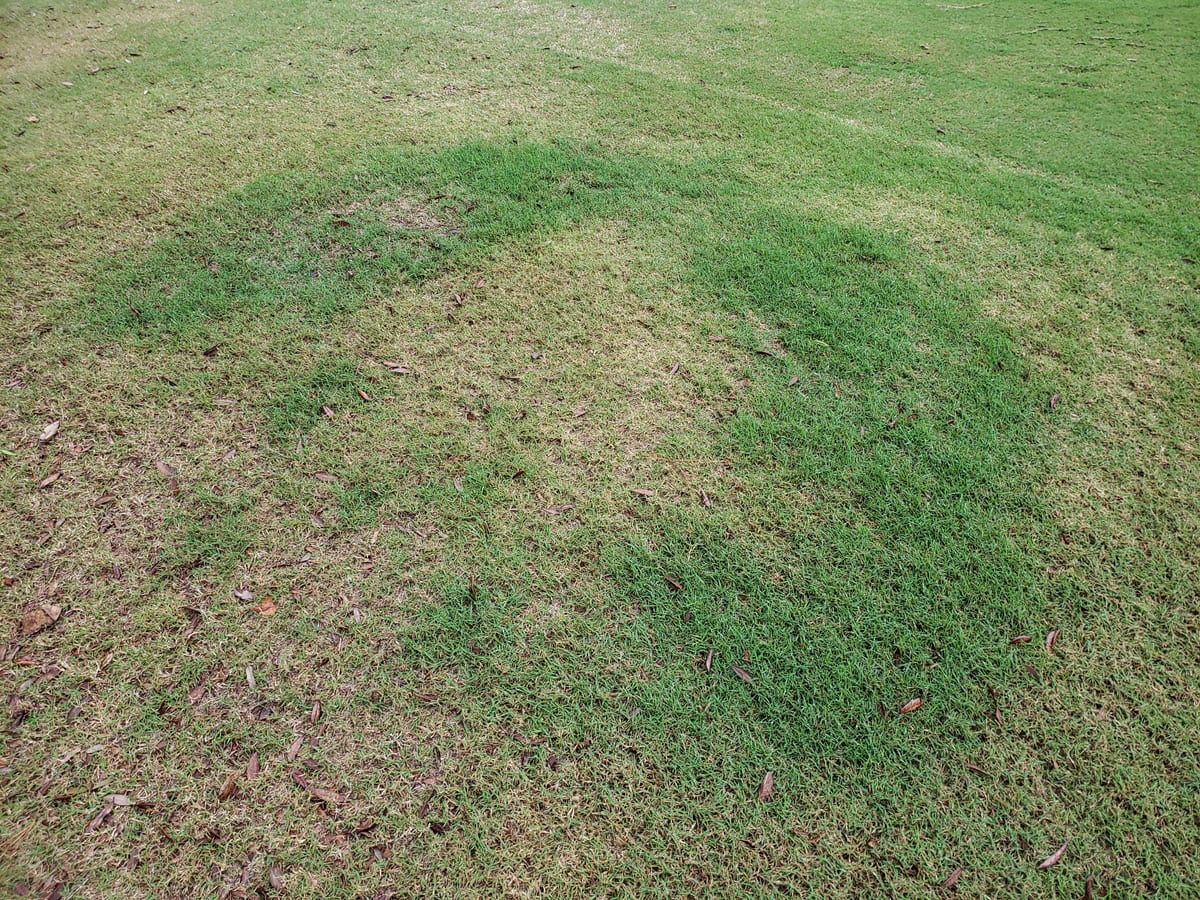 Lawn careBrown Circles in the Lawn: Brown Patch, Dollar Spot and FungusCircles that widen after humid nights are a fungus. Brown patch, dollar spot, fairy rings and summer patch told apart, the four habits that stop them, when to spray.
Explore the system
The mowers and pages behind this topic — see them sized to your yard.