
Something Is Digging Up My Lawn: Grubs, and What Digs for Them
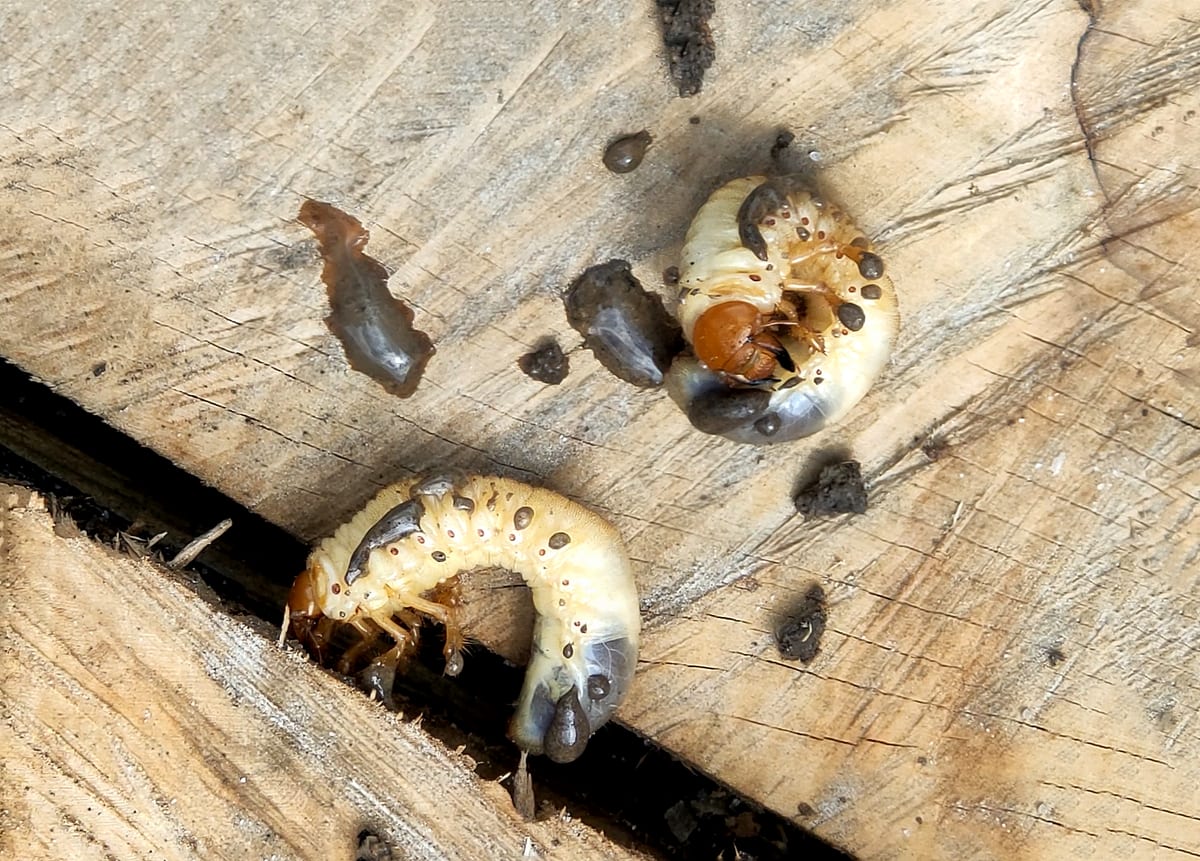
Photo: Carapulov, CC BY 4.0 (Wikimedia Commons).
You came out one morning and something had torn the lawn up in the night — turf flipped over in chunks, holes the size of a fist. Or you went to rake a brown patch and the whole thing lifted off the soil like a doormat. Both are the same story: grubs are eating the roots, and everything with a nose knows it.
The signs
- Turf that lifts like carpet. Grab a handful at the edge of a brown patch and pull. Healthy turf holds; grub-eaten turf peels back with nothing underneath, and the grubs are there in the top inch of soil — white, C-shaped, brown-headed, half an inch to an inch long. That’s the photo above.
- Brown patches in late summer that stay spongy. Irregular, not circular, worst in the sunniest, best-watered parts of the lawn (the beetles lay eggs where the grass is lush). They look like drought but don’t green up after rain.
- Animals digging at night. Skunks and raccoons dig neat cone-shaped holes and flip sod. It’s not the animals’ fault; they’re harvesting.
- Birds working one spot. Crows, starlings and robins probing the same area every morning.
The lookalikes: a circle with a green ring is a dog spot; a patch that widened over humid nights is a fungus; a blue-gray patch where footprints stay is drought. The lift test settles it in ten seconds.
Count before you do anything
This is the part most people skip, and it’s the whole decision. Cut a square foot of turf on three sides at the edge of the damage, fold it back, and count grubs in the top three inches. Do it in two or three places, in August or September.
- Under five per square foot: nothing. A healthy lawn feeds that many without showing it.
- Five to ten: a judgment call. A deep-rooted, well-watered lawn tolerates it; a thin, stressed one won’t.
- Over ten: treat.
A lawn treated without a count is a lawn treated on a guess, and the product goes into the water either way. A photo can show you the damage; it can’t count grubs. Lift the square.
Their year
The beetles — Japanese beetles, masked chafers, June beetles — fly and lay eggs in June and July, in the greenest, wettest turf they can find. Eggs hatch in July and August. The grubs feed hardest in August through October, which is when the damage shows and the animals come. They go deep for winter, come up to feed a little in spring, and pupate in May. That calendar is why timing matters more than product.
Treating, and when
Two windows, and spring isn’t one of them.
- Preventive, late spring to early summer. A season-long product applied before the eggs hatch, watered in. Right for a lawn that gets grubs every year (usually the one with the most Japanese beetles on the roses). Wrong as a routine on a lawn that’s never had them.
- Curative, late summer. A fast-acting product applied when you’ve counted too many and the grubs are small and near the surface — August to early September. Water it in well; it has to reach them.
- Spring: the grubs are big, nearly done, and about to pupate. Treatment mostly misses.
Biological options exist and are honest about their limits: beneficial nematodes (applied to moist soil in late summer, cool and damp weather) and milky spore (Japanese beetle grubs only, slow to build). Both work better as part of a healthy lawn than as a rescue.
The repair
Once the grubs are dealt with — or by October, when they’ve gone deep — the killed patches get reseeded: rake out the dead turf, loosen the soil, seed at the new-lawn rate for your grass, cover lightly, keep it moist. In the fall window it’s up in two to three weeks. The skunks stop the night the grubs go.
The robot part
A mower doesn’t touch grubs. What it touches is the lawn’s tolerance for them: a dense, deep-rooted lawn feeds five grubs a square foot without a mark, a thin shallow-rooted one shows every one. Deep roots come from a high cut (the robot holding the top of the range every day), fall feeding, and deep, rare watering — the same three things that beat every other problem on this list. And during the repair, the robot stays off the reseeded ground until the first mow; the plan tells it when.
Make it your plan
Map your lawn once, tap “Digging and lifting” on the diagnosis tiles, and the Lawn Care Plan sizes the repair seed for the damaged share, prints your seeding window, and tells the robot when to go back on. Send a photo of the lifted turf to the free lawn check-up and it will say whether it looks like grubs, a fungus or a dog — and remind you that it can’t count them. Lift the square; that’s the honest test.
Frequently asked
How do I know if I have grubs?
Lift a square foot of turf at the edge of a brown patch in late summer. Grub-damaged turf peels back like carpet because nothing is holding it — the roots are gone — and the grubs are right there: white, C-shaped, brown-headed, about half an inch to an inch long. Other signs: patches that go brown in August–September and stay spongy, skunks or raccoons tearing up the lawn at night, crows or starlings working one area every morning.
How many grubs per square foot is too many?
Count them in two or three spots. Under five per square foot, do nothing — a healthy lawn feeds that many without showing it. Five to ten is a judgment call; a well-watered, deep-rooted lawn tolerates it, a stressed one won't. Over ten per square foot, treat. The count is the whole decision — never treat a lawn you haven't lifted a square of.
When should I treat for grubs?
Either early with a preventive or late with a curative — not in spring. A preventive (season-long) product goes down from late spring to early summer, before the eggs hatch in July; it's the right choice for a lawn that gets grubs every year. A curative product goes down in late summer when the grubs are small and feeding near the surface; it's for a lawn where you've counted too many this year. Spring grubs are big, nearly done feeding, and about to pupate — spring treatment mostly wastes the product.
Will my lawn recover from grub damage?
The killed patches don't; they get reseeded. Once the grubs are dealt with (or have pupated), rake out the dead turf, loosen the soil, seed at the new-lawn rate, cover lightly and keep it moist. In the fall seeding window the repair is up in two to three weeks. The animals stop digging as soon as there's nothing to dig for.
Do robot mowers help with grubs?
Not directly — no mower does. Indirectly, yes: the lawn that shrugs off a handful of grubs is a dense, deep-rooted one, and that's what a high daily cut, fall feeding and deep, rare watering produce. The one thing to get right is keeping the robot off reseeded patches until the new grass has rooted.
Keep reading
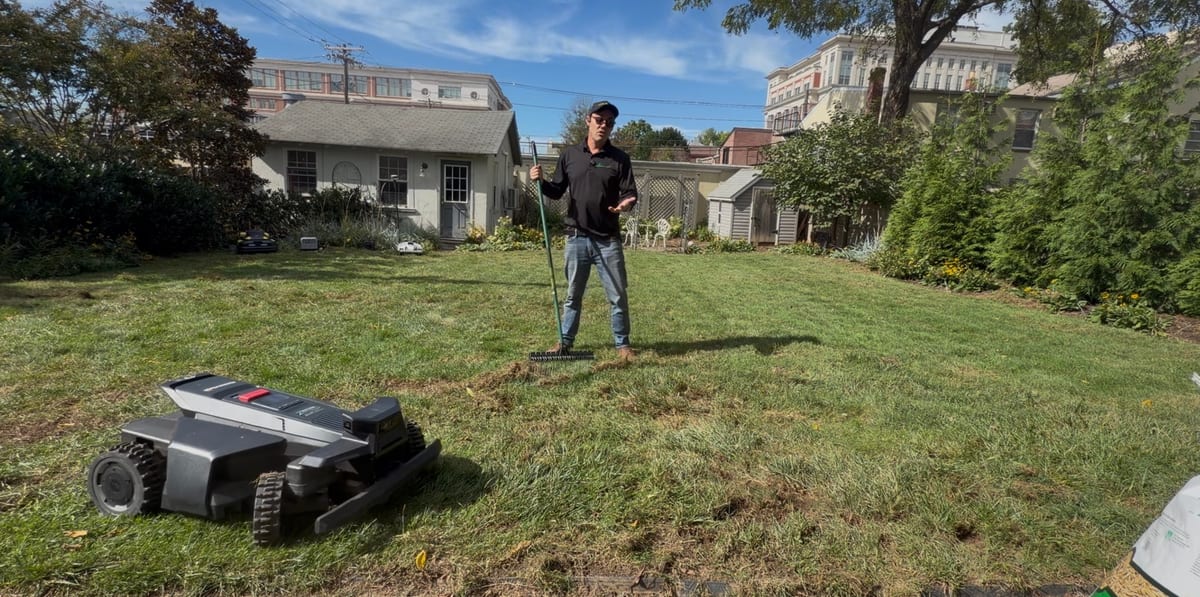 Lawn careWhy Won't My Lawn Fill In? Repairing Bare and Thin SpotsWhy bare spots never fill in (bunch grasses, shade, traffic, compaction), how much seed a patch needs, the repair in order, and when the mower goes back on.
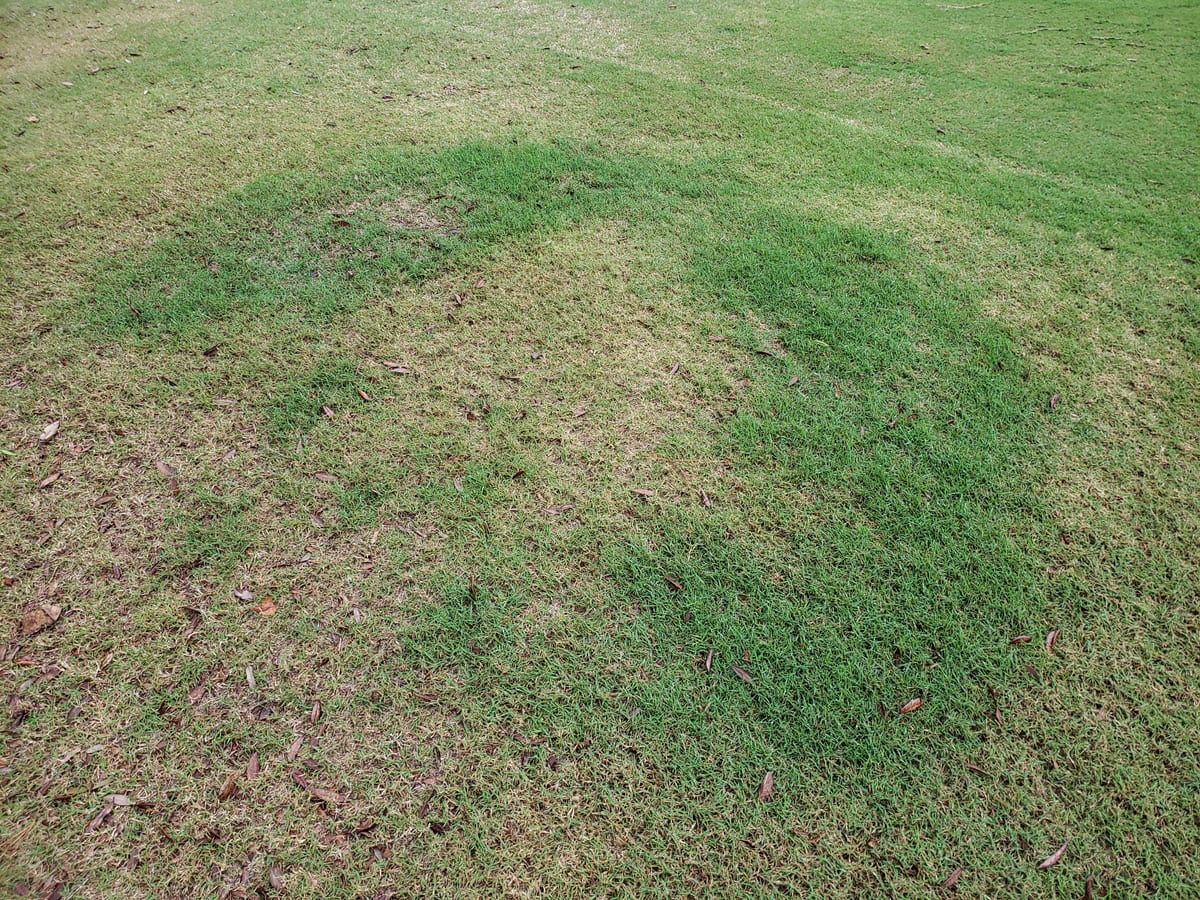 Lawn careBrown Circles in the Lawn: Brown Patch, Dollar Spot and FungusCircles that widen after humid nights are a fungus. Brown patch, dollar spot, fairy rings and summer patch told apart, the four habits that stop them, when to spray.
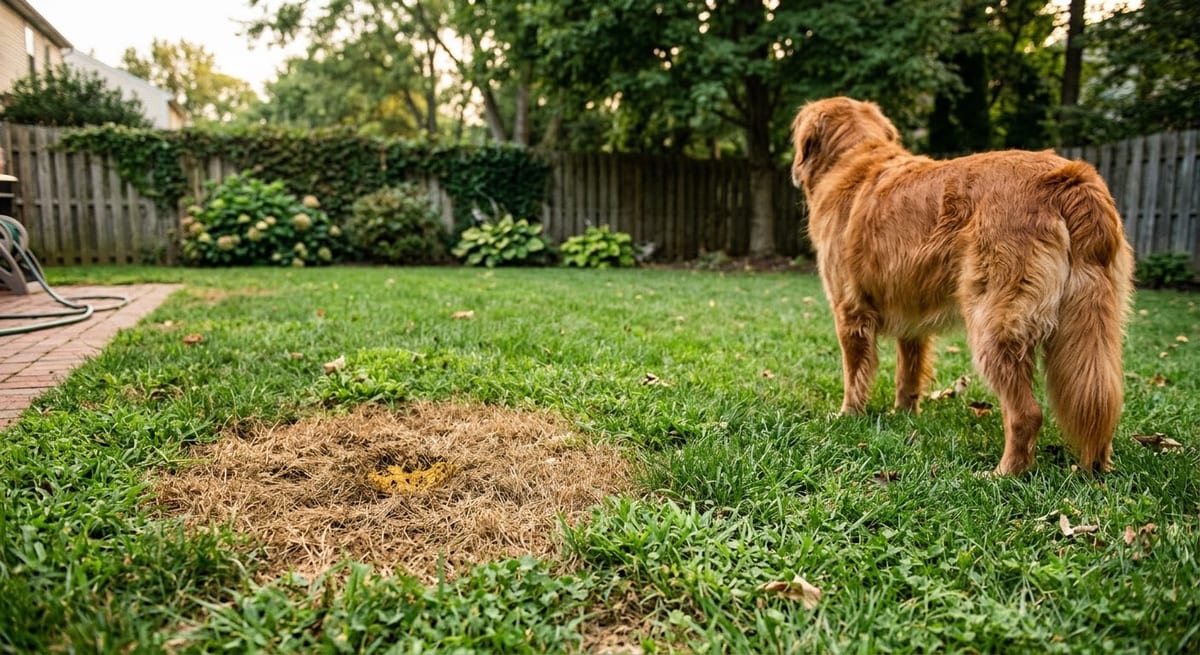 Lawn careDry Lawn or Dog Spots? Watering Right and Fixing the CirclesFootprints that stay pressed in mean drought; a dead circle with a lush ring is a dog spot. The inch-a-week rule, when to water, dormancy, and fixing each circle.
Explore the system
The mowers and pages behind this topic — see them sized to your yard.