
Why Won't My Lawn Fill In? Repairing Bare and Thin Spots
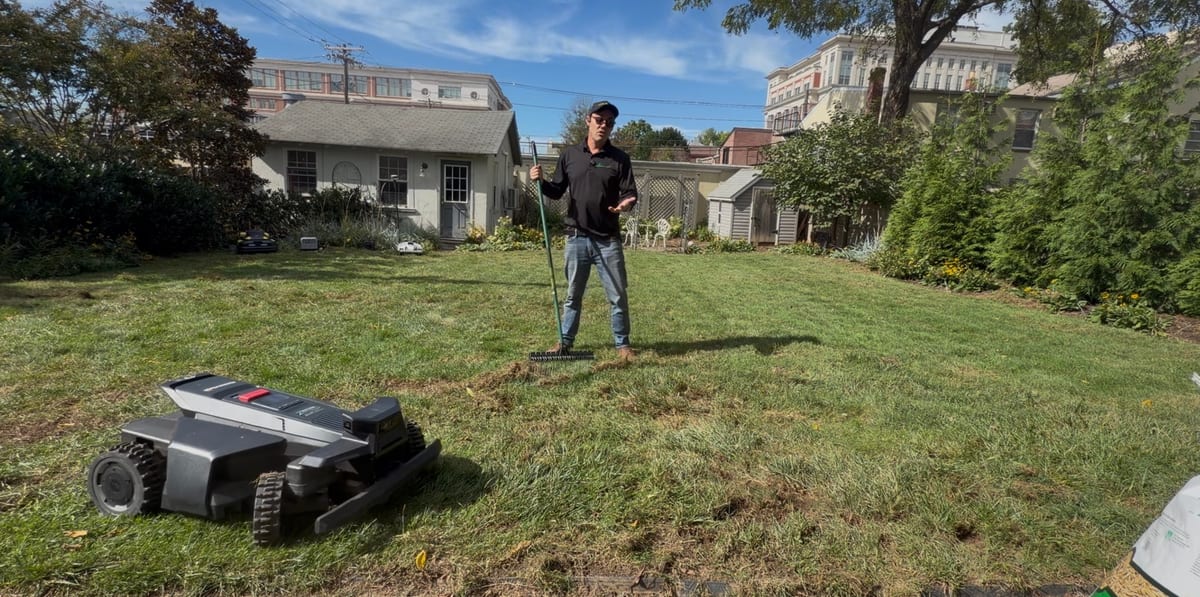
The spot has been there since spring. You’ve walked past it a hundred times waiting for the lawn to close over it, and it hasn’t moved an inch. Two things are going on: your grass may not be able to fill it, and something may still be making it.
Why it never fills
Grasses come in two habits. Bunch grasses — tall fescue, perennial ryegrass, most fine fescues — grow as individual plants that get thicker at the crown but never travel. A gap between plants is permanent until seed lands in it. Most northern lawns are fescue lawns, which is why “it’ll fill in” is the most common wrong assumption in lawn care.
Spreading grasses — Kentucky bluegrass, Bermuda, zoysia, St. Augustine, centipede — send out runners (rhizomes underground, stolons on top) and will creep into a small bare spot over a season, if the conditions that made the spot are gone.
That second clause is the other half. A bare spot is usually a bare spot for a reason, and seed poured onto the reason disappears the same way the grass did.
The four reasons, and how to tell them apart
- Shade. Grass under a tree or along a north wall thins every year and finally quits. Moss moves in. If the spot gets under four hours of direct sun, the grass you have may simply be the wrong grass — see lawns in shade.
- Traffic. A line from the back door to the shed, the spot where the kids’ goal stands, where the mower turns. The soil under it is compacted, and the plants above it are worn away. The shape gives it away: paths are lines, play areas are ovals.
- Compaction. Clay soil packed hard by foot traffic or construction — try pushing a screwdriver in; if it stops at an inch, roots do too. Plantain and goosegrass are the weeds that thrive there. See aeration and dethatching.
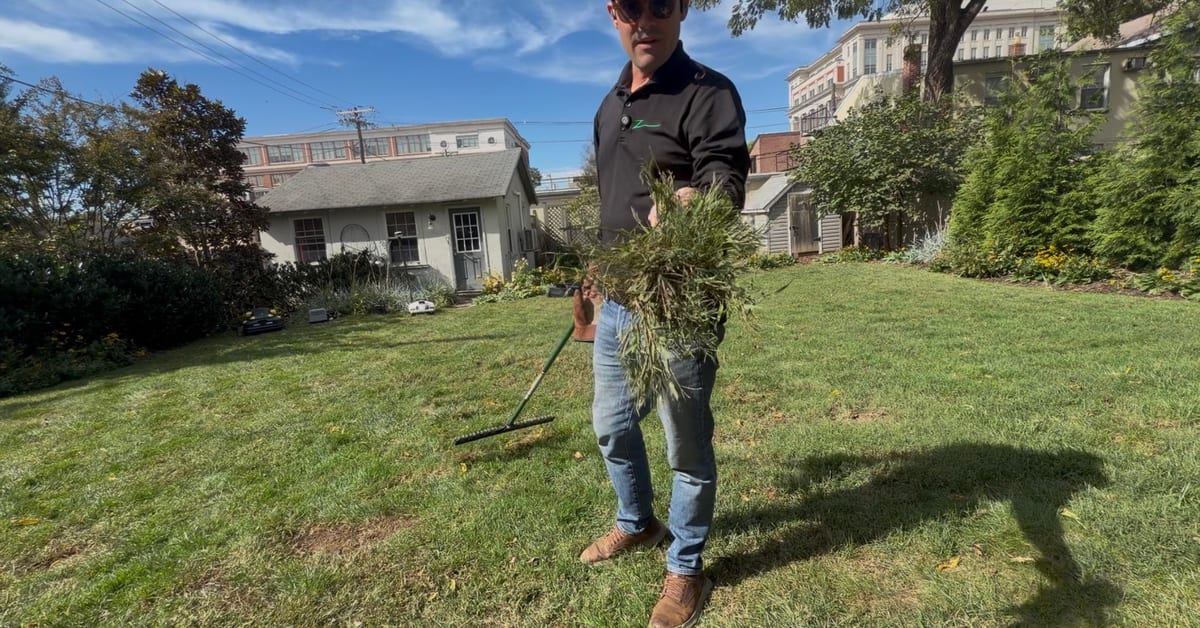
- Something ate the roots, or burned them. Turf that lifts like carpet with no roots holding it is grubs. A dead circle with a dark green ring is a dog spot. A patch that widened over a few humid nights is a fungus.
Fix the cause, then seed. Seed first and you’ll be back next year.
The repair, in order
-
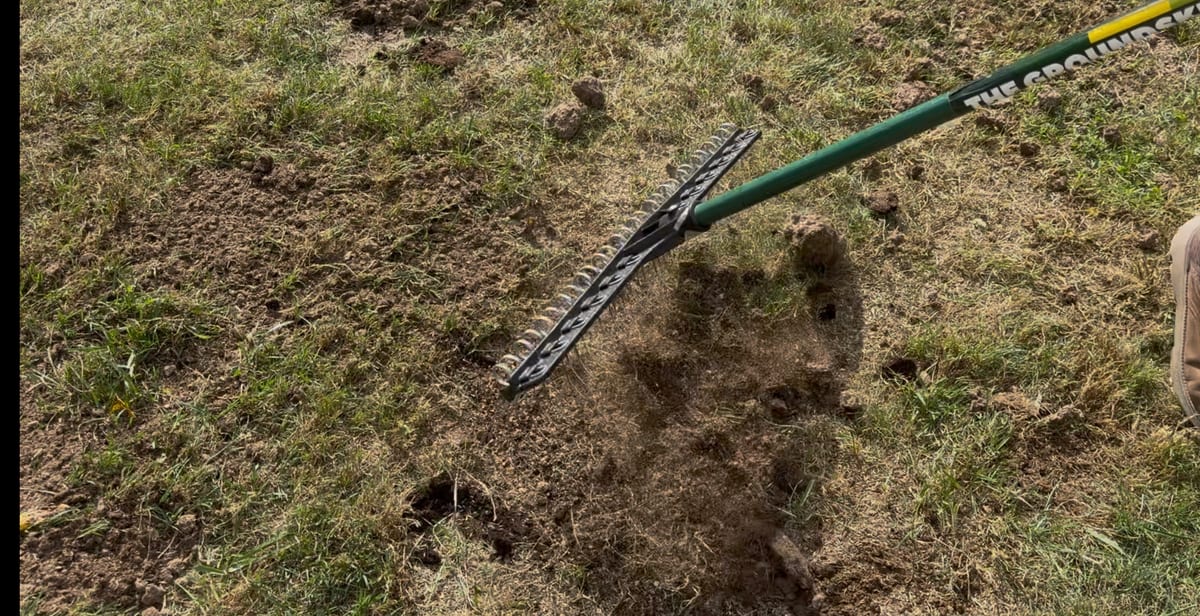
Rough it up. Rake out the dead grass and loosen the top two or three inches of soil. On a compacted spot, a garden fork worked in every few inches does what a rake can’t. Seed has to touch soil.
-
Seed at the new-lawn rate. Bare soil is not an overseed. Tall fescue wants about 6–8 lb per 1,000 sq ft; Kentucky bluegrass 2–3; perennial rye 6–9; Bermuda 1–2 (hulled). A 100 sq ft patch of fescue takes a bit under a pound. Match the seed to the sun the spot gets — a fine fescue blend in shade, your lawn’s own grass everywhere else.
-
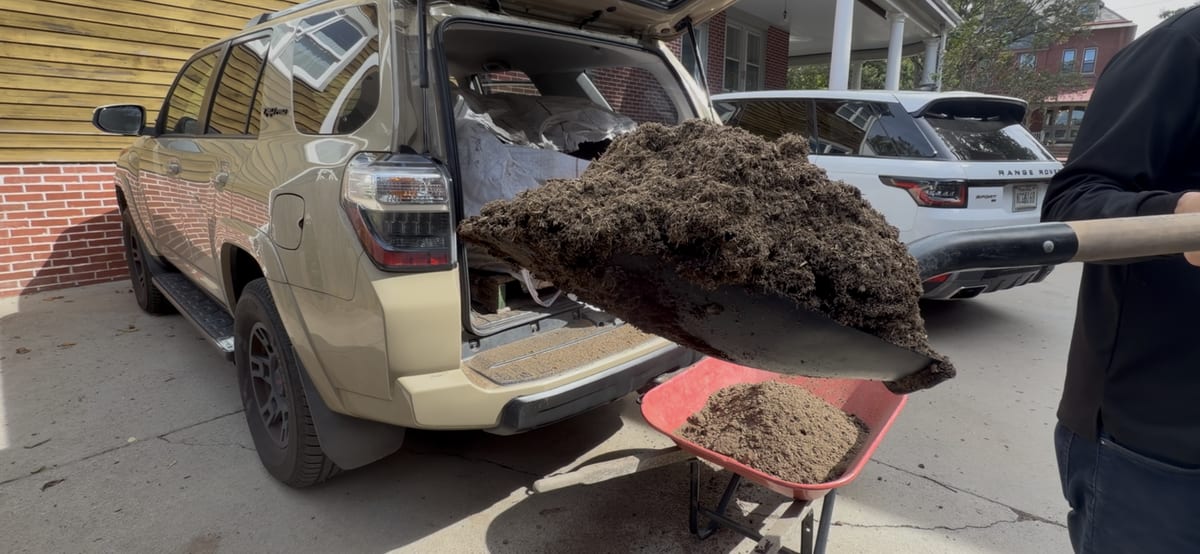
Cover it. A quarter inch of compost or screened topsoil over the seed, pressed down with the back of the rake or a foot. This holds moisture and hides the seed from birds. A starter fertilizer (one with phosphorus) is the one time phosphorus belongs on a lawn.
-
Water little and often. The top half-inch stays moist until the grass is up: two or three light waterings a day, early morning and midday, never a soaking. Then one deeper watering a day as the seedlings root, then back to normal after the first mow.
-
Keep every mower off it. Wheels pull seedlings out and a blade tears a plant that hasn’t rooted. Germination plus about two weeks — see when the mower goes back on.
If the whole lawn is thin rather than spotty, that’s a different job: aerate and overseed the whole thing at the overseeding rate, in the fall window. The Lawn Care Plan asks which it is and sizes accordingly.
When
Seed goes down when the soil will let it germinate and the weather will let it live. For cool-season grasses that is late August through October (September onward in the transition zone), when the soil is warm, the nights are cool and the crabgrass has stopped germinating. Spring is second-best and collides with crabgrass pre-emergent, which stops grass seed too. For warm-season grasses, late spring once the soil holds 65–75°F.
A summer repair on a cool-season lawn mostly grows crabgrass. If the spot is ugly in July, put a little topsoil on it, keep it watered, and seed it properly in September.
When the mower goes back on
The robot goes onto the repaired ground at its highest setting once the new grass stands about an inch over its target — germination plus ten to twenty-one days, so roughly three to five weeks for fescue, longer for bluegrass. Then once a week for two weeks, then two or three times a week a notch lower, then its normal rhythm. A robot is the right mower for this: a fraction of a walk-behind’s weight on small wheels, taking a few millimetres a pass, and never tearing a young plant.
Make it your plan
Map your lawn once and the Lawn Care Plan turns this into numbers: tap “Thin or bare” on the diagnosis tiles, tell it roughly how much of the lawn is bare, and it sizes the seed at the new-lawn rate for your grass, prints your seeding window, and tells the robot when to go back on. Not sure whether it’s shade, traffic or something eating the roots? Send a photo to the free lawn check-up — it reads the shape and the edges and says which it looks like, and how sure it is.
Frequently asked
Why doesn't my lawn fill in bare spots by itself?
Because of what it's made of. Tall fescue, perennial ryegrass and most fine fescues are bunch grasses — each plant gets thicker but never sends out runners, so a gap stays a gap. Kentucky bluegrass, Bermuda, zoysia and St. Augustine spread by rhizomes or stolons and will creep into a small bare spot over a season. If your lawn is a fescue lawn (most northern lawns are), the only thing that fills a hole is seed.
How do I fix bare spots in my lawn?
In this order: fix whatever made the spot (shade, a path, compacted soil, a dog), rough up the top two or three inches of soil with a rake, seed at the new-lawn rate for your grass, cover with a quarter inch of compost or topsoil, press it down, and keep the top half-inch moist with two or three light waterings a day until it's up. Keep every mower off it until the first mow.
How much grass seed do I need for a bare spot?
Bare soil takes the new-lawn rate, not the overseeding rate: about 6–8 lb per 1,000 sq ft for tall fescue, 2–3 for Kentucky bluegrass, 6–9 for perennial rye, 1–2 for Bermuda. A 10 × 10 ft patch is 100 sq ft, so a fescue patch that size wants a bit under a pound. The Lawn Care Plan's repair mode sizes it off the share of your lawn that's bare — 20% is the usual starting point.
When is the best time to repair bare spots?
The same window as any seeding: late August to October for cool-season grasses (September onward in the transition zone), spring as second-best, and late spring once the soil holds 65–75°F for warm-season grasses. A summer repair on a cool-season lawn mostly feeds the crabgrass.
Can I just throw seed on a bare spot?
You can, and most of it will dry out, wash off or feed the birds. Seed needs soil contact and steady moisture. Thirty seconds with a rake and a quarter inch of compost roughly triples the amount that comes up. If the spot is bare because it's a path or a dog's corner, seed alone fixes nothing — the cause comes first.
Keep reading
 Lawn careMoss and Thin Grass Under Trees: How to Grow a Lawn in ShadeMoss grows where grass gave up on the light. How much sun a lawn needs, the fine fescue that copes, lifting the canopy, and when to make it a bed instead.
 Lawn careSpongy Lawn, Puddles After Rain: Aeration and DethatchingA spongy lawn or water sitting after rain means thatch or compacted soil. The two tests, core aeration vs dethatching, when to do each, and seeding into the holes.
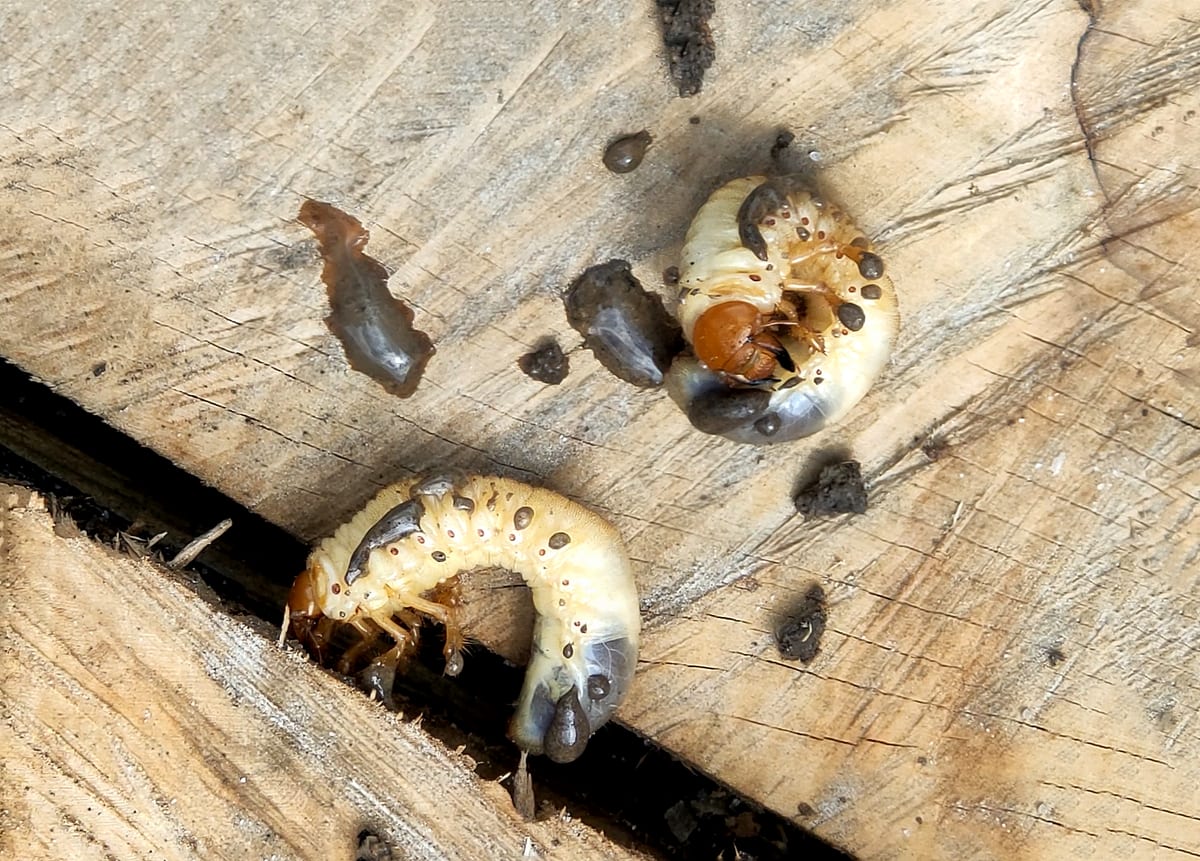 Lawn careSomething Is Digging Up My Lawn: Grubs, and What Digs for ThemTurf that lifts like carpet and animals digging at night mean grubs. How to count them, the number worth treating, the two treatment windows, and reseeding.
Explore the system
The mowers and pages behind this topic — see them sized to your yard.