
Brown Circles in the Lawn: Brown Patch, Dollar Spot and Fungus
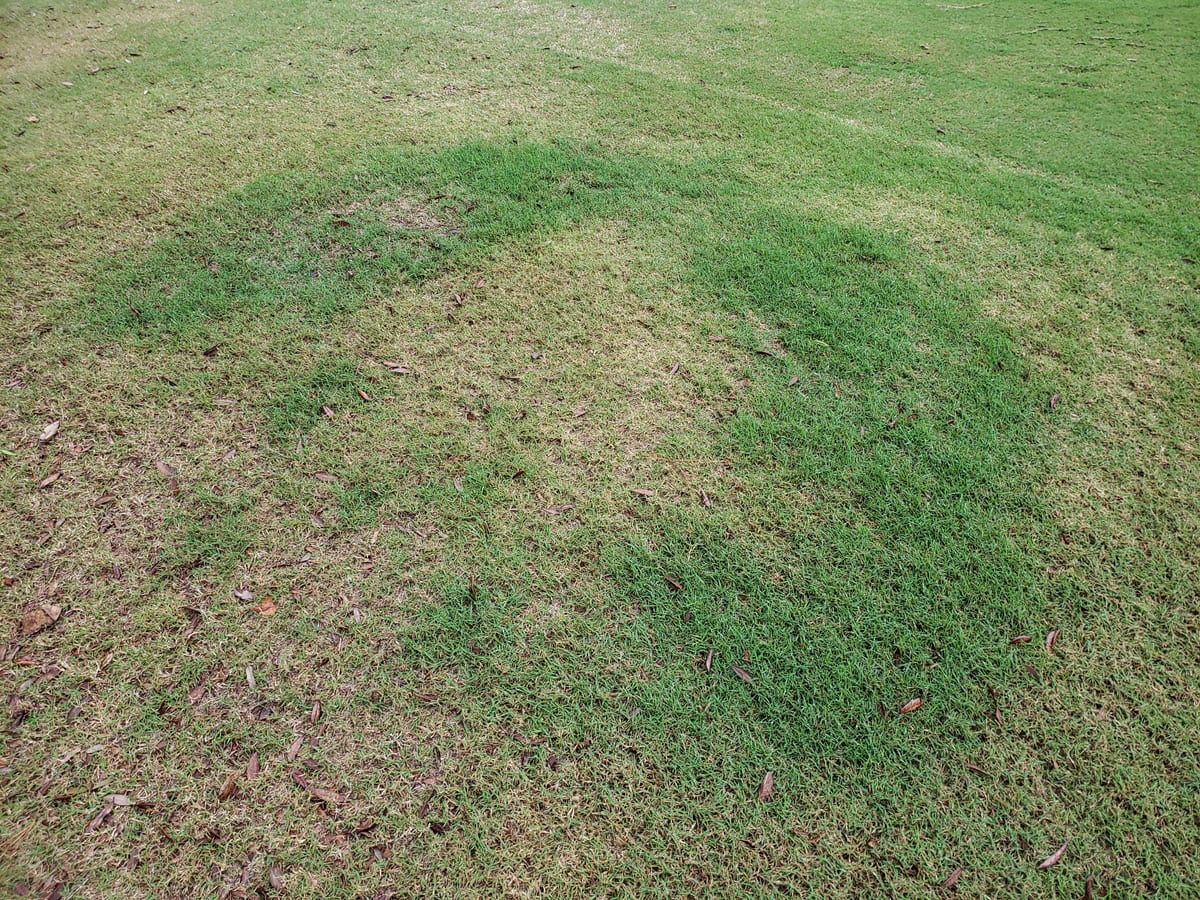
Photo: Scot Nelson, CC0 (Wikimedia Commons) — fairy rings on a golf green.
A patch appeared on Tuesday. By the weekend it’s twice the size, and there’s a second one. Circles that grow are the signature of a fungus, and summer — heat, humid nights, wet leaves — is when the lawn gives them a season. The good news is that the fixes are mostly habits, and the lawn usually comes back.
The recipe
Every lawn fungus is already in your soil. It becomes a disease when three things line up: heat (nights that stay above about 65°F), wet leaves for hours (evening watering, heavy dew, poor airflow), and often lush, soft growth from summer nitrogen. Take any one away and most outbreaks stall. That’s why the plan below is more about watering and mowing than about spraying.
The line-up
Brown patch is the common one on tall fescue and perennial ryegrass. Rough circles from a foot to several feet across, tan to brown, sometimes with a darker “smoke ring” at the edge in the morning dew. Humid nights in June to August. Leaf disease — the crowns usually live.
Dollar spot makes small straw-colored spots the size of a silver dollar that merge into ragged patches. Individual blades show tan lesions with a reddish-brown edge, pinched like an hourglass. It loves a hungry lawn and heavy dew; a light feeding is part of the cure.
Summer patch hits Kentucky bluegrass and fine fescues: crescents and rings six to twelve inches across, often with a tuft of green in the middle (the “frog-eye”). It’s a root disease of hot, wet soil, and it kills — those patches get reseeded in fall.
Fairy rings are arcs or full circles of dark green grass, sometimes a dead ring, sometimes a line of mushrooms. A fungus in the soil is breaking down old wood or roots and releasing nitrogen at its growing edge. The photo above is the textbook version on a golf green. Mostly cosmetic; core-aerate the ring and water it well to stop the soil going water-repellent.
Not fungus, but looks like it: a dead circle with a lush dark ring is a dog spot; turf that lifts with no roots holding it is grubs; a blue-gray patch where footprints stay pressed in is drought; a brown stripe over a bump is scalping. A photo can usually tell these apart. It can’t reliably tell one fungus from another — for that, your county extension office will look at a sample.
The four habits that stop it
- Water in the morning, deeply, rarely. Early morning, so the sun dries the leaves by mid-morning. About an inch a week in one or two goes. Evening watering is the single most reliable way to grow a fungus.
- Mow dry, sharp and high. Wet grass and a mower spread spores; a dull blade leaves frayed tips the fungus enters through. Raise the cut a notch — the top of your grass’s range — for the rest of the summer.
- No summer nitrogen on a cool-season lawn. Soft, fast growth in July is fungus food. Cool-season lawns eat in fall. (Dollar spot is the exception — a light feeding helps a hungry lawn outgrow it.)
- Air and drainage. Where the same corner goes brown every summer, look at what’s keeping it wet: a downspout, a fence blocking the breeze, thatch over half an inch, compacted clay. Aerate it in the fall.
When a fungicide is fair
For a severe outbreak that keeps spreading through the habits above, or on a lawn that has had it three summers running, a fungicide is reasonable — and works far better applied before the patches appear, in the weather that brings them, than after. Get the disease named first (a sample to the extension office is cheap), because the products differ. It’s a last resort, not a first one, and never a substitute for the watering change.
The robot part
A robot mower helps and can hurt, depending on how it’s set. It helps because it cuts a few millimetres at a time — the least stress a blade can take — and keeps the canopy open. It hurts if it’s mowing soaking-wet grass at dawn every day in a brown-patch summer with blades that haven’t been changed since April. Three settings: fresh blades every four to six weeks (sooner in a bad summer), the cut height at the top of your grass’s range, and the running window set to daytime while the humid stretch lasts, so it isn’t dragging spores through dew. The Lawn Care Plan and My Schedule carry all three.
Make it your plan
Map your lawn once and tap “Brown circles” on the diagnosis tiles: the plan raises the summer cut, prints the morning-only watering line, holds the nitrogen until fall for a cool-season lawn, and books the aeration. Or send a photo to the free lawn check-up — it will say whether the circle looks like a fungus, a dog, grubs or drought, and it will say plainly that it can’t name the fungus from a photo. That part is the extension office’s, and worth the sample.
Frequently asked
What causes brown circles in my lawn?
In summer, usually a fungus. Brown patch makes rough circles a foot to several feet across on tall fescue and ryegrass after humid nights above about 65°F; dollar spot makes silver-dollar-sized straw spots that merge, worst on a hungry lawn; summer patch makes crescents and frog-eye rings on bluegrass; fairy rings are dark green arcs, sometimes with mushrooms, from a fungus living in the soil. Brown circles that are not fungus: dog spots (a lush green ring), grubs (the turf lifts), drought (footprints stay pressed in) and a scalped high spot.
How do I get rid of brown patch?
Mostly by changing four habits: water only in the early morning and deeply, never in the evening; mow when the grass is dry, with sharp blades, at the top of the grass's range; skip nitrogen on a cool-season lawn in summer; and improve airflow and drainage where it recurs. The fungus is always there — the habits decide whether it gets a season. A fungicide is for a severe, spreading outbreak on a lawn you can't afford to lose, and works best applied before the patches show.
Should I water a lawn with brown patch?
Yes, but in the morning. The fungus needs the leaf to stay wet for many hours; evening watering keeps it wet all night, morning watering lets the sun dry it by ten. Water deeply and rarely — about an inch a week in one or two goes — rather than a little every day.
Can I mow a lawn with fungus?
Yes, when it's dry. Wet blades and a mower spread spores; dull blades leave torn tips the fungus enters through. Sharp blades, dry grass, the cut a notch higher than usual. For a robot, that means setting its running window to daytime in a bad summer — not the dawn hours when dew is heaviest — and fresh blades every four to six weeks.
Will brown patch go away on its own?
Usually. It's a leaf disease of hot humid weather; the crowns and roots generally survive, and the lawn fills back in when nights cool in September. Dollar spot recovers fastest with a light feeding. Summer patch is a root disease and can kill the crescents outright — those get reseeded in fall.
Keep reading
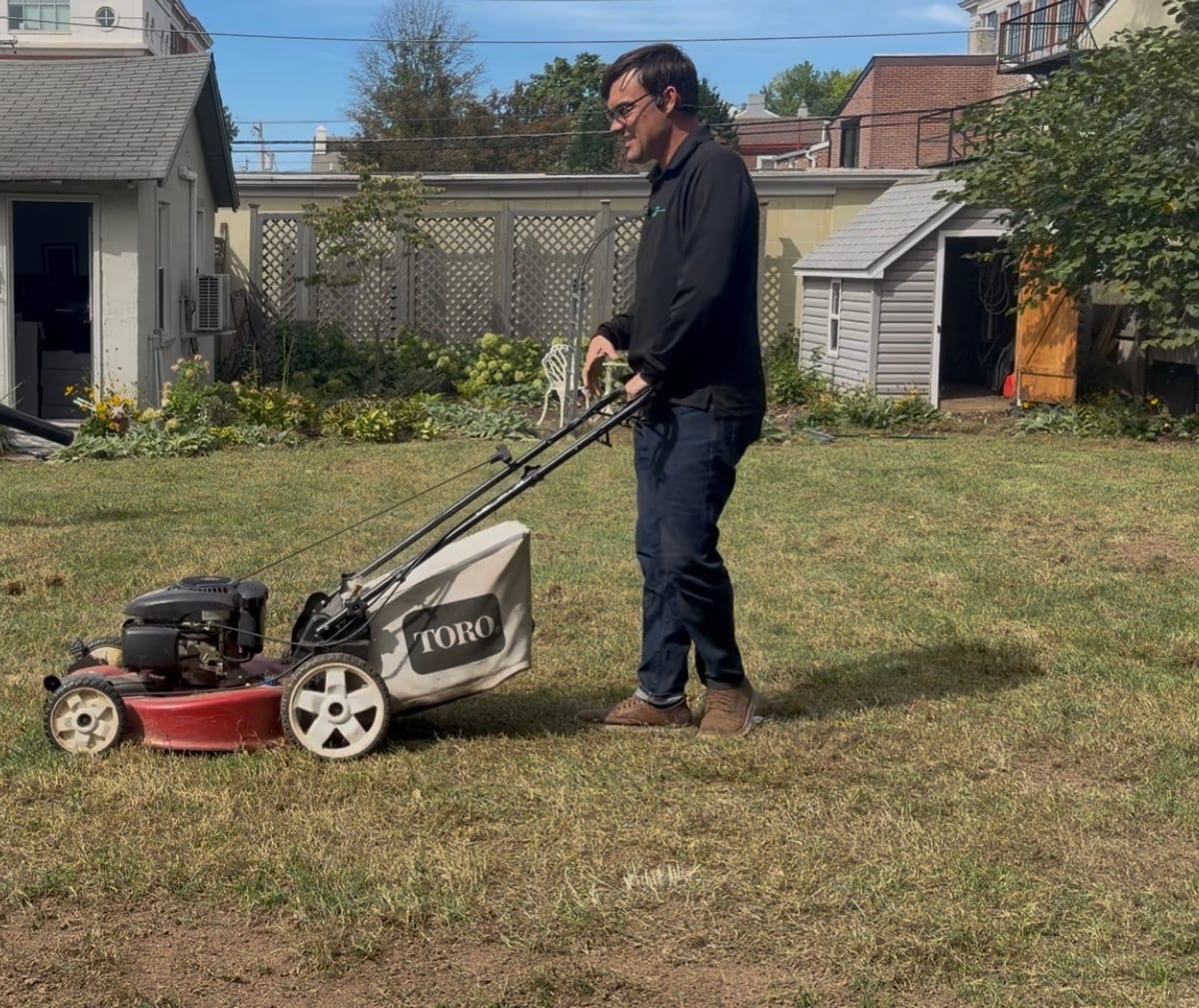 Lawn careWhy Does My Lawn Look Brown After Mowing? The ⅓ Rule and BladesWhite, frayed tips a day after mowing aren't disease — they're dull blades. The ⅓ rule, the right height for your grass, and the two-minute fix.
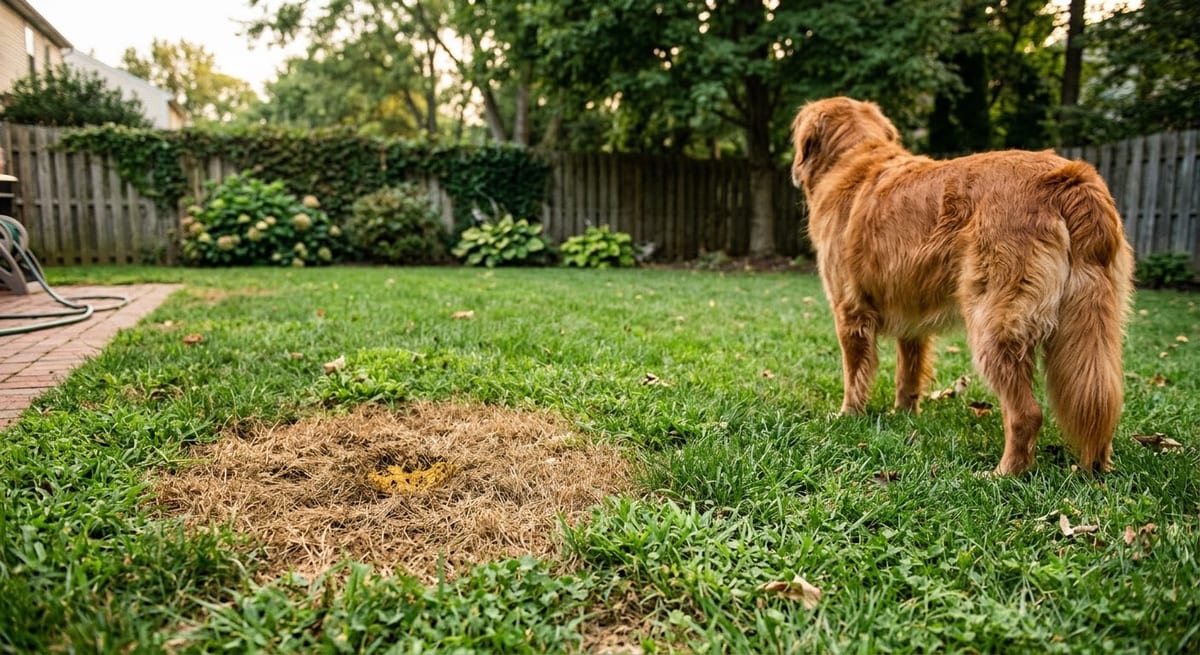 Lawn careDry Lawn or Dog Spots? Watering Right and Fixing the CirclesFootprints that stay pressed in mean drought; a dead circle with a lush ring is a dog spot. The inch-a-week rule, when to water, dormancy, and fixing each circle.
 Lawn careWhy Is My Lawn Yellow? What Fertilizer Your Lawn Actually NeedsYellow all over, in patches or in stripes: three different problems. Read the color, decode the bag's numbers, feed by season, and the $15 test that beats guessing.
Explore the system
The mowers and pages behind this topic — see them sized to your yard.