
Crabgrass: Why It's Back Every Summer, and the Date That Beats It
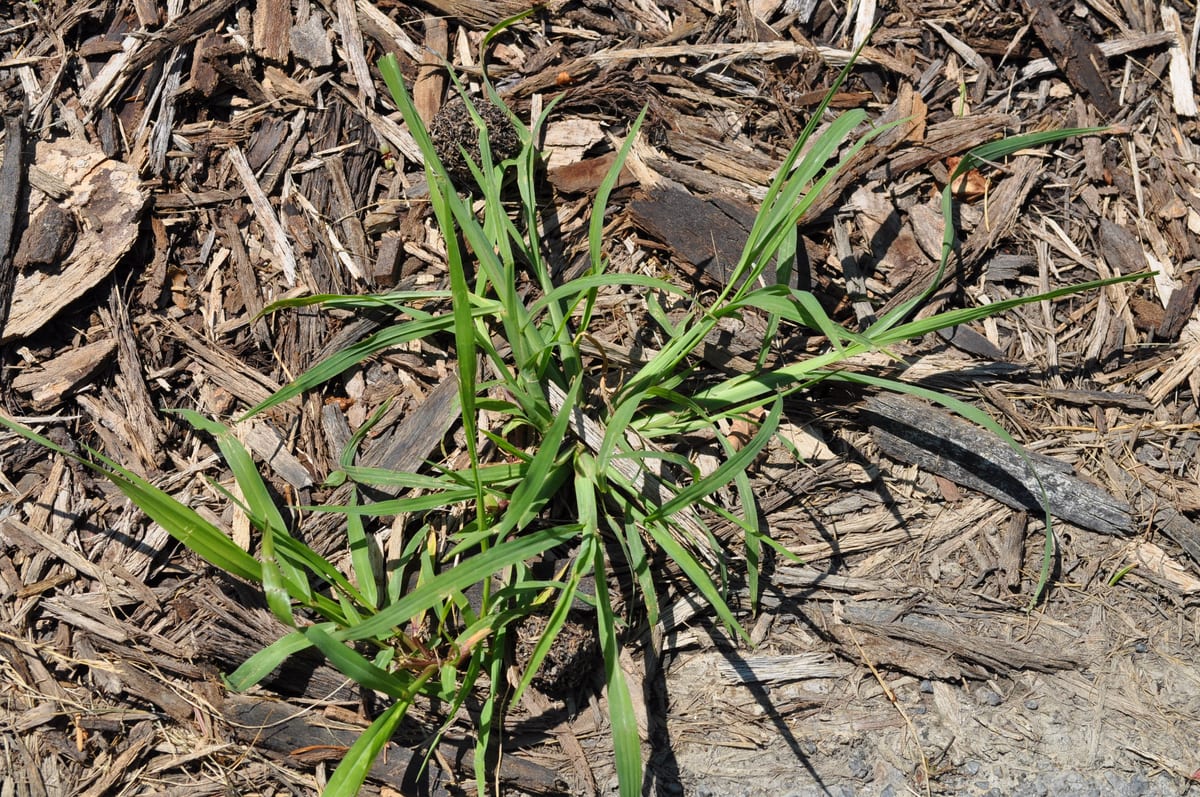
Photo: NY State IPM Program at Cornell University, CC BY 2.0 (Wikimedia Commons).
It’s August, and the edges of the lawn have gone coarse and pale green with plants that sprawl flat from a center and seem to double every week. That’s crabgrass, and the reason it’s back is that it was never really gone — it’s an annual, and last year’s plants left thousands of seeds behind. The fight is won in March, not August.
Know it
Crabgrass is light green to yellow-green, coarser than lawn grass, and grows flat from a central crown like the spokes of a wheel — the plant in the photo, sprawling over mulch, is the shape. It shows up in June, gets big in July and August, and sets seed on finger-like spikes by late summer. Worst along hot driveway and sidewalk edges and in any thin spot.
Lookalikes: tall fescue clumps in a bluegrass lawn are darker and upright, and perennial. Goosegrass is similar but darker with a silvery-white center, in the most compacted spots. Nutsedge isn’t a grass at all — a triangular stem, yellow-green, taller than the lawn two days after mowing, in wet ground. Each has a different fix, so a photo is worth a minute; the free check-up will name which it looks like.
Its year
Crabgrass seed germinates when the soil at two inches holds about 55°F for several days — March in the South, April in the North, and earlier along pavement. It germinates over weeks, not days, so a lawn keeps getting new plants into June. The plants grow all summer, set seed from August, and die at the first frost. One plant can leave thousands of seeds, and the seed lives in the soil for years. So a bad crabgrass year doesn’t reset next spring; it compounds.
The date
Pre-emergent is a product that stops seeds from germinating. It doesn’t kill crabgrass; it prevents it, and only for the eight to twelve weeks it stays active. So the whole game is timing:
- Put it down as the soil reaches 55°F — the week the forsythia blooms is the cue every extension office uses, and it works. That’s roughly March to April for cool-season lawns, February to March for warm-season ones. Water it in.
- A second, lighter application six to eight weeks later carries the protection through the long germination season, especially along pavement.
- Not within eight to ten weeks of seeding. A pre-emergent blocks grass seed as thoroughly as crabgrass seed. If you’re overseeding a thin lawn, the rhythm is seed in fall, pre-emergent in spring. If you have to seed in spring, ask for a seed-safe pre-emergent (siduron is the classic) — and accept that it’s a compromise.
The Lawn Care Plan books the pre-emergent in your window and flags the conflict if your seeding falls inside it.
Once it’s up
Small plants in June pull out whole from damp soil. A post-emergent crabgrass product works on young plants and poorly on big ones, and it stresses the lawn in heat. Large clumps in August are not worth spraying — they die at frost in a few weeks anyway. What matters is what happens to the bare spot they leave: fill it with seed in September, or it’s next year’s crabgrass nursery.
The thick lawn that ends it
Pre-emergent buys a season. What ends crabgrass is a lawn that leaves it no soil to land on:
- Mow high. Crabgrass seed needs light at the soil to germinate. A lawn at three to four inches shades most of it out; a lawn scalped to two inches invites it. The edges along pavement are where people cut lowest and where the soil is hottest — raise the cut there first.
- Overseed in fall. Every gap is a seedbed. A dense lawn is the only permanent pre-emergent.
- Water deep and rare. Daily sprinkling keeps the soil surface moist and warm — crabgrass weather. An inch a week in one or two goes favors deep-rooted lawn grass.
- Feed in the right season. Nitrogen on a cool-season lawn in summer feeds the crabgrass more than the fescue. Fall feeding thickens the lawn for next spring.
The robot part
A robot mower’s daily cut is the mow-high rule made automatic: set the height at the top of your grass’s range and it holds the canopy there every day, so the soil stays shaded through the whole germination season. It also beheads crabgrass seed heads the day they stand up in August, which cuts next year’s seed bank. What it can’t do is fill a bare edge — that’s the September seed, and the plan keeps the robot off it while it comes up.
Make it your plan
Map your lawn once, tap “Crabgrass” on the diagnosis tiles, and the Lawn Care Plan books the pre-emergent in your climate zone’s window, warns if your seeding collides with it, raises the cut along the edges, and schedules the fall overseeding that ends the cycle. Not sure it’s crabgrass? Send a photo to the free lawn check-up — it names the lookalikes and says how sure it is.
Frequently asked
When should I apply crabgrass preventer?
When the soil at two inches holds about 55°F for several days in a row — the week the forsythia blooms is the old gardener's cue, and it's a good one. That's March to April for most cool-season lawns and February to March in the South. Too early and it wears off before the last seeds germinate; too late and the seeds are already up. A second, lighter application six to eight weeks later covers the long germination season.
Can I put down pre-emergent and grass seed at the same time?
Not the ordinary kind. A pre-emergent stops seeds from germinating and doesn't know the difference between crabgrass and fescue — it blocks grass seed for eight to twelve weeks. Seed in fall and pre-emergent in spring is the normal rhythm. If you must seed in spring, use a seed-safe pre-emergent (siduron is the classic) and ask your extension office.
How do I get rid of crabgrass in the summer?
Pull small plants while the soil is damp — the whole crown comes out. A post-emergent crabgrass killer works on young plants in June, poorly on big ones in August. Large midsummer clumps aren't worth chemicals: they die at the first frost regardless. Fill the bare spot they leave with seed in September so next year's seed has no soil to land on.
Does mowing high prevent crabgrass?
It's the second-best prevention there is. Crabgrass seed needs light and warm soil to germinate; a lawn mowed at three to four inches shades the soil enough that most of it never does. Lawns scalped to two inches along a hot driveway edge are exactly where crabgrass starts.
Why is crabgrass worst along my driveway and sidewalk?
Heat and thin grass. Pavement warms the soil beside it weeks earlier than the middle of the lawn, so the seed germinates there first, and the grass along an edge is usually cut shorter, watered less and walked on more. Raise the cut along pavement, water the edges, and overseed that strip in fall.
Keep reading
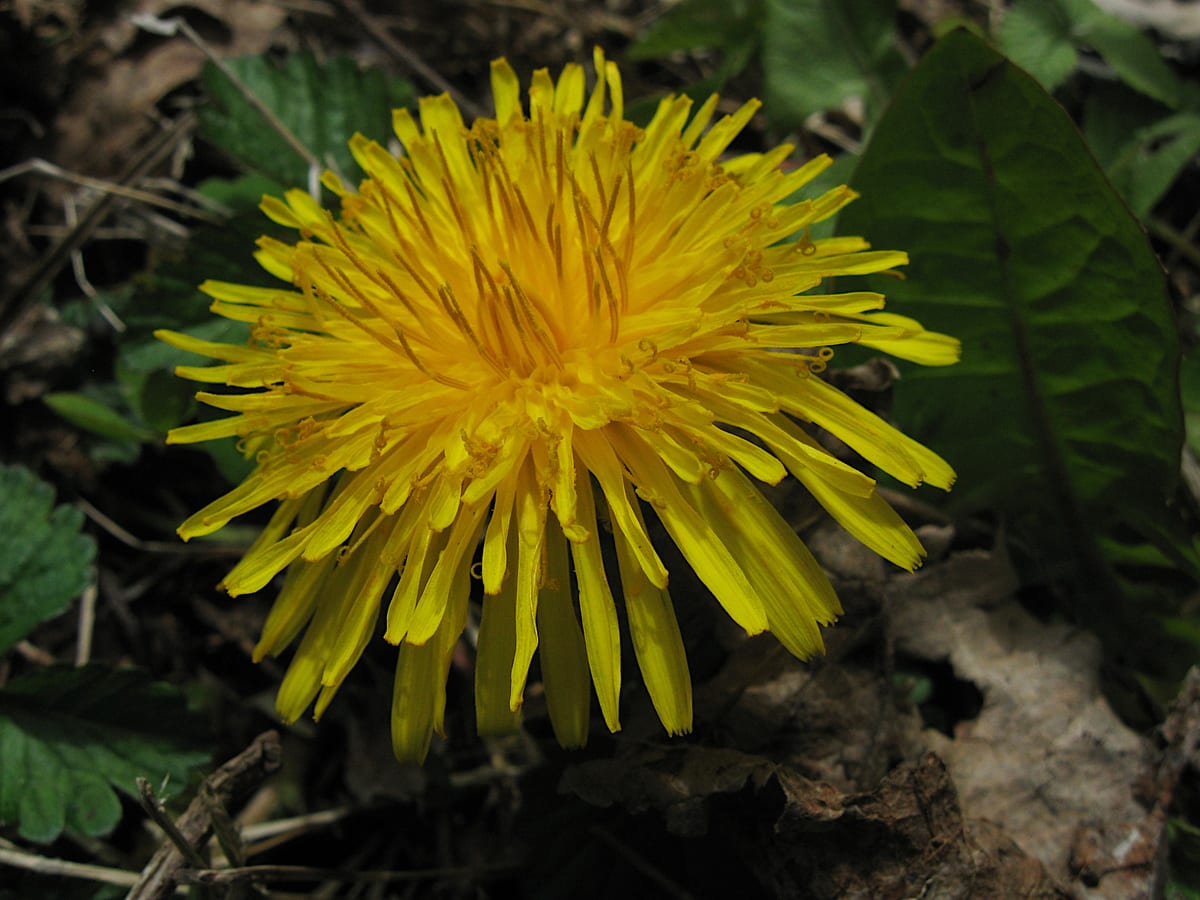 Lawn careWhat Kind of Weed Is This, and How Do I Get Rid of It?Tell a broadleaf weed from a grassy one in ten seconds, what each says about your lawn, the fix that holds, and why a robot's daily cut is half of weed control.
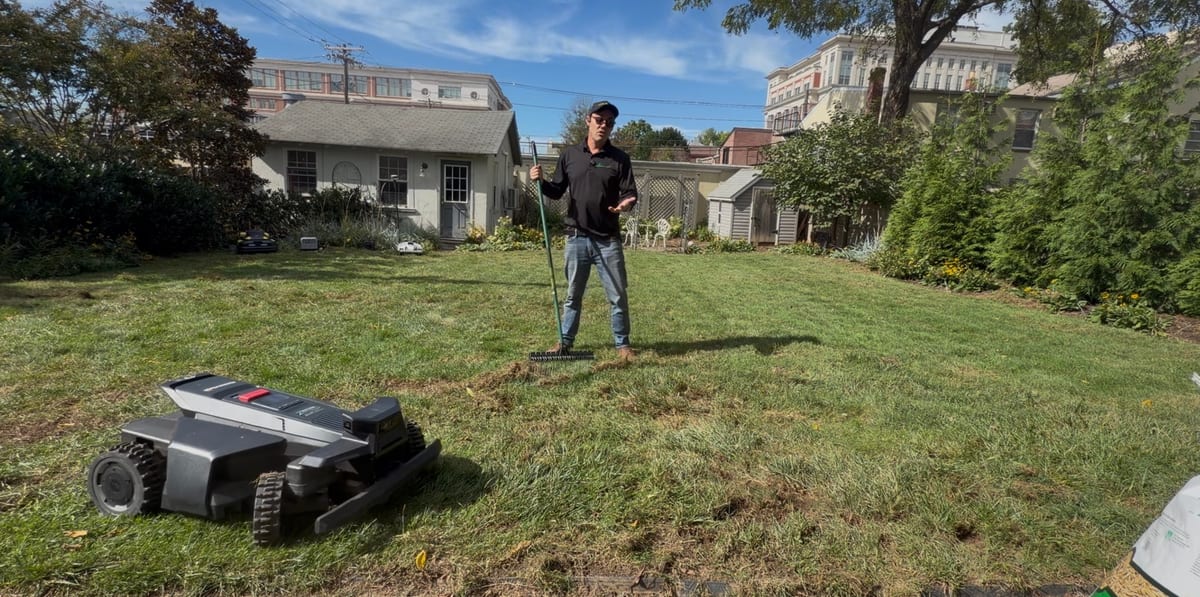 Lawn careWhy Won't My Lawn Fill In? Repairing Bare and Thin SpotsWhy bare spots never fill in (bunch grasses, shade, traffic, compaction), how much seed a patch needs, the repair in order, and when the mower goes back on.
 Lawn careWhy Does My Lawn Look Brown After Mowing? The ⅓ Rule and BladesWhite, frayed tips a day after mowing aren't disease — they're dull blades. The ⅓ rule, the right height for your grass, and the two-minute fix.
Explore the system
The mowers and pages behind this topic — see them sized to your yard.