
Why Does My Lawn Look Brown After Mowing? The ⅓ Rule and Blades
The mower ran yesterday. Today the lawn looks gray-brown, like it’s stressed, and you’re wondering whether it’s a fungus, drought, or the fertilizer you put down. Kneel and look at one blade. If the tip is white and frayed — ragged, like it was torn rather than cut — you’ve found it. It’s blades. It isn’t a disease, and it’s the cheapest fix in lawn care.
What a dull blade does
A sharp blade slices. The cut is clean, it seals within hours, and the plant carries on growing. A dull blade tears: the tip frays, loses water through the ragged wound, dries out and whitens. Multiply that by every blade on the lawn and by the weekend the whole thing has a brownish cast, even though nothing else changed — same water, same sun, same feeding. The torn tips also stand open to fungus, which is how “just dull blades” becomes a real disease problem a month later.
If you remember one diagnostic from this whole page: white, frayed tips a day after mowing means blades — not water, not fertilizer, not disease.
The ⅓ rule
Under every mowing decision is one rule: never take more than a third of the blade in a single cut. Take more and the plant panics — it sheds roots to rebalance with the leaf it has left, goes pale while it recovers, and opens the ground to weeds and heat.
A weekly mower obeys the rule by cutting high and taking about an inch. A robot obeys it by taking a few millimetres every day or two, which is why it can hold the lawn permanently at its ideal height instead of sawing between “just cut” and “needs cutting.” Miss a week and then cut — the classic vacation scalp — and you’ve broken the rule in one pass.
The rule has a corollary for new grass: a plant that has just rooted can’t afford to lose blade every day yet, which is why the first weeks after seeding are once a week at the highest setting. The full ramp is in mowing new grass with a robot.
The right height for your grass
Height is where most lawns are quietly mismanaged. Every grass has a range it’s happiest in, and the reason is roots: roots only go as deep as the blade above them is allowed to grow. Cut a tall fescue at two inches and you’ve given it two-inch roots — and a lawn that browns the first week of July.
The ranges, and why:
- Tall fescue — 3–4″. A bunch grass with no runners; it can’t creep back from scalping. Tall blades shade its own soil and feed the deep roots that make it the most drought-tolerant northern grass.
- Kentucky bluegrass — 2.5–3.5″. Spreads underground, so it recovers from wear, but it’s the hungriest northern grass and wants height in summer.
- Perennial rye — 2–3″. The fast one; the least heat-hardy.
- Bermuda — 1–2″. A sun-loving runner that gets dense and fine when cut low and often — the one lawn that wants a short cut.
- Zoysia — 1–2.5″. Slow, dense, and forgiving.
- St. Augustine — 2.5–4″. Broad blades that burn if cut short.
- Centipede — 1.5–2″. A naturally low ceiling; its light color is genetics, not hunger.
Each grass’s full page — identification, the seasonal height changes, feeding, color diagnostics — is under robot mowers by grass type. The seasonal part matters: cool-season lawns ride the top of their range through summer heat and drop a notch for the last cuts of fall; warm-season lawns cruise mid-range in their peak and carry a little extra into dormancy.
How to set it in practice: start a notch or two above your target and let a few cycles run. Robot mowers cut a tiny amount daily, so the height you set is the height the lawn lives at permanently — and on uneven ground a low setting scalps the high spots. Step down until you find the lowest setting that doesn’t scalp anywhere. That’s your number.
Blades: the two-minute fix
Robot blades make this easy where a mower shop makes it a chore. They’re small razor-style blades — a few dollars each — that swap in about two minutes with a screwdriver, always with the fresh screws from the kit. The rhythm is every four to six weeks in season, sooner on sandy soil, big lawns and heavy schedules; the app’s My Mower page tracks the mowing hours and taps you on the shoulder when it’s time.
Two more cut-quality causes worth ruling out while you’re under there: a packed deck (clumps of dried grass around the disc, which stop the blades from spinning freely — clean it), and too few blades on the disc for a coarse lawn (some mowers accept extra blades in the factory holes). The rest — missed strips, stragglers along an edge — is usually positioning, not cutting, and lives in robot mower not cutting evenly? 7 fixes.
Make it your plan
If the tips are frayed, the plan is short: fresh blades this week, the right height for your grass, and the daily rhythm from there. Map your lawn once and the Lawn Care Plan writes the rest for your grass and your mower — tap “Frayed or scalped” on the diagnosis tiles, or send a close-up of a blade to the free lawn check-up and it will tell you whether it’s blades or something else.
Frequently asked
Why are the tips of my grass white or brown after mowing?
Dull blades. A sharp blade slices grass and the cut seals in hours; a dull one tears it, the ragged tip loses water, dries out and whitens, and by the weekend the whole lawn has a gray-brown cast. It's the most common lawn 'disease' we're sent photos of, and it isn't one. Fresh blades fix it with the next cycle of growth.
What is the one-third rule?
Never remove more than a third of the grass blade in a single cut. Take more and the plant sheds roots to rebalance, goes pale, and opens up to weeds and heat stress. A weekly mower obeys the rule by cutting high; a robot obeys it by cutting a few millimetres every day or two.
What height should a robot mower cut at?
The grass's own range, and usually the top of it: 3–4 inches for tall fescue, 2.5–3.5 for Kentucky bluegrass, 1–2 for Bermuda, 1.5–2 for centipede. Start a notch above your target, let a few cycles run, then step down until you find the lowest setting that doesn't scalp anywhere. Every grass's range and the reasoning is on its page under Robot Mowers by Grass Type.
How often should robot mower blades be changed?
Every four to six weeks in season — sooner on sandy soil, big lawns and heavy schedules. Robot blades are small razor-style blades that swap in two minutes with a screwdriver and cost a few dollars, and the app's My Mower page tracks the hours and reminds you.
Why does my lawn have bald stripes after the robot mows?
Scalping: the deck set too low for the ground, so the high spots get shaved to the soil while the rest looks fine. Raise the height a notch or two. If the stripes are always in the same place along an edge, that's positioning — RTK drift from a marginal antenna spot — not the cut.
Keep reading
 Tips & MaintenanceRobot Mower Not Cutting Evenly? 7 Fixes for a Crisper LawnBrown tips, stragglers, missed strips? The 7 reasons a robot mower's cut stops looking crisp — dull blades, packed decks, wet schedules — and how to fix each.Lawn careWhat Kind of Weed Is This, and How Do I Get Rid of It?Tell a broadleaf weed from a grassy one in ten seconds, what each says about your lawn, the fix that holds, and why a robot's daily cut is half of weed control.
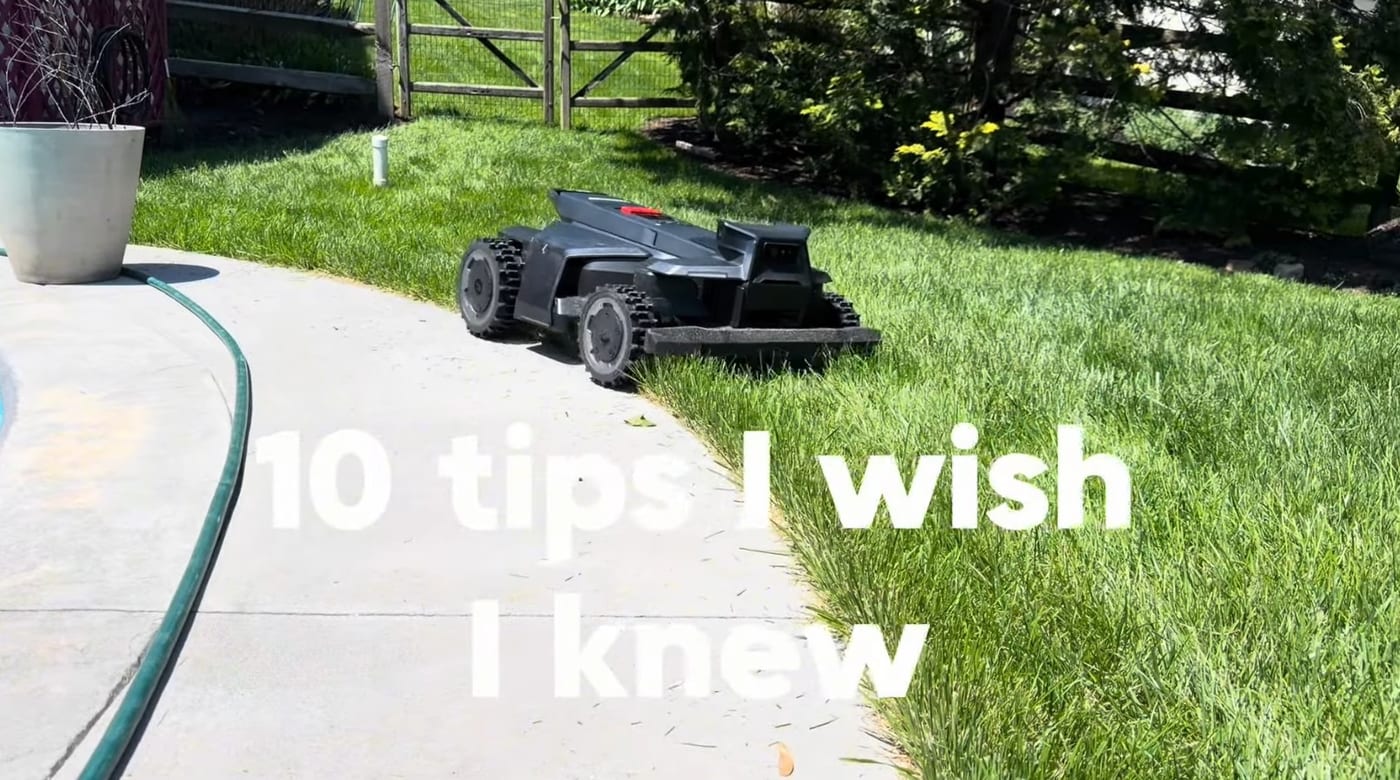 Buying Guides10 Things I Wish I Knew Before Robotic Lawn MowingThree seasons of robot mowing taught me 10 things I wish I knew on day one — the mulch-bed edging trick, buffer zones, deck height, daily micro-cutting and more.
Explore the system
The mowers and pages behind this topic — see them sized to your yard.