
Why He Ripped Out His Boundary Wire Mower — Warrington, PA
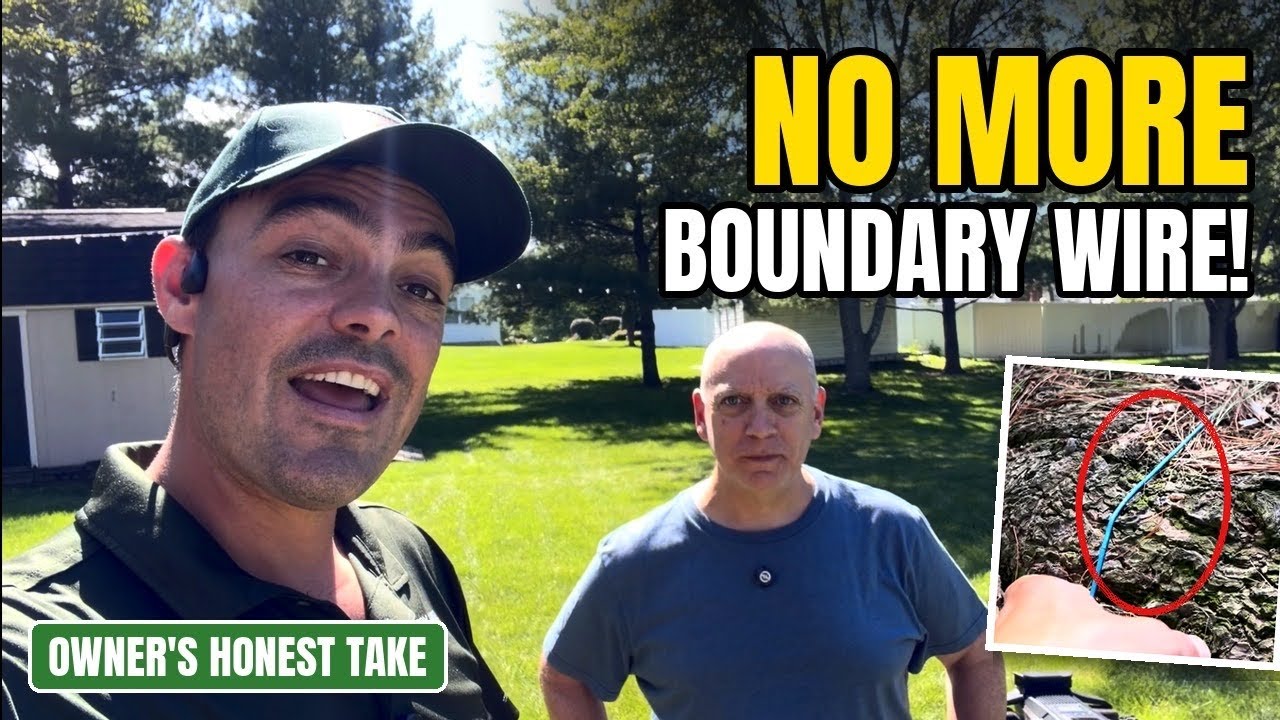
Brian didn’t call us because his robot mower stopped working. He called because of everything the mower wouldn’t let him do.
He’s owned one for years — a Husqvarna Automower cutting his lawn in Warrington, Pennsylvania, up in Bucks County. It did its job and he liked it. But it ran on a boundary wire: a loop of low-voltage cable buried a couple of inches under the grass around the entire perimeter of the property.
That wire quietly rewrote how he took care of his lawn. Not in ways he expected when he bought the thing.
What actually happens when a boundary wire breaks?
The entire system stops — not the section near the break, all of it. The wire works by carrying a continuous signal around a closed loop, and the mower reads that signal to know where the lawn ends. Cut the loop anywhere along its length and the signal dies everywhere. The mower doesn’t work around it or keep mowing the other 95% of the yard. It sits.
Over a mower’s lifespan, that cable is exposed to a lot:
- an edger that bites an inch too deep
- a fence post going in
- an electrician trenching a line out to a shed
- a landscaper planting a tree
- animals digging, and frost heave over a Pennsylvania winter
Any one of them takes the whole system down. And finding the break is the miserable part — the cable is buried, and usually there’s nothing to see from the surface. You walk the perimeter with a wire break detector listening for the spot where the signal drops, then dig, splice, and hope you found the only one. Brian has done it. He’ll be the first to tell you it isn’t a pleasant afternoon.
The cost nobody quotes you: six years without aeration
Brian hasn’t aerated his lawn in six years — because of the wire.
Core aeration pulls plugs of soil out of the ground to relieve compaction and let water, air and nutrients reach the root zone. On a lawn that gets regular traffic it’s one of the highest-value things you can do for it. Skip it long enough and you get compacted soil, thatch buildup, shallow roots, and turf that struggles every August no matter how much you water.
He skipped it because an aerator’s hollow tines punch several inches down — right through the depth where the boundary wire sits. One pass over the loop and the mowing system is down.
So the aeration never happened. Same story for dethatching, deep overseeding, new beds, planting, irrigation work — anything that puts a tool into the ground. The mower he bought to make lawn care easier had quietly fenced off lawn care itself. That’s a real cost, it just never shows up on the price tag.
It’s the mirror image of what a well-set-up robot does for turf: mowing a little every day, taking a sliver instead of a third of the blade, is one of the better things that can happen to a lawn. Being unable to aerate for six years is one of the worse ones.
And exclusion zones are their own dig
Say you add a flower bed, a play set or a tree ring and you want the mower to stay out of it. On a wire system, every exclusion zone needs its own loop — routed out from the perimeter, around the obstacle and back along the same path. It works. It’s also a dig, every time. Move that bed next spring and you dig it up and do it again.
Most wire owners we meet simply don’t bother. They put a paver ring around the tree or move the planter, because reworking the wire isn’t worth it.
Boundary wire vs RTK wire-free: what actually changes
| Boundary wire | RTK wire-free (Navimow X430) | |
|---|---|---|
| Boundary | Buried cable loop around the whole lawn | Virtual, mapped once and stored in the app |
| One break | Entire system down until found and spliced | Nothing to break |
| Aeration / dethatching / planting | Avoid, or risk cutting the loop | Unrestricted — nothing in the ground |
| New exclusion zone | New wire loop, dug in | Drawn on the map in about a minute |
| Moving a zone | Dig it up, re-route, re-bury | Edit it on your phone |
| Accuracy | Wire position, ±the wander of the mower | Centimeter-level RTK, plus onboard vision |
| What it needs instead | Nothing above ground | Clear sky for the antenna and the dock |
That last row is the honest trade, and it’s the one this install turned on. Wire-free doesn’t mean requirement-free — it swaps a buried dependency for an overhead one. (What a robot mower’s satellites actually are, in plain English.)
What we replaced it with
We installed a Segway Navimow X430. Instead of a buried wire it uses RTK satellite positioning combined with onboard vision, so it knows where it is on the property to centimeter-level accuracy.
Nothing goes in the ground. Mapping the lawn means walking the perimeter once with the mower, and from then on the boundary lives in the app — about three-quarters of an acre of mapped grass on Brian’s property, comfortably inside what the X430 is rated for.
Exclusion zones take about a minute each: draw the zone on the map or drive the mower around the object, and it’s set. Change your mind next season and you edit it on your phone. There is nothing to dig up.
And Brian can aerate again. He can dethatch, overseed, plant and run irrigation without wondering whether a tine or a shovel just ended his mowing season.
The part that didn’t go to plan: the dock has to see the sky
We want to be straight about this one, because it’s the most useful thing in the whole install.
The homeowner wanted the charging station tucked under the pool deck, out of sight. That’s a completely reasonable request, and we always try to deliver what the customer wants aesthetically — so we tried it. We even mounted the RTK antenna out at the edge of the deck with a clear view of the sky.
It didn’t work. The mower wouldn’t complete its mapping run from under the deck.
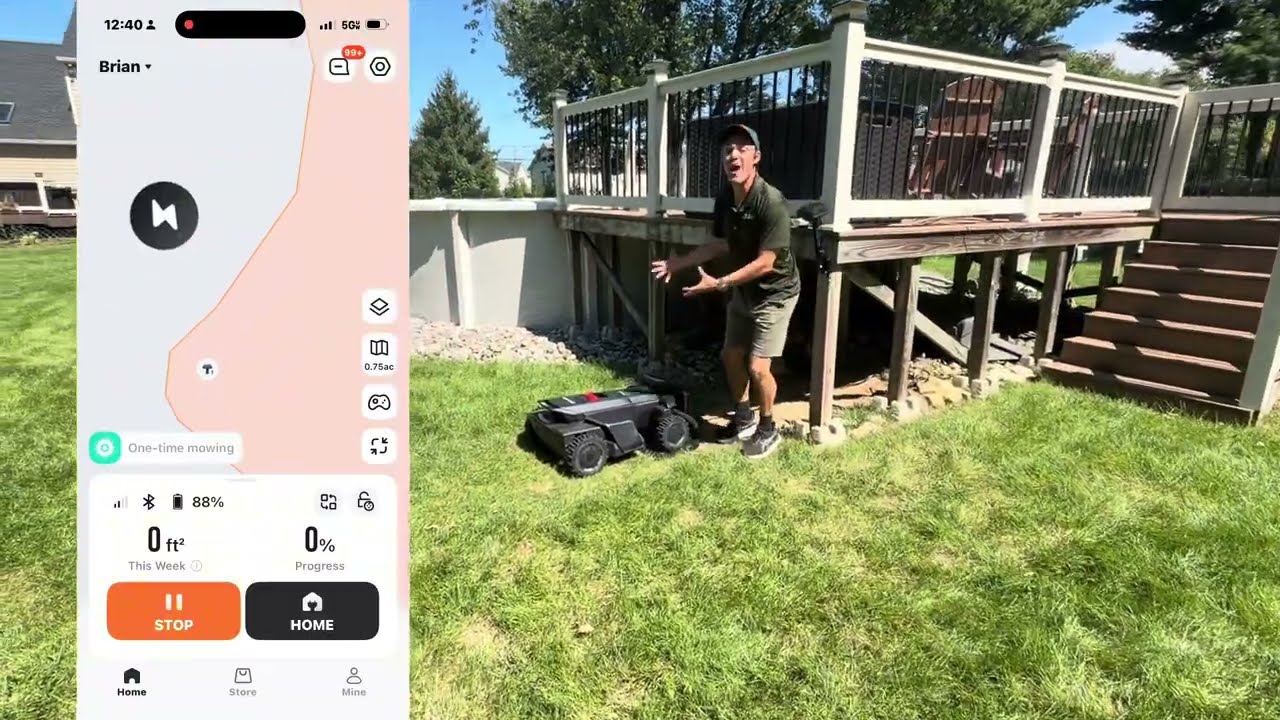
Here’s the reason, and it’s the part that surprises people: the antenna isn’t the only component that needs the sky. The mower itself has to establish its own satellite fix at the dock before it starts a job. Under a solid deck, it never got there.
So we relocated the dock to an open spot, raised it off the ground so it stays clear of standing water and debris, and permanently wall-mounted the RTK antenna. The result is clean, solid, and looks like it was meant to be there.
The lesson for anyone considering a wire-free mower: the dock needs a clear view of the sky — not a mostly-clear view, and not a covered spot with the antenna nearby. This is exactly why we walk a property before we quote it, and why a real site evaluation beats a spec sheet. (Where the RTK antenna goes, and why height beats everything.) You can check the overhead half yourself in about ten seconds with our free satellite sky view — it shows every GPS, Galileo, GLONASS and BeiDou satellite over your address right now.
Should you upgrade from a wire mower? Three questions
If your wire mower runs fine and has never broken, there’s no emergency. But these are the three questions worth asking honestly:
- Have you had a break already? If so, you’ll have another one. Buried cable doesn’t get more durable with age.
- Are you avoiding lawn care because of the wire? Skipped aeration, a landscaping project on hold, a contractor warned off half the yard — the wire is already costing you something, and it isn’t showing up as a repair bill.
- Is the mower aging out anyway? Most boundary wire units on properties around here are approaching the end of their service life. If you’re replacing the machine regardless, replacing it with a wire-free system retires the wire permanently instead of inheriting it for another decade.
For Brian, all three were true. That made the decision straightforward.
What a professional install actually includes
A robotic mower is not a box you open and plug in. Mapping a property with slopes, beds and tree cover takes judgment about where the boundary really belongs, where the mower will get stuck, and where the dock and antenna need to sit — as this one demonstrated twice over. (The mapping mistakes we see most.)

Here’s how the customer described it in his own words:
Paul at ZippyLawnz was great from start to finish. I did my own research before contacting him and he was on point with his info that he provided me. He also taught me MANY things about the Navimow X430 that I didn’t get from my research. He provided me with a complete setup of the mower, charging station, connection of the RTK antenna, along with a custom mapping of our large yard. He stayed with us to ensure that the mower made a couple of complete perimeter runs before setting up our initial schedule for the mower and showing us how to “tweak” it after we see a few days of operation. Two thumbs up, I highly recommend Paul.
That last part matters. The first week is when you learn how your lawn actually behaves — where the mower wants more time, where the schedule needs to shift, where a boundary should move a foot. Knowing how to adjust it yourself is the difference between a mower you manage and one that just runs. (The full first-30-days playbook.)
Robot mower installs in Warrington & Bucks County, PA
Warrington sits about an hour up from our West Chester store, and it’s a drive we make constantly — this is the second Bucks County job we’ve filmed in a month. The other one was the opposite problem: a 40%-plus berm in Bucks County planted with dozens of young trees, where the challenge was traction and obstacles rather than a buried cable.
We cover the county from Doylestown and Newtown to Yardley, New Hope and Langhorne — see the Bucks County robot mower dealer page, or the Pennsylvania service map for the rest of the state, including Montgomery County, the Main Line, Chester County and the Lehigh Valley.
Zippy Lawnz is an authorized dealer and service center for Segway Navimow, Mammotion and Yarbo, serving Pennsylvania, New Jersey, Maryland, Delaware, Virginia and Colorado with hands-on installs, and everywhere else with nationwide sales and remote support. Upgrading an older boundary wire system is one of the most common jobs we do — site evaluation, professional installation, mapping, training and local warranty service.
If you’ve got a wire in your yard and you’re tired of working around it, we’d be glad to take a look at your property.
- Map your lawn free (size, slope and sky view in about two minutes): app.zippylawnz.us
- Call or text: 410-725-7500
- Email: [email protected]
Frequently asked
What happens when a robot mower's boundary wire breaks?
The whole system stops. A boundary wire works by carrying a continuous low-voltage signal in a closed loop around the lawn; the mower reads that signal to know where the grass ends. Break the loop anywhere and the signal dies everywhere — the mower doesn't route around the break or keep mowing the other 95% of the yard, it just won't mow. Finding the break means walking the perimeter with a wire break detector listening for where the signal drops, then digging, splicing and hoping there was only one. An edger, a fence post, a tree planting, a trenched utility line, animals or frost heave can all cause it.
Can you aerate a lawn that has a robot mower boundary wire buried in it?
Not safely, and that's the hidden cost almost nobody is warned about. Core aeration pulls plugs several inches deep — straight through the depth where the boundary wire sits — so one pass over the loop takes the mowing system down. The homeowner in this Warrington, PA install hadn't aerated in six years for exactly that reason. The same applies to dethatching, deep overseeding, planting beds and irrigation work. A wire-free RTK mower removes the restriction completely: there's nothing in the ground to hit.
Is it worth upgrading from a boundary wire robot mower to a wire-free one?
If any of three things are true, yes. One: you've already had a wire break, because you'll have another one — buried cable doesn't get more durable with age. Two: you're skipping lawn care (aeration, dethatching, planting, irrigation) or warning contractors off half the yard to protect the wire. Three: your mower is aging out anyway, in which case replacing it with an RTK machine takes the wire out of the equation permanently instead of inheriting it for another decade. If your wire mower runs fine and has never broken, there's no emergency.
Can a robot mower charging station go under a deck?
Usually not, and this install is why. The mower itself has to establish a satellite fix at the dock before it starts a job — the RTK antenna having a clear sky view isn't enough on its own. We tried the dock under this customer's pool deck because that's what he wanted aesthetically, with the antenna mounted out at the edge of the deck in the open, and the mower still wouldn't finish its mapping run. We relocated the dock to an open spot, raised it off the ground out of standing water and debris, and permanently wall-mounted the antenna. Plan on the dock needing real sky above it, not a mostly-clear spot.
Do you install robot mowers in Warrington and Bucks County, PA?
Yes — Warrington, Doylestown, Newtown, Yardley, New Hope and Langhorne, from our West Chester store. Zippy Lawnz is an authorized dealer and service center for Segway Navimow, Mammotion and Yarbo, with hands-on installs across Pennsylvania, New Jersey, Maryland, Delaware, Virginia and Colorado. Replacing an older boundary wire system is one of the most common jobs we do: site evaluation, mower sizing, RTK setup, mapping, training and local warranty service. Call or text 410-725-7500.
Keep reading
 Customer InstallsCan a Robot Mower Handle a 40% Slope? Bucks County X430 InstallCan a robot mower handle steep hills? We put a Segway Navimow X430 on a 40%+ berm in Bucks County, PA — close to an acre, dozens of young trees. Here's how it went.
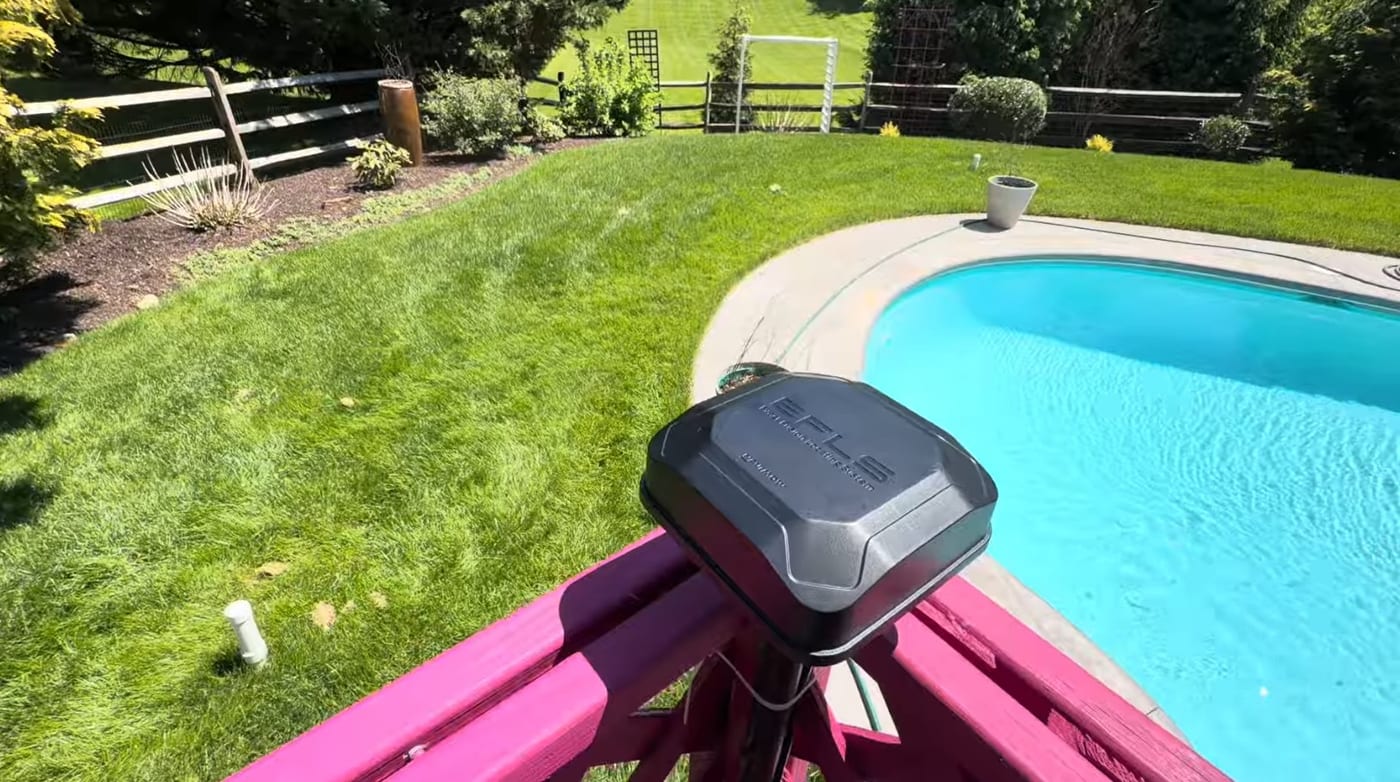 Installation & SetupWhere to Install Your Robot Mower's RTK Antenna (4 Rules)Mount your robot mower's RTK antenna wrong and it drifts after a season. The 4 rules of RTK placement — open sky, height, rigid mounting, and reflective surfaces.
 Installation & SetupWhat a Professional Robotic Mower Installation Actually Looks LikeWe filmed a robotic mower install start to finish — RTK placement, wall-mounted power, mapping, and training — and why the install matters more than the mower.
Explore the system
The mowers and pages behind this topic — see them sized to your yard.