
Where to Install Your Robot Mower's RTK Antenna (4 Rules)
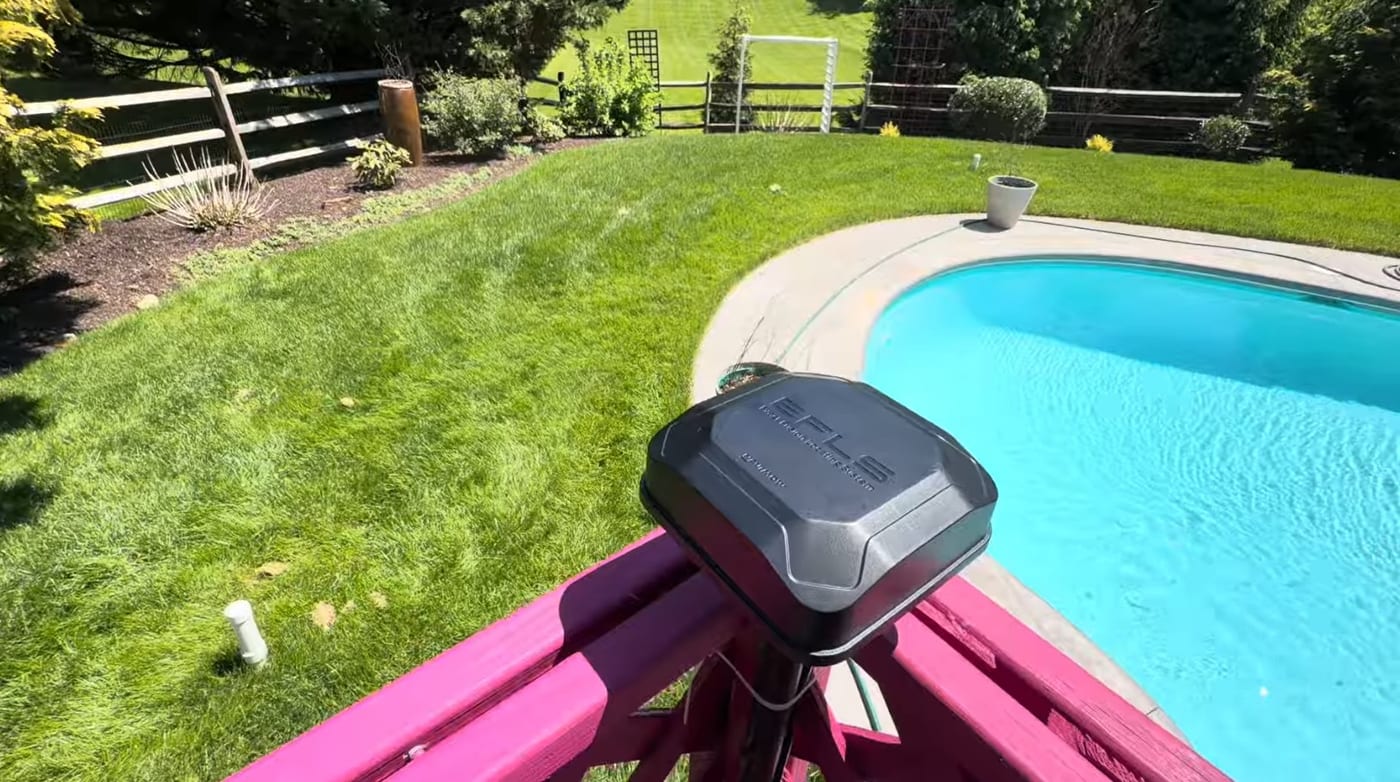
Here’s a question that decides whether your robot mower runs reliably for years or slowly falls apart: where do you put the RTK antenna? Get it wrong and the mower starts drifting after a season — cutting into beds, missing edges, wandering off its boundaries. Get it right and it just works, quietly, for years.
We once took on a heavy tree-cover install that two other pros walked away from — they said the yard couldn’t be done. It could. The whole fix came down to antenna placement. Here’s everything that actually matters, including the 4 rules we follow on every install.
What RTK is (and why your mower needs it)
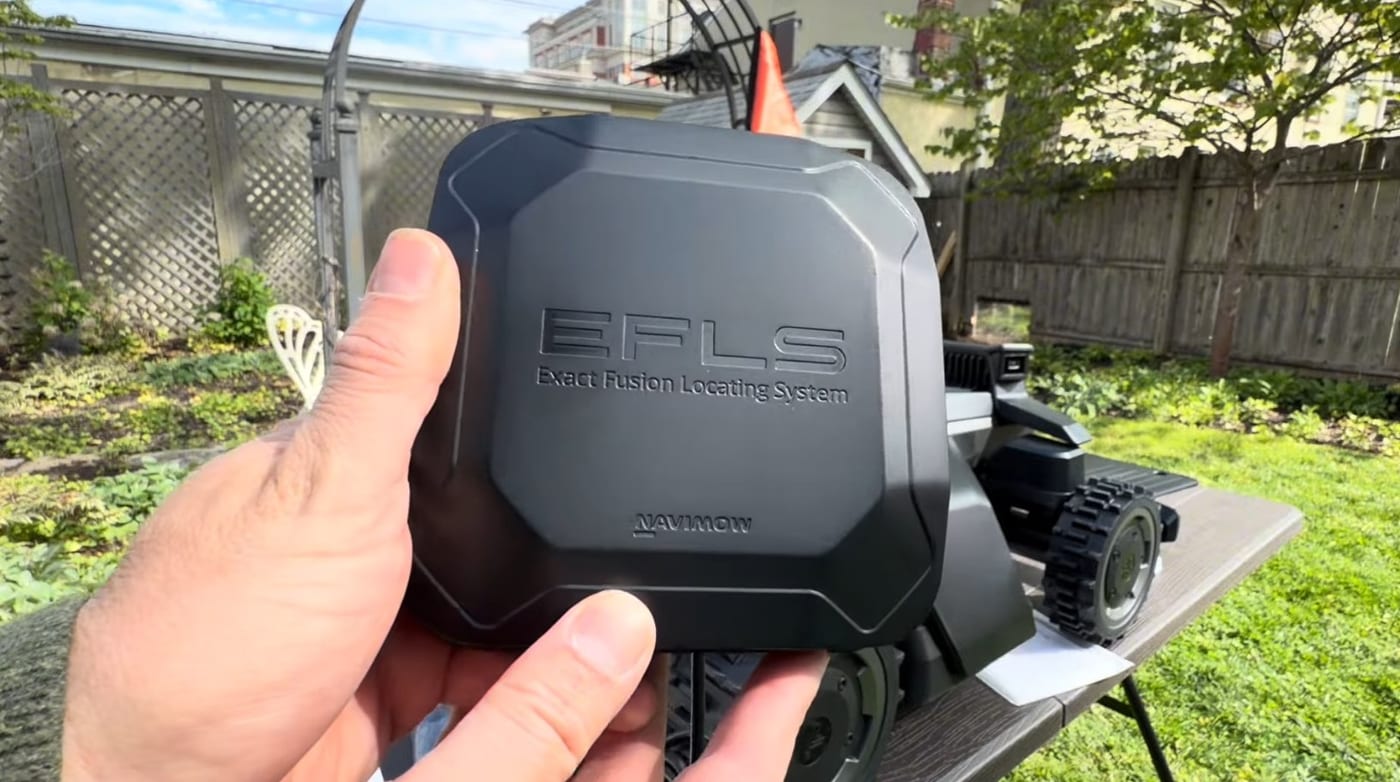
Plain GPS is accurate to a few meters — nowhere near good enough to keep a mower off your flower beds. RTK (“real-time kinematic”) fixes that. A fixed antenna in a known spot listens to the same satellites as the mower and calculates the tiny corrections needed to pin the mower’s position down to centimeters. The mower is only ever as accurate as the corrections that antenna feeds it — which is exactly why where you put it matters so much.
This applies to nearly every modern wire-free mower: Segway Navimow (its EFLS system), and Mammotion LUBA and Yuka. Get the antenna right and all of them behave.
One thing worth knowing before you mount anything: out of the box, a Navimow usually isn’t using this antenna at all — it defaults to NetRTK, corrections delivered over the internet instead of from a local base. The base station is the lower-latency, dead-zone-proof option, but it’s a choice you have to make. The full NetRTK vs Local RTK breakdown is here — read it first if you’re not sure which mode your yard should run.
The biggest misconception: it doesn’t belong next to the dock
Almost everyone assumes the RTK antenna has to sit right next to the charging dock. It doesn’t. The dock and the antenna are two independent things:
- The dock goes wherever it’s convenient for the mower to park and charge.
- The antenna goes wherever it gets the best view of the sky — even if that’s on the roof, across the yard, or up a pole — as long as it’s within your model’s range (about 600 feet line-of-sight in our real-world range test, meaningfully less through trees). And if the lawn genuinely runs past that, a second antenna extends the coverage.
Free yourself from that assumption and the good placements suddenly open up. Now, the four rules that decide whether a spot is actually good.
Rule 1 — Open sky view
The antenna’s whole job is seeing satellites, so it needs the widest, most unobstructed view of the sky you can give it. A roof overhang, a wall, a dense tree canopy, even a big shrub can shadow part of the sky and starve the fix. Picture a dome over the antenna: the more of that dome is open sky (not roofline, not leaves), the better and more stable the positioning.
Rule 2 — Height matters more than you think
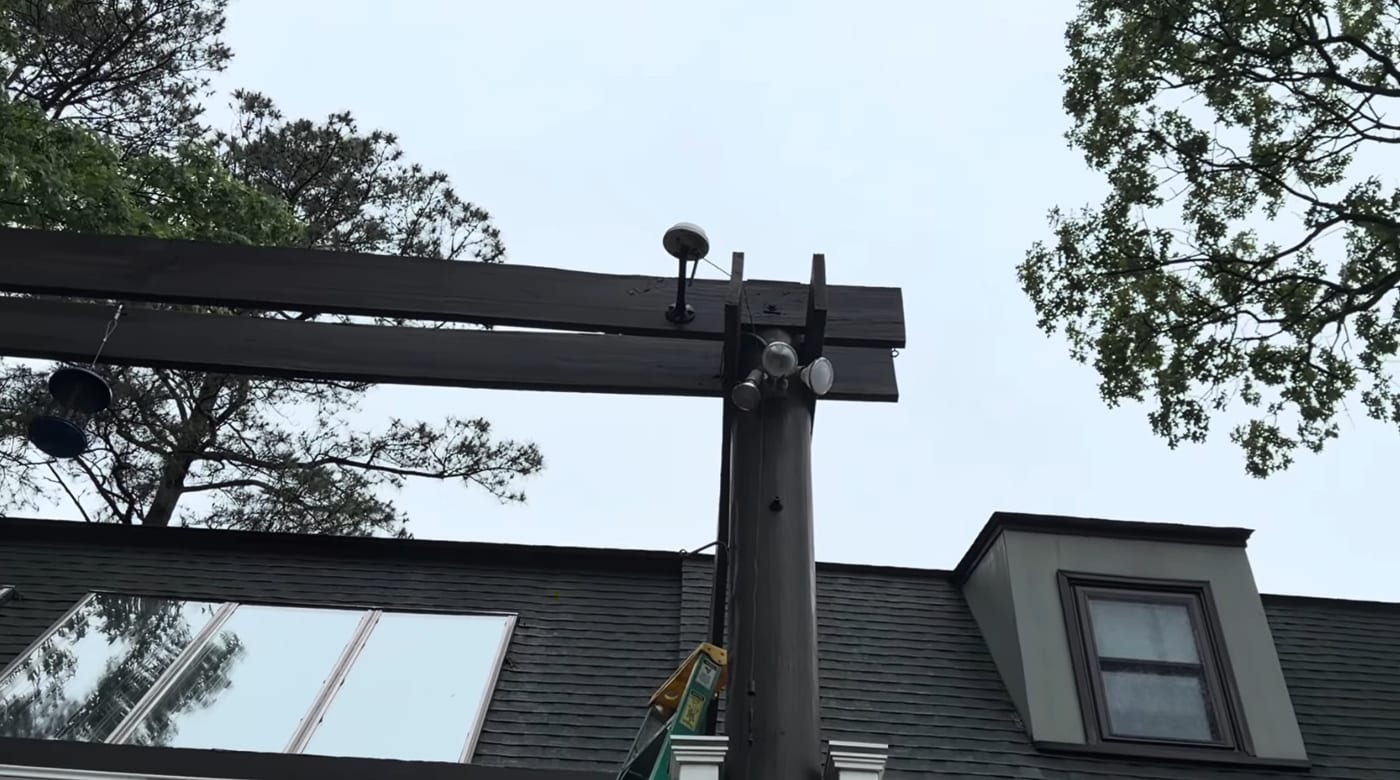
Height is the lever most people underuse. Raising the antenna lifts it above the obstructions — the fence, the hedge, the roof edge — and widens its sky view. A few extra feet often turns a marginal, drifty spot into a rock-solid one. Roof peaks, gables, and tall poles are all fair game. When in doubt, go higher.
Rule 3 — Rigid mounting (the silent killer)
This is the one people skip, and it quietly ruins installs. The antenna must not move. RTK is measuring position to the centimeter — if the antenna itself sways in the wind on a flimsy pole or a wobbly fence post, that movement becomes position error, and the mower inherits it. A mount that looks “good enough” but flexes an inch in a breeze is enough to cause problems. Bolt the antenna to something genuinely solid, and brace tall poles so they don’t sway.
Rule 4 — Stay away from reflective surfaces
Satellite signals bounce. Large reflective surfaces nearby — a metal roof, big glass windows, a car, or standing water like a pool — send bounced copies of the signal into the antenna, a problem called multipath. The antenna can’t tell the real signal from the reflection, and the fix gets noisy. Keep the antenna clear of big metal, glass, and water.
Case study — the 25-foot pole
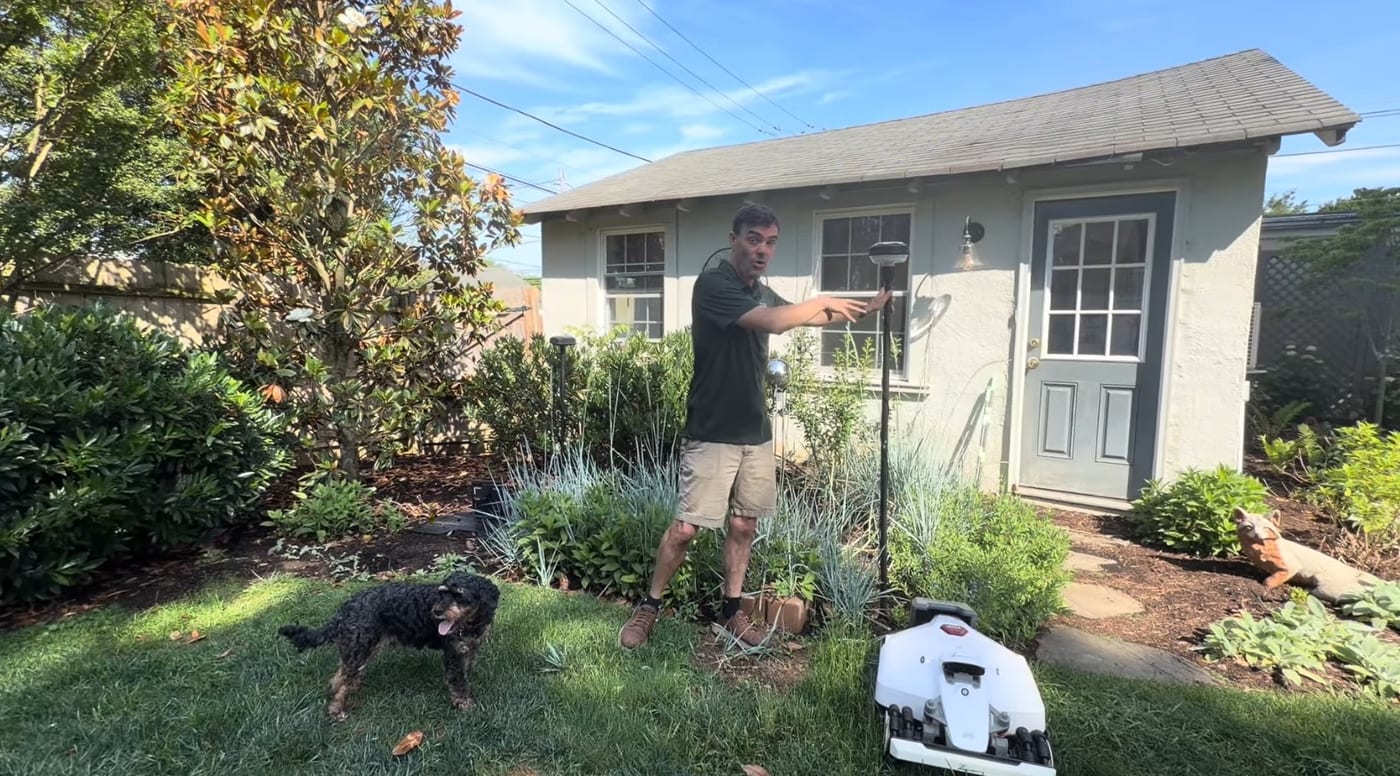
Back to that “impossible” yard. The problem was tree cover — the canopy blocked the sky everywhere at ground level, and two installers had walked away. Our fix was pure Rules 1 and 2: we went up. A 25-foot pole lifted the RTK base clean above the canopy into open sky, on a rigid braced mount. The mower that “couldn’t work there” has run reliably ever since. Height plus open sky solved what everyone else called impossible.
There is a limit, though. If you genuinely cannot get above the canopy, no antenna placement will save a satellite-based mower — that’s the point where a LiDAR mower earns its keep.
Why bad placement causes dangerous “silent drift”
Here’s the part that makes placement worth obsessing over. A mediocre antenna spot usually works at first. The trouble starts weeks later: the fix quality slowly degrades, and the mower begins to drift off its mapped boundaries — a little into the flower bed here, a missed strip along the edge there. Because it happens gradually and without any alarm, you often don’t catch it until it’s already chewed a garden or scalped an edge.
That slow, silent failure is genuinely more dangerous than an outright error, because a mower that stops and flashes a fault gets your attention — one that quietly wanders does its damage first. Getting the antenna right on day one is what prevents it.
What a professional install looks like
A proper RTK install is more than zip-tying a receiver to a fence. It means finding the spot that satisfies all four rules, building a rigid mount at the right height (a real mast or braced pole, or a solid roof mount), running and protecting the cable, and then verifying the fix quality before walking away — not just “it powered on.” For a simple, open yard, a confident DIYer can absolutely do it. For tree cover, tall masts, or roof mounts, it’s usually worth hiring someone who installs these for a living.
Not sure what your yard needs?
The fastest way to know whether your property has the open sky an RTK mower needs — or whether you should be looking at LiDAR instead — is to let us read it from satellite.
- 📍 Check my lawn — free — we assess your tree cover and open sky in about two minutes.
- 🗺️ Book a free mapping & install call — we’ll plan antenna placement (and everything else) for your exact yard.
This is the deep dive on Tip 8 from our 10 robot mower mapping tips — mapping and signal are the two things that make or break these machines.
Frequently asked
Does the RTK antenna have to be next to the charging dock?
No — this is the biggest misconception. The dock and the RTK antenna are independent. The dock goes wherever is convenient for the mower to charge; the antenna goes wherever it gets the best, most open view of the sky — even if that's on the roof, on the other side of the house, or on a tall pole. It just needs to stay within your model's stated range.
How high should a robot mower RTK antenna be?
As high as it takes to clear obstructions and see open sky — height gives the antenna more sky and a more stable fix. A roof peak, gable, or tall pole is common. On one heavy tree-cover install, we mounted the RTK base 25 feet in the air to get above the canopy after two other installers said the yard couldn't be done.
What is RTK drift, and why is it dangerous?
Drift is when the mower slowly wanders off its mapped boundaries over weeks. A marginal antenna spot — too low, wobbly, or near reflective surfaces — often works fine at first, then degrades. Because it's gradual and silent, you don't notice until the mower is cutting into garden beds or missing edges. That slow failure is more dangerous than an outright error, because nothing alarms you.
Can I install the RTK antenna on my roof?
Often yes, and it's frequently ideal — a roof delivers height, open sky, and a rigid mount all at once. Just keep the antenna clear of large reflective surfaces (metal flashing, skylights), mount it solidly so it can't move, and plan the cable run. If that's more than you want to take on, a professional install is worth it.
Do Mammotion and Navimow follow the same RTK rules?
Yes — it's the same physics. Segway Navimow (EFLS), and Mammotion LUBA and Yuka all rely on RTK GNSS and the same placement rules apply. The exception is the Mammotion LUBA 3, which uses NetRTK over cellular and needs no base station at all — though it still needs signal, and under heavy canopy a LiDAR mower is the real answer.
Is my mower even using this antenna? I never installed it.
Quite possibly not — out of the box a Navimow defaults to NetRTK, pulling its corrections over the internet via cellular instead of from the base antenna. That's why the antenna is still in so many owners' boxes. The base station is the steadier option — a direct low-frequency radio link with no dependence on your cell coverage — and these four placement rules are what make it work when you switch.
Keep reading
 Installation & SetupNetRTK vs Local RTK on a Navimow: Which Should You Run?Every Navimow runs one of two correction paths: NetRTK over the internet, or your own base station's direct radio link. How each works and when to switch.
 Customer InstallsHow Far Does Navimow RTK Reach Through Trees? A Paoli, PA InstallWe tested Navimow RTK range with clear line of sight and through trees, mounted a charging station on a brick patio with concrete anchors, and set up VisionFence.
 Installation & SetupNavimow Signal Enhancement Antenna: Do You Need a Second RTK Unit?Navimow mows the front fine but goes yellow out back? That's the edge of RTK range. When a second antenna is the fix, where to mount it, and what it costs.
Explore the system
The mowers and pages behind this topic — see them sized to your yard.