
Robot Mower vs. Lawn Service: Cost, Lawn Health & Reliability
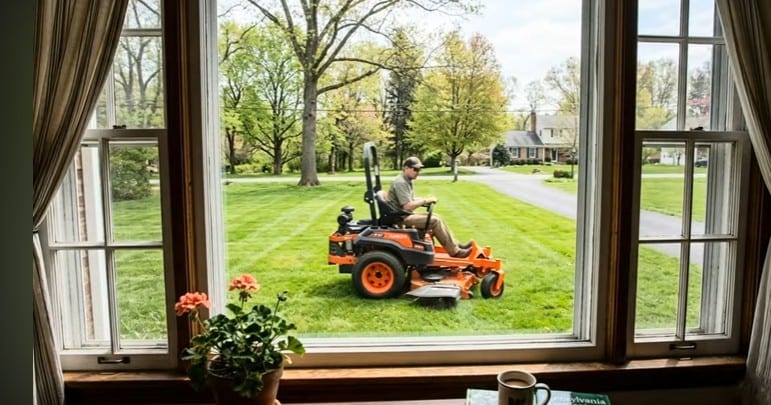
Most lawn services show up once a week — often late, always loud, and with results that depend on which crew turned up. The alternative isn’t just “buy a robot.” There are really three ways to get your lawn cut, and the math and lawn-science between them is worth two minutes of your time.
The problem with weekly cutting (it’s not just the noise)
A weekly service cuts your grass the way a barber would cut hair once a season: dramatically. Taking a third or more of the blade off in one pass shocks the plant — it stresses roots, browns tips, and leaves windrows of clippings. Then the lawn spends a week getting shaggy before it happens again. Add the Saturday-morning gas engines, the rain cancellations, and the invoice that goes up a little every year, and you have the system most of us just accept. At its worst, the damage outruns the care entirely — one Villanova homeowner was fertilizing and overseeding while his weekly crew’s heavy mowers rutted and tore up the same lawn.
Why daily mowing grows a better lawn
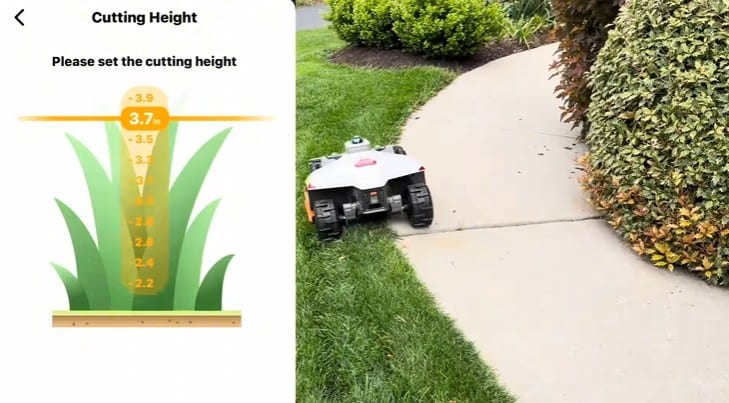
A robot mower flips the model: it cuts a little bit, every single day.
- No shock. Each pass removes a few millimeters, never a third of the plant. The grass stays in growth mode instead of recovery mode.
- Free fertilizer. The micro-clippings drop straight into the canopy and decompose — a steady feed instead of clumps to rake.
- Fewer weeds. Constant trimming means weeds rarely get to flower and seed; over a season the turf visibly thickens and crowds them out.
- Fewer ticks. Short, consistently cut grass is a worse habitat for ticks than week-old shag — a real consideration for kids and dogs in our area.
- Silence. The robot hums along at conversation volume, usually while you’re not even home.
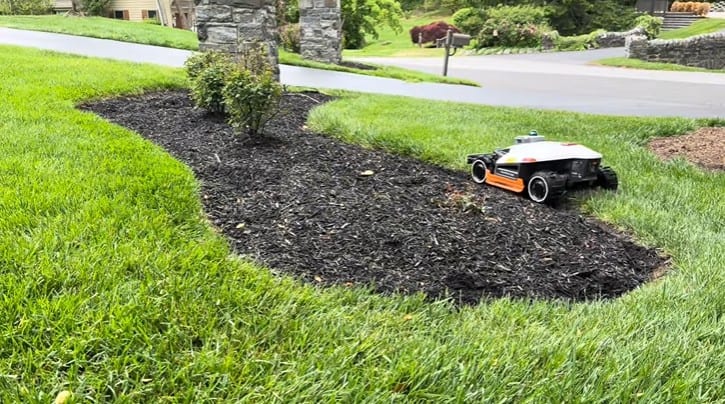
The money: service vs. owning the robot
Here’s the math for a typical half-acre lawn (run your own numbers with your rate in our free tool):
- Weekly service: $40–60 a visit × ~30 visits ≈ $1,200–1,800 per year, every year, rising with inflation.
- Owning a robot: a one-time $1,300–3,300 for the mower (size-dependent), $499–799 for professional install and mapping (by lawn size), then electricity that rounds to a few dollars a month and an eventual battery pack years down the road.
Most lawns pass break-even in year two or three. From then on, the robot mows ~daily for less per month than a single service visit — and the “raise” it asks for each year is zero. (Full numbers: what a robot mower costs to run and how long the battery lasts.)
The third option: a robotic lawn service
Here’s the part most people don’t know exists. The honest weakness of robots is the finishing work — no robot edges a bed, string-trims a fence line, or picks up sticks. If you own the machine, that’s a light 15-minute chore. If you’d rather own nothing and do nothing, that’s exactly what our robotic lawn service is:
- The robot mows a little every day — the thicker-lawn, fewer-weeds, no-noise benefits above.
- Our crew handles the rest — edging, weed whacking, and stick cleanup on a schedule.
- It actually shows up. The mower lives in your yard, our managed fleet runs at 99% uptime, and when a unit needs service we fix it without your lawn waiting on a truck.
You get a better lawn than weekly cutting produces, without buying or maintaining anything.
Service areas: Southeastern Pennsylvania · Northern Delaware · Maryland’s Eastern Shore · Northern Virginia · the Denver, Colorado area. Check if you’re in our service area →
Which path fits you?
- Love the math and a 15-minute weekend chore? Buy the robot — start by mapping your lawn free to size the right one.
- Want the better lawn with zero involvement? The robotic lawn service — daily robot + human finishing.
- Sticking with your weekly crew? No hard feelings — but do the year-two math before renewing.
Either robotic path starts the same way: knowing what your lawn actually is. Our free tool measures it from satellite, checks the signal a robot needs, and shows the exact cost-vs-service math for your yard and your local rates — in about two minutes.
Frequently asked
Is a robot mower cheaper than a lawn service?
Over time, almost always. A weekly service at $40–60 a visit runs $1,200–1,800 every season, forever, and rises with inflation. A robot mower is a one-time purchase (most residential models $1,300–3,300, plus $499–799 for professional install, by lawn size) and a few dollars a month to run. Most lawns pass break-even in year two or three — after that you're mowing for the cost of a coffee a month.
Does mowing a little every day really make the lawn healthier?
Yes — it's the strongest agronomic argument for robots. Daily light cuts remove a sliver of blade instead of a third of the plant, so the grass is never shocked; the fine clippings mulch straight back in as free fertilizer; and the constant trimming keeps weeds from seeding. The result over a season is a visibly thicker, greener lawn — and shorter, drier grass also harbors fewer ticks.
What about edging, weed whacking and cleanup — robots can't do that, right?
Right — no robot edges a bed or picks up sticks. If you own the mower, that's a light 15-minute job every week or two. If you'd rather not do any of it, our robotic lawn service pairs the daily-mowing robot with a human crew that handles the edging, weed whacking and cleanup on a schedule — the robot does the 95%, people do the finishing 5%.
How reliable is a robotic lawn service compared to a crew?
More reliable than most people expect. A traditional crew cancels for rain, breakdowns and scheduling; the robot lives in your yard and just mows — our managed fleet runs at 99% uptime, and when a unit does need service, we handle it and your lawn doesn't wait for a truck to show up.
Keep reading
 Customer Installs"Paying Someone to Ruin My Lawn": Villanova Robot Mower InstallHe fertilized and overseeded — and every week his lawn crew's heavy mowers undid it. Ruts, torn turf, shredded seed. Why this Villanova, PA homeowner went robotic.
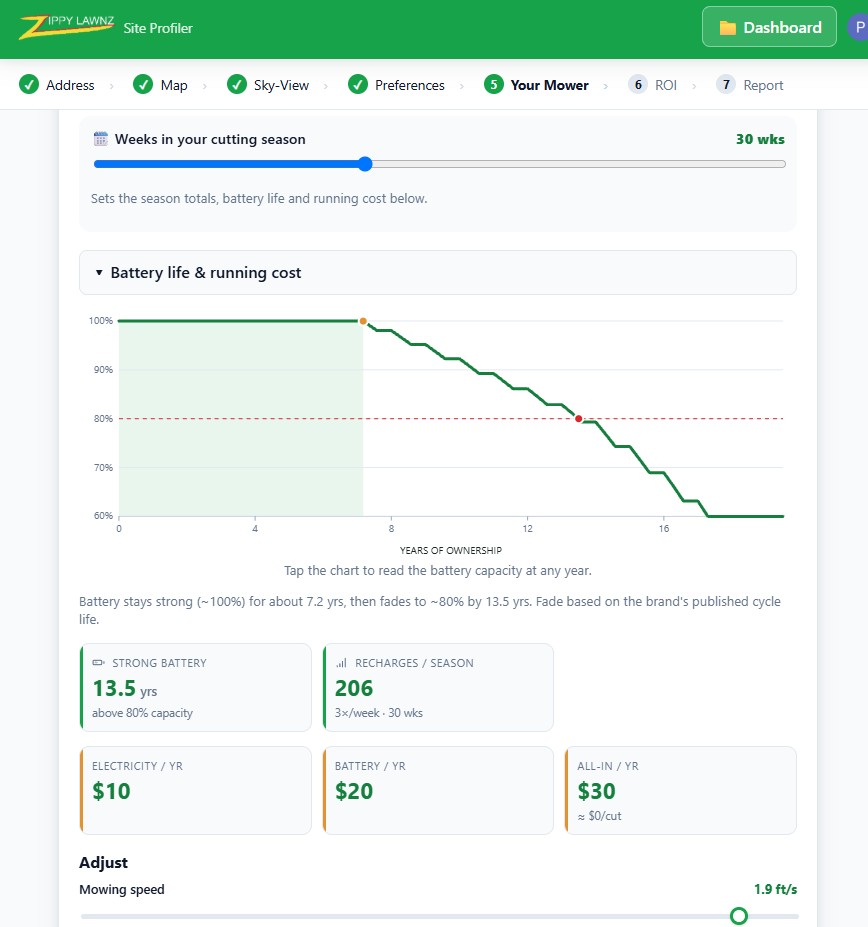 Buying GuidesHow Much Does a Robot Mower Cost to Run?Robot mowers sip electricity — most cost a few dollars a month to run. Here's the real math on kWh, your rate, battery life and total cost of ownership.
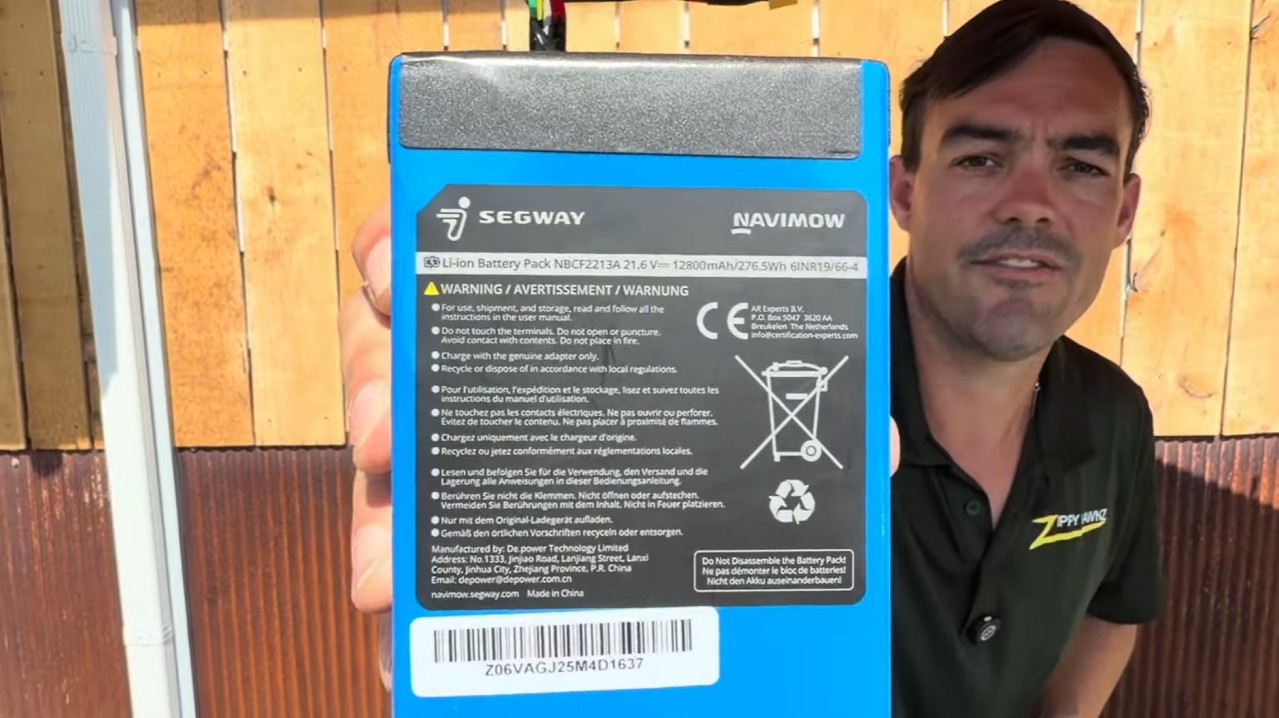 Buying GuidesHow Long Does a Robot Mower Battery Last? We Ran the NumbersA robot mower's lithium battery can outlast the mower on a small lawn — or fade in about 5 years on a big one. Here's the real cycle math, by lawn size.
Explore the system
The mowers and pages behind this topic — see them sized to your yard.