
Safe for kids, pets & wildlife
Pivoting blades, lift sensors, no-go zones and Wildlife Mode. Engineered to stop before anything gets close.
How the safety works — seven layers, in order
It's the first question we get from almost every parent and dog owner, usually before price: is this thing going to hurt somebody? Fair question — it's an unattended machine with blades. The honest answer is that a robot mower is engineered around exactly that fear, and the engineering is genuinely good. Here's what's actually in the machine:
| Layer | What it does | Protects |
|---|---|---|
| Pivoting razor blades | Small free-swinging blades recessed under the deck skirt — a fraction of a gas mower's power. On impact they fold away instead of powering through. | Toys, hoses, roots, a boot |
| Lift & tilt sensors | Pick it up or tip it past its limit and the blades stop instantly. Baseline on every model we carry. | Curious hands, a child lifting it |
| Obstacle detection | Bump sensors plus camera or LiDAR: anything in the path — a ball, a beagle — is something to slow for, avoid and route around. | Pets, people, furniture |
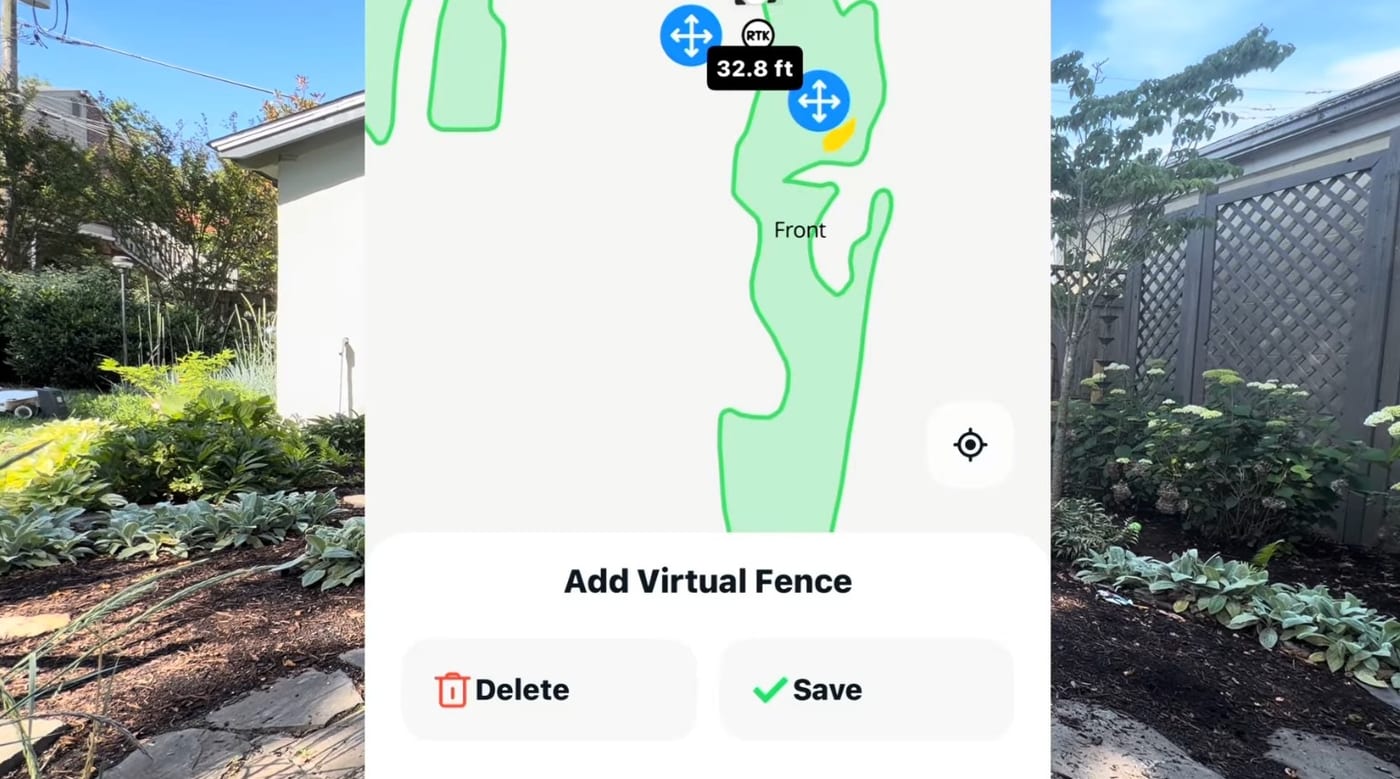
| No-go zones | Virtual fences drawn once on the map and enforced every single day — play set, sandbox, pond edge, bed. | Play areas, water, drop-offs |
| Wildlife Safety Mode | Slower, gentler behaviour and daylight-only scheduling for owners who'd rather not run through cover after dark. | Rabbits, toads, nesting birds |
| Quiet and slow | About 60 dB at walking pace on mapped routes — nobody is startled, pets don't panic, and you can hear a child over it. | Everyone |
| PIN lock | Account-tied lock so curious hands can't start it — the same lock that makes a stolen mower useless. | Kids, theft |
Start with the blades, because they're nothing like a traditional mower's. A gas mower swings a rigid steel bar with enormous stored energy. A robot spins small free-pivoting razor blades on a fraction of the power, recessed well inside the deck — and because they pivot freely on their screws, they fold away on impact instead of fighting through. On top of that, lift-and-tilt cut the blades instantly, obstacle detection slows and reroutes, and the whole thing moves at walking pace on mapped routes at about 60 dB. Nothing sudden, nothing loud, nothing with a person behind the controls not looking.
Kids
The machine handles the hard part; you handle the easy part:
- Schedule mowing for hours kids aren't on the lawn. The mower doesn't care when it works — that's the whole point of the schedule window.
- Draw no-go zones around the play set, sandbox and trampoline. The map is your standing supervision — set once, enforced every day.
- Pick up toys. Sensors are built for obstacles, not for a G.I. Joe hiding in the grass. Small, low, still objects are the one thing every mower is worst at seeing.
- Nobody rides it, ever. The lift sensor kills the blades anyway, but the rule stands.
- Use the PIN lock. Curious hands can't start it.
Dogs and cats
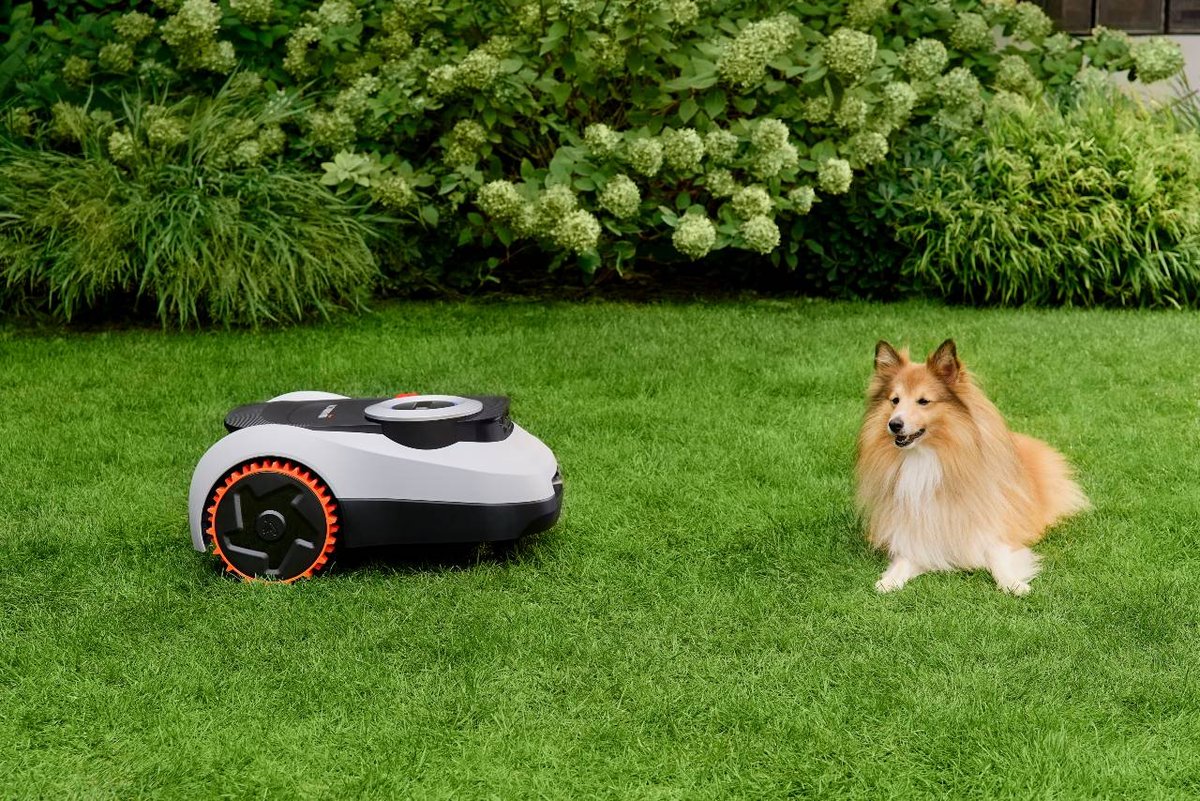
Watch a dog meet a robot mower and you'll see a week-long arc: suspicion, investigation, boredom. It's quiet, slow and predictable — the three things a gas mower isn't — and the obstacle detection treats your dog as a thing to route around. The actual dog-owner issue isn't safety, it's sanitation: a robot will drive through whatever your dog left in the yard. Keep pickup ahead of the mowing schedule, or set the window for after your usual patrol.
Wildlife
You may have seen the headlines. They're largely a European debate, centered on hedgehogs — which curl up in the grass rather than flee, and which don't live in North America. So the specific risk behind those stories doesn't map to US lawns. Responsible habits still apply: avoid running through dense cover or garden edges after dark, and use Wildlife Safety Mode or a daylight-only schedule if you'd rather not chance it at all. Rabbits, toads and birds get up and go; a mower at walking pace gives them plenty of notice.
When the yard itself is the hazard: pools, ponds, drop-offs
Good setup closes the loop in both directions — keeping the mower away from danger, and keeping the dangerous parts of the yard fenced without giving up the automation. A fenced pool normally blocks a robot entirely; on a West Chester install we solved it with a MowGate — a powered gate the mower opens itself to mow the pool area and leave, with the fence doing its child-safety job the other 23 hours. Ponds, streams and drop-offs get no-go zones with real buffers, because a mower in the pond is one of the ten classic disasters.
The honest part. Safety hardware is excellent; it isn't magic.
- Small, low, still objects are what every mower sees worst. A hose, a phone, a toy in tall grass. Walk the lawn before the window opens.
- The last mile is habits — the schedule, the no-go zones, the PIN, the toys. The machine does the rest.
- Blade changes go through cleaning mode, which disables the blades first. Never reach under a live deck.
Keep reading
- Are robot mowers safe for kids, pets & wildlife? — the full guide
- 10 things never to do with a robot mower
- Mapping tips that avoid the classic mistakes
- Reason No. 5 — whisper quiet
From our customers
“Watching my lawn get mowed with a cup of coffee in my hand is one of the best parts of my day. Zippy Lawnz did a great job.”
“Paul was extremely helpful on the install! Very professional and easy to talk to! Thanks Paul for all your help! The mower is running great.”
The other 6 reasons
See it on your lawn first — free
Two minutes, your actual address: real mowable area, RTK sky view, the right mower, and the savings. Nothing to install, no account to start.
Common questions
Are robot mowers safe around children?
Engineered to be, with sensible habits on top. The blades are small free-pivoting razors recessed under the deck — not a rigid high-power bar — that fold away on impact, and every mower we carry stops its blades instantly when lifted or tilted. Treat it like any yard machine anyway: schedule mowing for hours kids aren't playing, draw no-go zones around play areas, pick up toys, and nobody rides it.
Will a robot mower hurt my dog?
In practice, dogs and robot mowers coexist easily. The mower runs at about 60 dB, moves slowly and predictably, and its obstacle detection treats a dog like any obstacle — slow, avoid, reroute. Most pets are ignoring it within a week. The real dog-owner issue is sanitation: a robot will drive through what your dog left behind, so keep pickup ahead of the schedule.
Do robot mowers stop when picked up?
Yes. Stopping the blades the instant the mower is lifted or tilted is baseline behaviour on every model we sell. It's also why blade changes are done through the app's cleaning mode, which disables the blades before your hands go near the deck.
What about wildlife at night?
The famous night-mowing wildlife debate is largely European — it centers on hedgehogs, which curl up instead of fleeing and don't live in North America. On US lawns that specific risk doesn't map, but responsible habits still apply: avoid dense cover and garden edges after dark, and use Wildlife Safety Mode or a daylight-only schedule if you'd rather not chance it.
What is a robot mower worst at seeing?
Small, low, still objects — a toy hidden in the grass, a garden hose, a phone. Sensors are built for obstacles that stand up. A quick walk of the lawn before the window opens, and no-go zones where the kids' things live, closes that gap.