
Whisper quiet
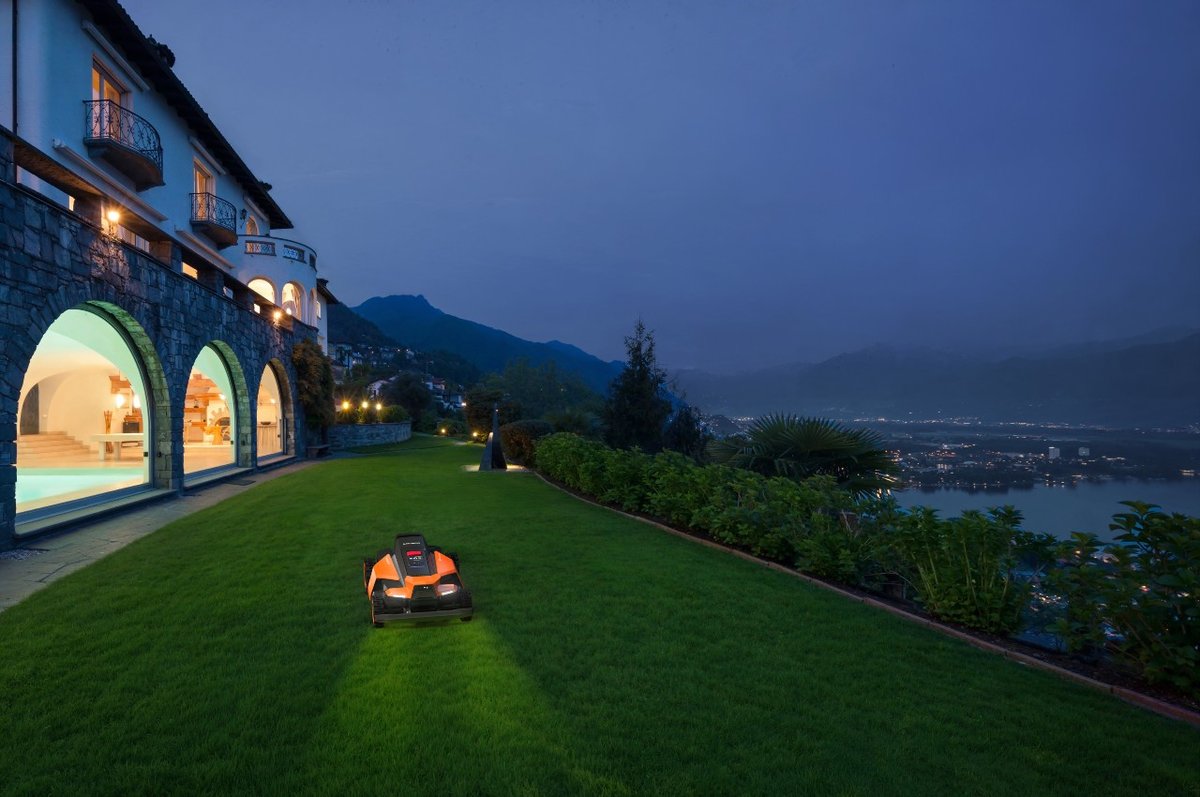
Around 60 dB — conversation level. Mow at dawn, dusk or overnight without a neighbor ever noticing.
Hear the difference
Turn your sound up. This is a Navimow X430 at work on a two-yard install in Wilmington, Delaware — the install where we put a meter on it and measured about 60 dB. That's as loud as it gets.
From the Wilmington two-yards install.
Where 60 dB sits
Decibels are a logarithmic scale, which is why the numbers undersell the gap: every 10 dB is roughly twice as loud to the ear. A 90 dB gas mower isn't "50% louder" than a 60 dB robot — it's about eight times as loud.
| Sound | Typical level | vs the robot |
|---|---|---|
| Whisper | ~30 dB | 13% as loud |
| Quiet library | ~40 dB | 25% as loud |
| Normal conversation | ~60 dB | — |
| Robot mower (measured) | ~60 dB | — |
| Dishwasher | ~75 dB | 3× as loud |
| Vacuum cleaner | ~75 dB | 3× as loud |
| Gas push mower | ~90 dB | 8× as loud |
| Gas leaf blower | ~100 dB | 16× as loud |
| Chainsaw | ~110 dB | 32× as loud |
Typical published levels for each source; the robot row is our own measurement. Models vary by a few dB.
Mow at dawn, dusk or overnight
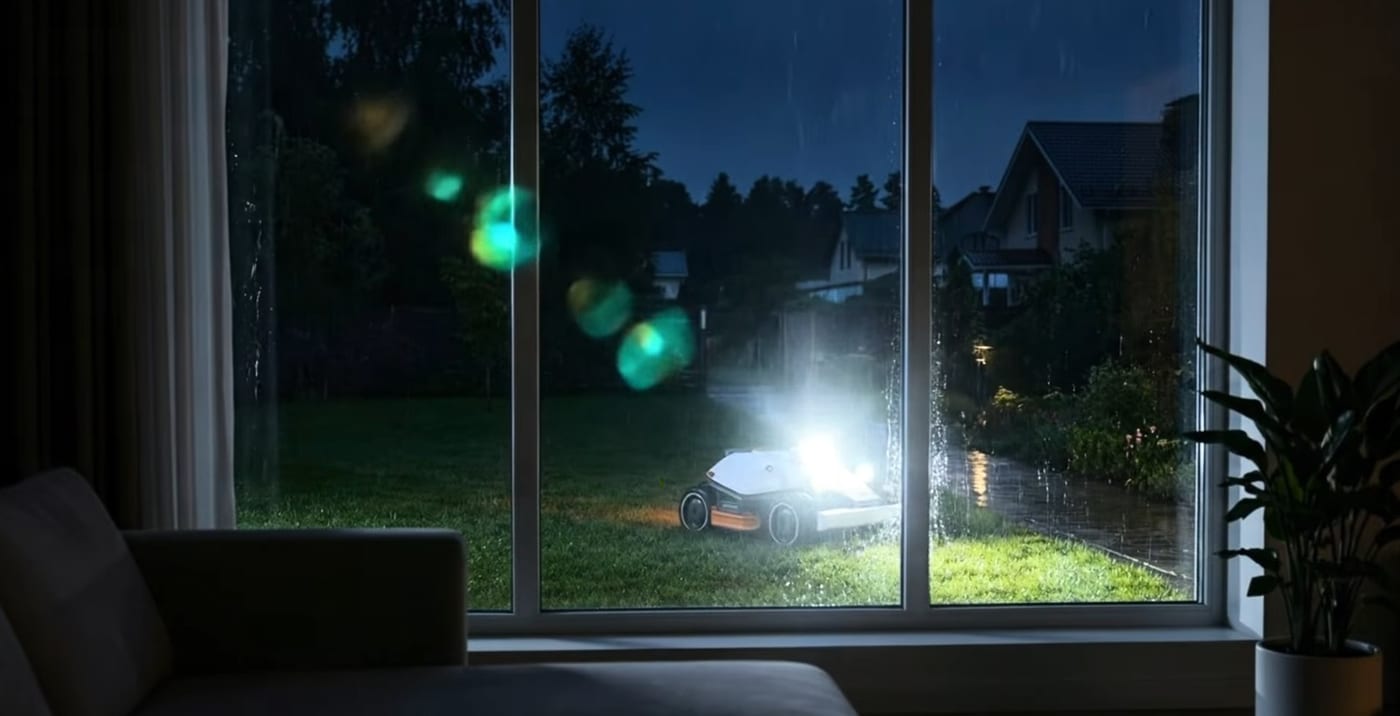
Quiet is what unlocks the schedule. Because nobody hears it, the mower can work at 5 a.m. before the heat, at dusk when the kids are inside, or in an overnight window that's finished by the time you're up — and the lawn is always freshly cut when you look at it. HOA quiet hours, a baby napping, a work call in the home office, the dog that hides under the bed every Saturday morning: none of them are a reason to wait.
Two honest notes on night mowing. Heavy dew can clump the cut, so time the window to finish before moisture peaks or run in the afternoon. And camera-based mowers slow down in the dark — a LiDAR mower like the LUBA 3 doesn't need light at all. The full night-mowing guide covers wildlife mode, dew and which models handle the dark.
What quiet changes
- You stop planning around the mow. No Saturday-morning engine, no waiting for the crew's blowers to finish before a call.
- Pets and kids don't scatter. Sixty decibels is also a safety feature — nobody is startled, and you can hear a child over it. How the safety works.
- The neighborhood gets its mornings back. The loudest thing in most suburbs on a summer weekend is lawn equipment. A street of robots is a quiet street.
The honest part. It isn't silent — a soft whir and a blade hiss, a little more under load on tall grass, slopes or edge stones, and a few dB between models. What's gone is the engine, and the engine was the whole problem.
Keep reading
- Should your robot mower mow at night? Wildlife, dew & LiDAR
- Robot mower scheduling, explained
- Robot mowing by the numbers — every figure we've measured
- Reason No. 6 — genuinely eco-friendly
From our customers
“Watching my lawn get mowed with a cup of coffee in my hand is one of the best parts of my day. Zippy Lawnz did a great job.”
“Love my robot (Stormy). They came out, set him up and off he went. They answered all the questions I had, which weren’t many because they went over every detail. We were able to switch his mowing pattern, how often he mows and length of the mow. We put him away for the winter but it’s now time to get him out and get him started mowing. Can’t wait to start him up. Neighbors have stopped by to ask about him — I have recommended to anyone that asks.”
The other 6 reasons
See it on your lawn first — free
Two minutes, your actual address: real mowable area, RTK sky view, the right mower, and the savings. Nothing to install, no account to start.
Common questions
How loud is a robot mower?
About 60 dB — normal-conversation level, and quieter than a dishwasher (~75 dB). A gas push mower runs around 90 dB. Because the decibel scale is logarithmic, that 30 dB gap means the gas mower sounds roughly eight times as loud to the ear.
Can I run it at night without bothering the neighbors?
Noise-wise, yes — at 60 dB it's below the level of a conversation on a porch, and it fades to nothing across a property line. The things to think through are dew (heavy overnight moisture can clump the cut), the mower's own vision (camera-based models slow down in the dark; LiDAR models don't), and wildlife habits. Many owners settle on a dawn finish or a dusk window instead of the middle of the night.
Does it get louder on tall or wet grass?
A little — the blade motor works harder and you'll hear it. It's still nowhere near a gas engine, and because a robot cuts a few millimeters a day the grass is rarely tall to begin with.
Is it silent?
No. Expect a soft electric whir and a hiss from the blades, a bit more on slopes or over edge stones. What's missing is the engine — the part that makes a gas mower a neighborhood event.