
Are Robot Mowers Safe for Kids, Pets & Wildlife?
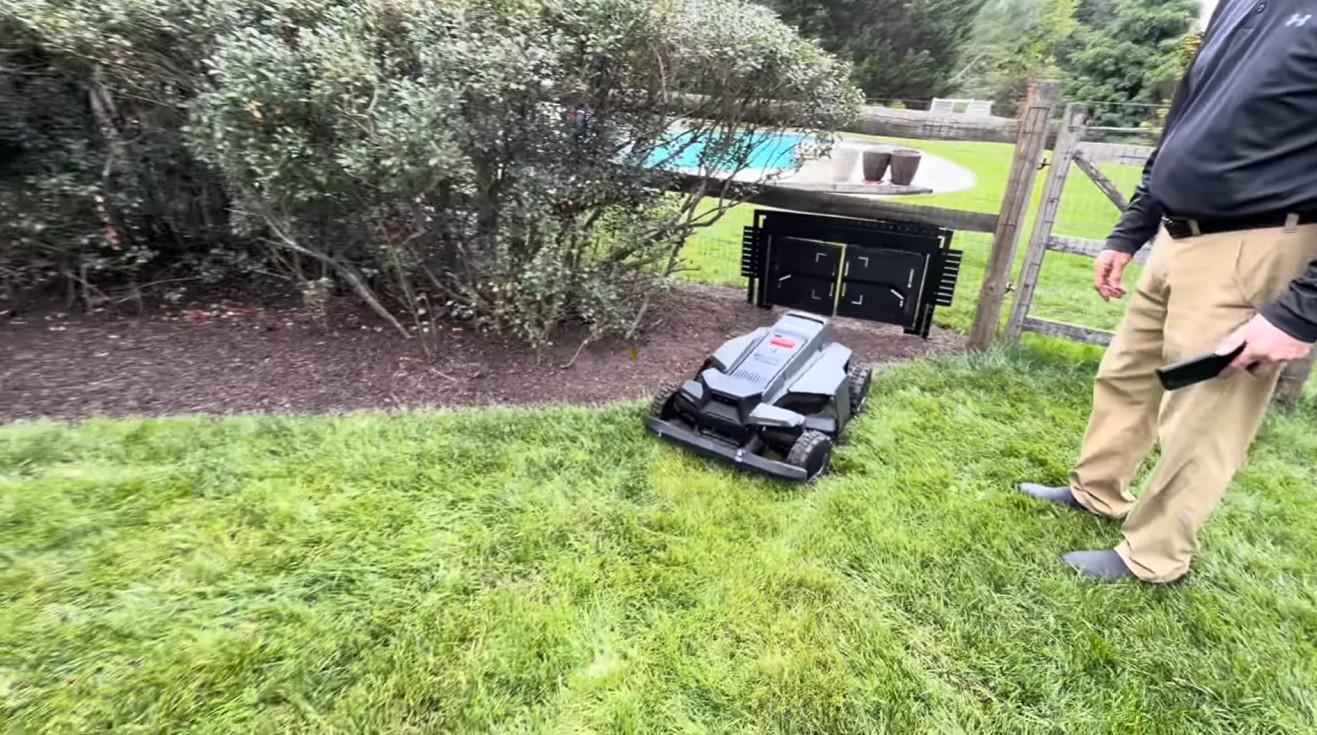
It’s the first question we get from almost every parent and dog owner, usually before price: is this thing going to hurt somebody?
Fair question — it’s an unattended machine with blades. The honest answer is that a robot mower is engineered around exactly this fear, and the engineering is genuinely good — but the last mile of safety is setup and habits, and that part belongs to you. Here’s both halves.
How is a robot mower safer than the mower you have now?
Start with the blades, because they’re nothing like a traditional mower’s. A gas mower swings a rigid steel bar with enormous stored energy. A robot mower spins small, free-pivoting razor blades — they’re recessed well inside the deck skirt, they run on a fraction of the power, and because they pivot freely on their screws, they fold away on impact instead of powering through.
On top of the blade design:
- Lift and tilt cut the blades instantly. Pick the mower up, tip it past its limit — blades stop. This is baseline behavior on every model we carry, and it’s why blade work is done through cleaning mode, which disables the blades before your hands get near the deck.
- Obstacle detection slows and reroutes. Bump sensors and camera systems (like the VisionFence we set up on installs with blind corners) treat anything in the path — a ball, a boot, a beagle — as something to avoid, not something to fight.
- It’s quiet: about 60 dB, quieter than a dishwasher. That’s a real safety feature — nobody gets startled by it, pets don’t panic around it, and you can hear a child over it.
- It’s slow and predictable. Walking pace, mapped routes, no sudden reversals with a human behind the controls not looking.
So what about kids, specifically?
The machine handles the hard part; you handle the easy part:
- Schedule mowing for hours kids aren’t on the lawn. The mower doesn’t care when it works — that’s the whole point of the schedule window.
- Draw no-go zones around the play set, sandbox and trampoline — the map is your standing supervision, set once and enforced every day.
- Pick up toys. Sensors are built for obstacles, not for a G.I. Joe hiding in the grass — small, low, still objects are the one thing every mower is worst at seeing.
- Nobody rides it, ever. (The lift sensor kills the blades anyway, but the rule stands.)
- Use the PIN lock so curious hands can’t start it — the same account-tied lock that doubles as anti-theft (5 reasons nobody steals a robot mower).
What about dogs and cats?
Watch a dog meet a robot mower and you’ll see a week-long arc: suspicion, investigation, boredom. It’s quiet, slow, and predictable — the three things a gas mower isn’t — and the obstacle detection treats your dog as a thing to route around.
The actual dog-owner issue isn’t safety, it’s sanitation: a robot will drive through whatever your dog left in the yard, with results you’ll be cleaning off the deck. Keep pickup ahead of the mowing schedule, or set the window for after your usual yard patrol.
And wildlife?
You may have seen the headlines — they’re largely a European debate, centered on hedgehogs, which curl up in grass and don’t flee. North America doesn’t have hedgehogs, so the specific risk behind those stories doesn’t map to US lawns. Responsible habits still apply: avoid running through dense cover or garden edges after dark, and use Wildlife Safety Mode or a daylight-only schedule if you’d rather not chance it at all.
When the yard itself is the hazard: fences, pools, ponds
Good setup closes the loop in both directions — keeping the mower away from danger, and keeping the dangerous parts of the yard fenced without giving up the automation. A fenced pool normally blocks a robot entirely; on a West Chester install we solved it with a MowGate — a powered gate the mower opens itself to mow the pool area and leave, with the fence doing its child-safety job the other 23 hours. Ponds, drop-offs and streams get no-go zones with real buffers, because a mower in the pond is one of the ten classic disasters.
The honest bottom line
A robot mower with pivoting recessed blades, lift sensors and obstacle detection is a categorically gentler machine than the spinning steel bar you’re pushing around now — and unlike you, it never mows distracted. But it’s still a machine with blades: sensors reduce risk, they don’t erase it. Supervise the first few cycles, set the map and schedule like the parent or pet owner you are, and it disappears into the background of a safer yard than the one you had.
Get help with your robot mower
Zippy Lawnz is an authorized dealer and service center for Segway Navimow, Mammotion, and Yarbo, with nationwide sales and remote support and hands-on installs across Pennsylvania, New Jersey, Maryland, Delaware, Virginia, and Colorado. Kid-heavy backyard, pool fence, a dog with opinions — we’ve set up for all of it, and safety setup is part of every install we do.
- 📍 Check my lawn — free — your lawn’s real size, slope and satellite sky view, measured in about two minutes.
- 🗺️ Book a free site assessment — we’ll pull up your address, plan the antenna, dock and no-go zones, and quote the whole install.
- 📞 Call or Text Us: 410-725-7500
The safety stack: pivoting recessed blades · blades stop on lift/tilt · obstacle detection · ~60 dB · no-go zones + PIN · Wildlife Mode — plus a schedule set for when the yard is empty
Frequently asked
Are robot mowers safe around children?
Engineered to be, with sensible habits on top. The blades are small free-pivoting razors recessed under the deck — not a rigid high-power bar like a traditional mower — they fold away on impact, and every mower we carry stops its blades instantly when lifted or tilted. Treat it like any yard machine anyway: schedule mowing for hours kids aren't playing, keep no-go zones around play areas, pick up toys, and don't let anyone ride it.
Will a robot mower hurt my dog?
In practice, dogs and robot mowers coexist easily — the mower runs at about 60 dB (dishwasher-quiet, nothing like the gas mower that sends pets under the bed), moves slowly and predictably, and its obstacle detection treats a dog like any obstacle: slow, avoid, reroute. Most pets are ignoring it within a week. The practical dog issue isn't safety, it's waste — a robot will drive through what your dog left behind, so keep pickup ahead of the schedule or mow after your usual yard patrol.
Do robot mowers stop when picked up?
Yes — stopping the blades instantly when the mower is lifted or tilted is a baseline safety behavior on every model we carry. It's the same reason blade changes are done through the app's cleaning mode, which disables the blades before your hands go anywhere near the deck.
Is it safe to run a robot mower at night with animals around?
The famous night-mowing wildlife debate is largely European — it centers on hedgehogs, which don't live in North America. On US lawns the specific risk doesn't map, but responsible habits still apply: avoid running through dense cover after dark, and use Wildlife Safety Mode or a daylight-only schedule if you'd rather not chance it.
Keep reading
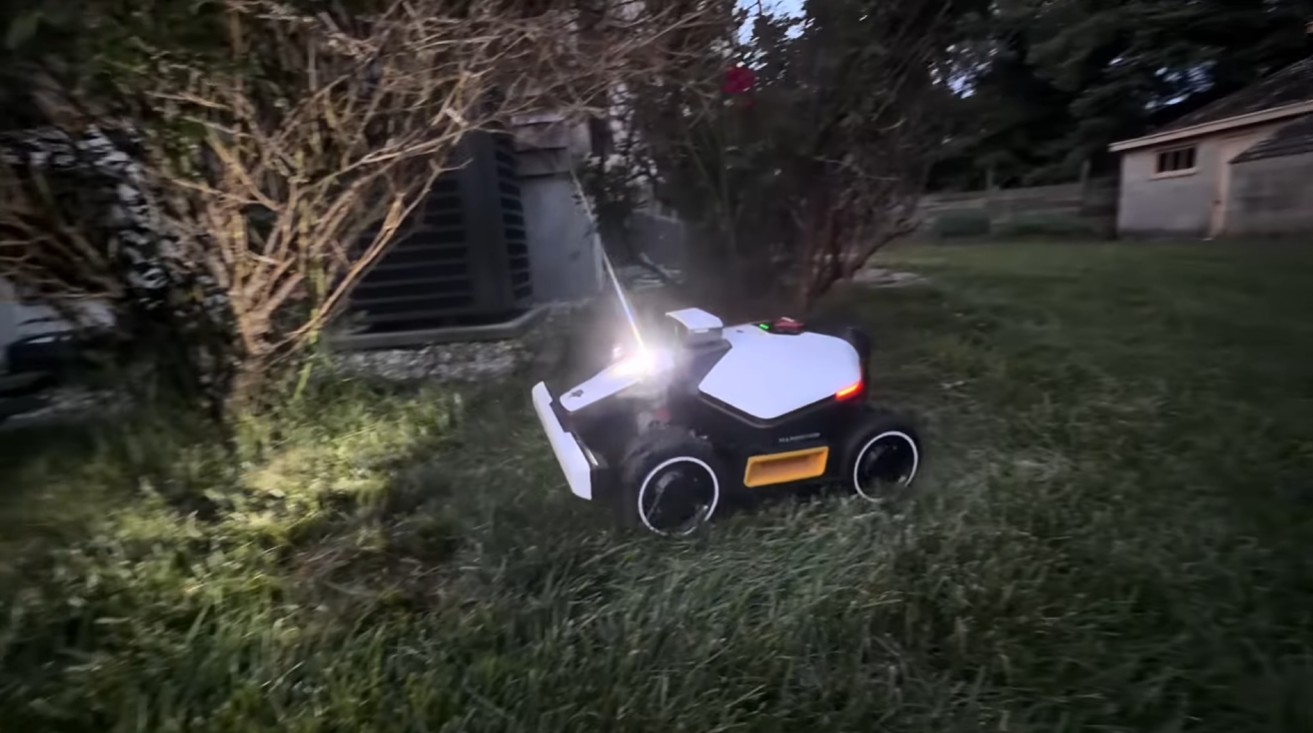 Tips & MaintenanceShould Your Robot Mower Mow at Night? Wildlife, Dew & LiDARNight mowing is quiet and satisfying — but should your robot mower do it? The honest truth on wildlife, why vision mowers fail in the dark, and how LiDAR fixes it.
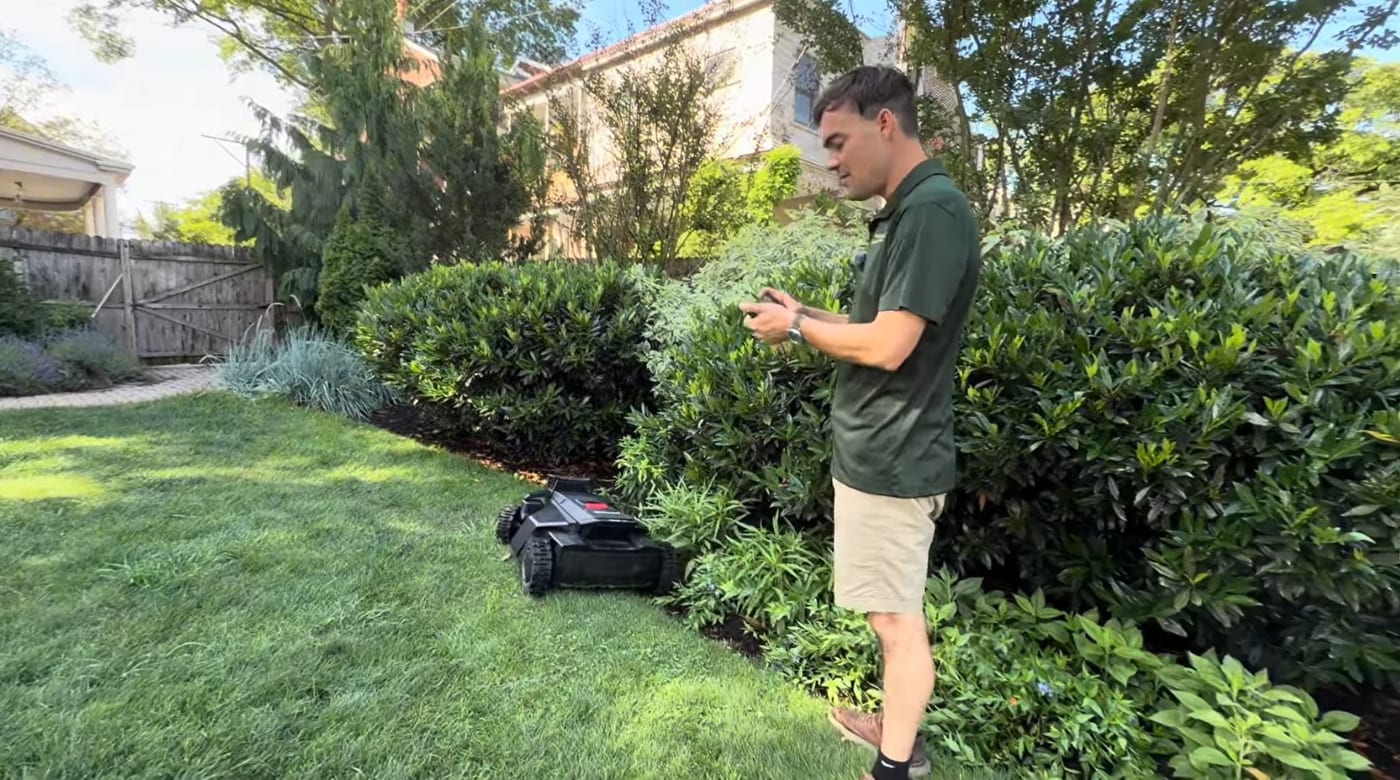 Installation & Setup10 Robotic Lawn Mower Mapping Tips (Avoid Costly Mistakes)Mapping makes or breaks a robot mower — most problems trace back to it. 10 tips on dock placement, channels, no-go zones, virtual fences, RTK signal and more.
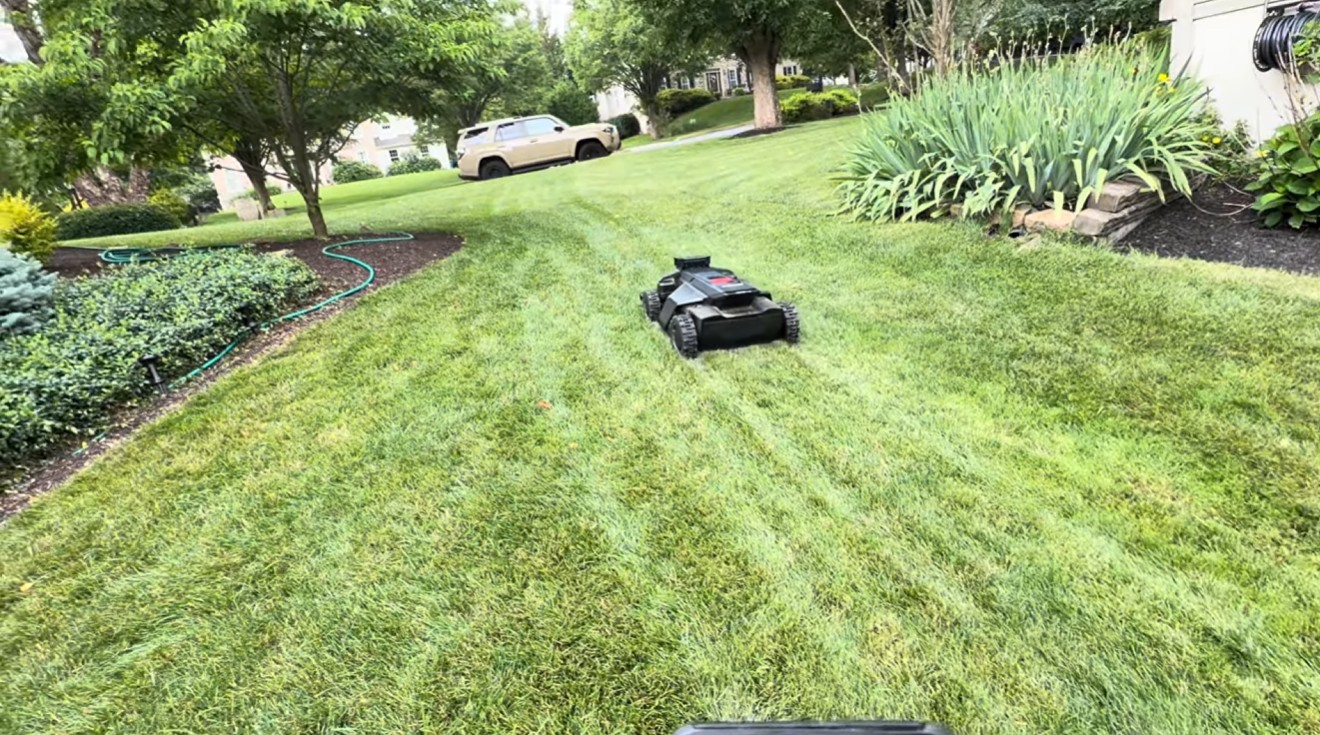 Customer InstallsNavimow X430 Review: A West Chester Homeowner's Take After 1 MonthWe installed a Navimow X430 for a West Chester, PA homeowner, then asked for his honest take 30 days later — including a tricky pool fence handled with a MowGate.
Explore the system
The mowers and pages behind this topic — see them sized to your yard.