
Genuinely eco-friendly
Zero gas, zero exhaust, nothing bagged and hauled. One quiet battery replaces the dirtiest engine in your garage.
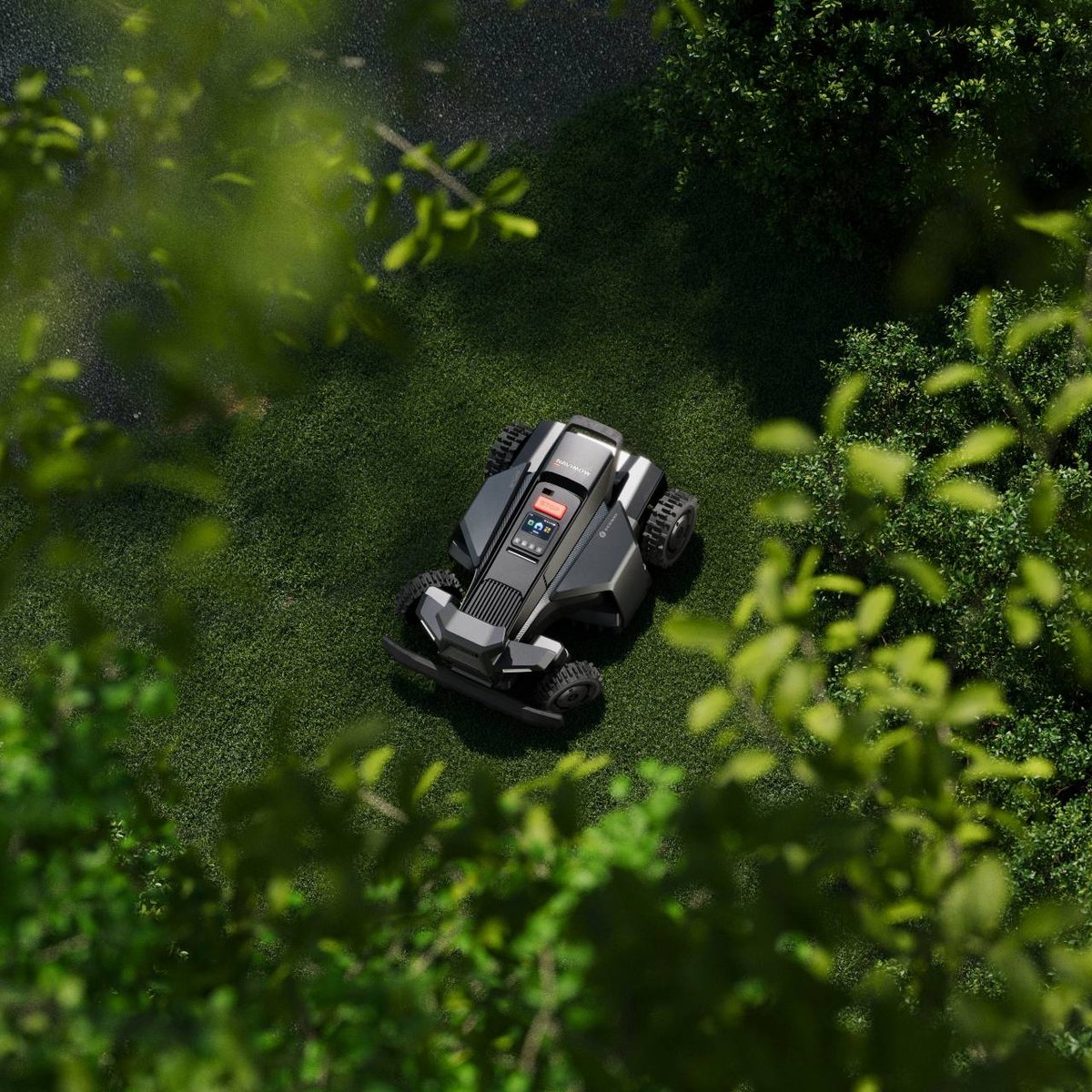
Zero gas, zero exhaust
The engine in a gas mower is the dirtiest engine most households own. It burns gasoline with no catalytic converter, no particulate filter and none of the controls a car has had for fifty years — which is why California's Air Resources Board rates one hour of a commercial gas mower at the smog-forming pollution of a modern car driven about 300 miles, and one hour of a gas leaf blower at about 1,100 miles. Add the fuel spilled at every refill, the oil changes, the filters and plugs in the trash, and the truck-and-trailer a lawn crew drives to your house thirty times a season.
A robot mower has none of it. One small battery, topped up from the dock, cutting a few millimeters a day.
The emissions math — same lawn, four machines
The reference lawn is half an acre, mowed weekly for 34 weeks. The hours and fuel burn per machine are the figures our ROI calculator uses (a walking pace with turns and overlap, an engine's mid-load draw); the robot's energy is modeled for the mower that fits that lawn on its default schedule.
| Machine | Hours / season | Gallons | lb CO₂ / season | vs the robot |
|---|---|---|---|---|
| Gas push mower (21″) | 48.6 | 19.4 | 381 | 7× |
| Gas self-propelled (21–22″) | 37.8 | 17 | 333 | 6× |
| Riding mower / lawn tractor (42–46″) | 13.6 | 16.3 | 320 | 6× |
| Zero-turn (48–54″) | 6.8 | 11.6 | 227 | 4× |
| Navimow X430 (robot) | daily, unattended | 0 (61 kWh) | 52 | — |
Factors: 19.6 lb CO₂ per gallon of gasoline (EPA); 0.85 lb CO₂ per kWh, the EPA eGRID U.S.-average grid rate — a solar home is near zero. CO₂ only; the smog-forming gap is far larger, because small engines are uncontrolled.
Nothing bagged and hauled
Because the robot removes so little each day, the clippings are tiny and decompose into the canopy within days — grasscycling. They return nitrogen to the root zone continuously, which is why our ROI model credits 25% of a normal fertilizer program to the robot. Less fertilizer manufactured and spread, no plastic bags, no yard-waste truck, no clippings composting in a landfill. Why that also grows a thicker lawn.
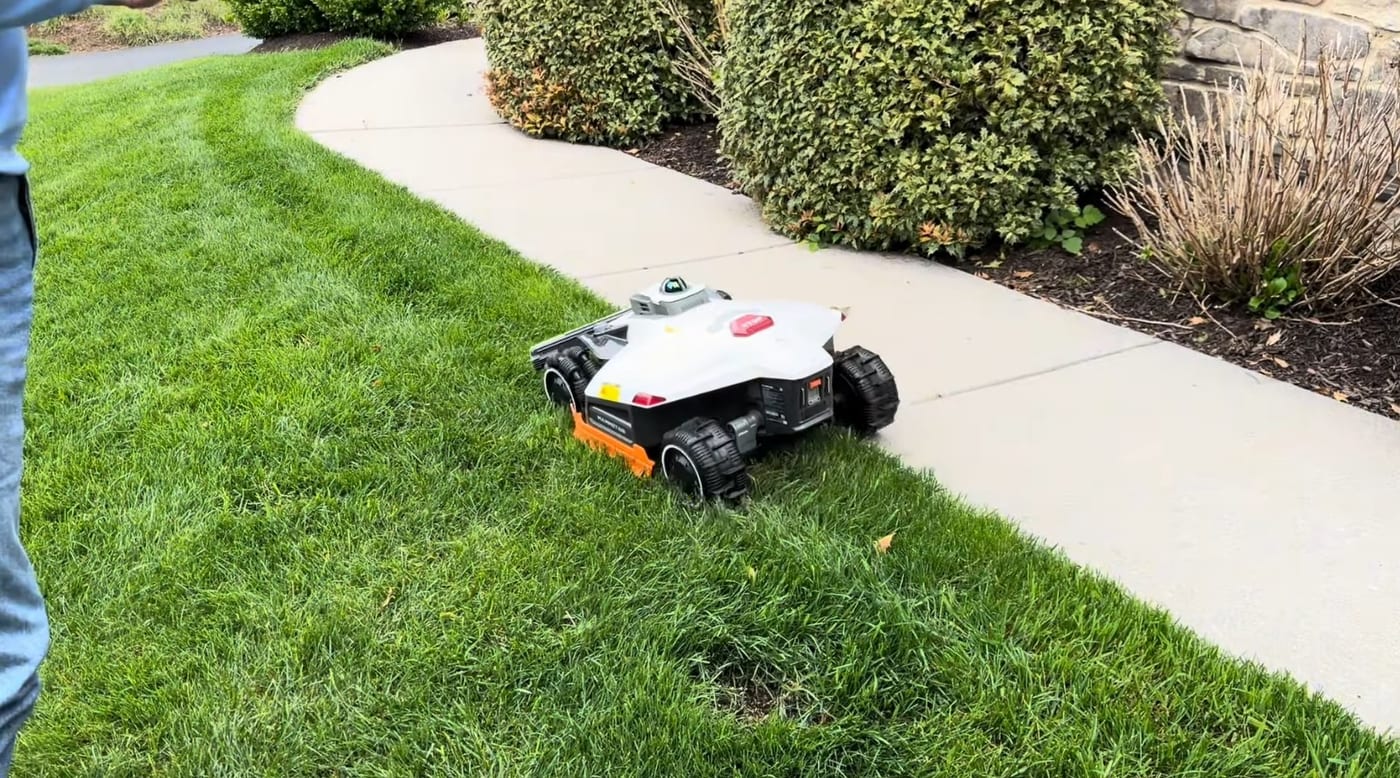
One quiet battery
The whole running footprint is about 61 kWh a year from the wall — pennies a month, and at 60 dB it's quieter than the dishwasher that uses more electricity. No fuel to store in the garage, no spills at the pump, no two-stroke smell drifting into the neighbor's yard. Owners with rooftop solar mow on sunshine, literally.
The honest part.
- Electricity isn't zero. The 52 lb above is the U.S.-average grid; a coal-heavy grid is higher, solar is near nothing.
- The machine and its battery have a manufacturing footprint, and a pack is replaced every few years. Lithium packs are recyclable — bring the old one to us.
- Our install truck drives to you once. A crew's does it thirty times a season.
- Even with all of that counted, the gap is an order of magnitude, not a rounding error.
Keep reading
- How much does a robot mower cost to run?
- Pollinator zones, no-mow areas and other creative uses
- The full ROI calculator — gas, time, maintenance and fertilizer counted
- CARB on small off-road engines (source for the mileage equivalents) ↗
From our customers
“Zippy Lawnz is a very cool company. Great YouTube videos to learn from. Thanks Paul! They also have great customer service and respond quickly to any questions you have about your order. They also ship quick.”
“Paul was extremely helpful on the install! Very professional and easy to talk to! Thanks Paul for all your help! The mower is running great.”
The other 6 reasons
See it on your lawn first — free
Two minutes, your actual address: real mowable area, RTK sky view, the right mower, and the savings. Nothing to install, no account to start.
Common questions
How much pollution does a gas lawn mower produce?
Two kinds. Carbon dioxide from the fuel: a gas self-propelled mower on a half-acre lawn burns about 17 gallons a season, which is roughly 333 lb of CO₂ at the EPA's 19.6 lb per gallon. And smog-forming pollution (hydrocarbons and NOx), where small engines are far worse per gallon than cars because they have no catalytic converter — California's Air Resources Board puts one hour of a commercial gas mower at the smog-forming output of a modern car driven about 300 miles.
How much electricity does a robot mower use in a year?
On a half-acre lawn the Navimow X430 pulls about 61 kWh a year — roughly what a modern refrigerator uses in a month or two. At the U.S.-average grid emission rate that's about 52 lb of CO₂, and near zero on a home with solar.
Is a robot mower actually eco-friendly once you count the battery?
Yes, by a wide margin. The mower and its lithium pack have a manufacturing footprint, and a pack is replaced every few years, but the running emissions are an order of magnitude below any gas machine — 6× less CO₂ than a gas walk-behind on the same lawn, before counting the fuel spilled at every refill, the oil changes, or the crew truck and trailer that drive to a serviced lawn thirty times a season.
What happens to the clippings?
Nothing — that's the point. A robot takes a few millimeters a day, and the fine clippings decompose into the lawn within days as a steady nitrogen feed. Nothing is bagged, nothing goes to the curb in plastic, no yard-waste truck hauls it, and our ROI model credits 25% of a normal fertilizer program to that alone.