
Pennsylvania's Lawn Fertilizer Law, Explained for Homeowners
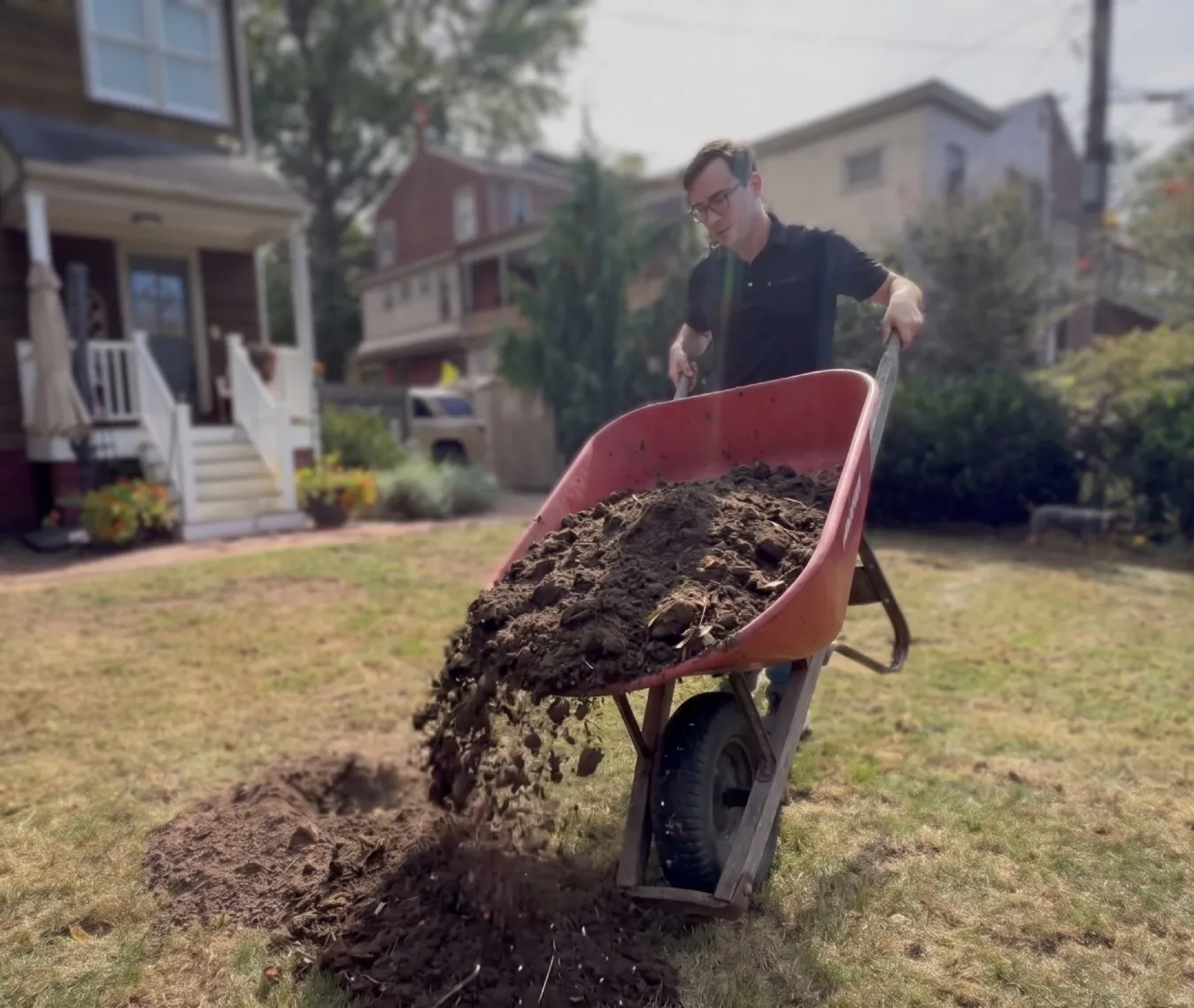
Here’s something a lot of Pennsylvania homeowners don’t know: since July 2022, the state’s fertilizer law applies to you, not just to lawn care companies. If you spread a bag of fertilizer on your own lawn, the rules on how much, when and where are yours to follow.
The point of the law is clean water. Fertilizer that the grass can’t use washes off driveways and lawns into storm drains, then into creeks like the Brandywine and eventually the Chesapeake Bay. The good news is that following it mostly means doing what’s better for your lawn anyway: feeding less, feeding smarter and building soil that holds on to what you put down.
We’re a robotic mower dealer, not lawyers. This is a plain-English summary of what the state and Penn State Extension publish; the law and the bag’s label are the final word.
The rules at a glance
| Rule | What it says |
|---|---|
| Nitrogen per application | No more than 0.9 lb total N and 0.7 lb plant-available N per 1,000 sq ft, unless it’s an enhanced-efficiency (slow-release) product |
| Phosphorus | None, unless you’re establishing, reestablishing or repairing turf, or using an enhanced-efficiency phosphorus product |
| Organic fertilizers’ phosphorus | Enhanced-efficiency, natural organic and organic-based fertilizers: at most 0.25 lb phosphate per 1,000 sq ft per application, 0.50 lb per year |
| Winter blackout | No nitrogen or phosphorus fertilizer after December 15 or before March 1 |
| Frozen or snowy ground | Don’t apply on snow-covered or frozen ground, and never use fertilizer to melt ice |
| Weather | Don’t apply when heavy rain is expected |
| Water setback | Keep a 15-foot buffer from the top of the bank of a lake, pond, wetland or stream |
| Hard surfaces | Never apply to driveways or sidewalks; sweep stray granules back onto the grass right away |
| Equipment | Use a properly calibrated spreader and follow the label’s rate |
Sources: the Pennsylvania Department of Agriculture’s homeowner page and Penn State Extension’s summary for home gardeners. Penn State also notes one exception: if a soil test recommends a higher rate than the law’s maximums, you may follow the soil test.
What 0.9 lb of nitrogen actually looks like
The nitrogen cap is per application, per 1,000 square feet, and it’s measured in pounds of nitrogen, not pounds of product. The first number on the bag is the percentage of nitrogen.
- A 24-0-6 fertilizer is 24% nitrogen. 0.9 lb of nitrogen ÷ 0.24 = about 3.75 lb of product per 1,000 sq ft.
- On a half-acre lawn (about 21,800 sq ft), that’s roughly 82 lb of that product per application at the cap.
Most bag labels in Pennsylvania are already written to the law, so following the label’s spreader setting keeps you inside it. The trouble starts with “a little extra for good measure,” a spreader that’s never been calibrated, or a second pass to fix stripes.
Why the winter blackout matters
Cool-season lawns can use a late-fall feeding, and that’s still allowed through mid-December on ground that isn’t frozen. After December 15, roots aren’t taking up much, the ground freezes and thaws, and whatever sits on top rides the next rain into a storm drain. Mark your calendar: the last fertilizer of the year goes down before the 15th, and the first of the new year waits until March.
The phosphorus rule, and where compost fits
Phosphorus is the nutrient that turns streams and ponds green with algae, so the law keeps it off established lawns. That’s why the middle number on most lawn fertilizer bags in Pennsylvania is now zero. Starter fertilizer for new seed is the main exception.
Organic and organic-based fertilizers have their own phosphate cap (0.25 lb per 1,000 sq ft per application, 0.50 lb per year), because manures and blood or bone meals carry some phosphorus naturally. If you top-dress with compost or use an organic fertilizer, ask the supplier for a lab analysis so you know what’s in it, and keep applications thin and spaced out. (How to read a compost lab report.)
Feeding less is easier than it sounds
The law caps how much you put down at once. Three habits mean you need less to begin with:
- Leave the clippings. Clippings are roughly 3 to 4% nitrogen by dry weight, and returning them can supply about a quarter of a lawn’s yearly nitrogen. A robot mower does this by default, every day, with clippings small enough to disappear. (How clippings fit a feeding plan.)
- Build organic matter. Soil with a healthy organic layer holds nutrients instead of losing them to runoff, so each feeding goes further. (Why your lawn stays thin: soil tilth and the O horizon.)
- Test before you feed. A soil test from Penn State’s lab tells you what’s actually short. Many lawns don’t need phosphorus at all, and some need lime more than fertilizer.
Put together, a lawn with daily robotic mowing, a thin fall compost top-dressing and a soil-test-based feeding plan often needs fewer and lighter applications than the four-step programs sold in stores. That’s less money spent, less to wash away and a lawn that’s easier to keep inside the rules.
How we approach it
Zippy Lawnz installs and services robotic mowers; we don’t run a spray program. What we do is help customers set up a lawn that needs less: a robot that returns micro-clippings every day, and, within 30 miles of Kennett Square, Organic Lawn Builder compost delivered or spread. Our free Zippy Lawn Care Report also prints the feeding plan for your grass type against your state’s rules.
Want to start with the map? Map your lawn free, or call or text 844-445-2969.
Frequently asked
Does Pennsylvania's fertilizer law apply to homeowners?
Yes. The Pennsylvania Department of Agriculture says everyone who applies fertilizer must comply, including homeowners and residents who fertilize their own lawns, not just lawn care companies.
How much nitrogen can I put on my lawn in Pennsylvania?
No more than 0.9 lb of total nitrogen and 0.7 lb of plant-available nitrogen per 1,000 square feet per application. Enhanced-efficiency (slow-release) nitrogen products are treated differently, so follow the bag's label.
When can't I fertilize my lawn in Pennsylvania?
Penn State Extension says nitrogen and phosphorus fertilizers may not be applied after December 15 or before March 1, or when the ground is snow-covered or frozen. The state also says not to fertilize when heavy rain is expected.
Can I use phosphorus on my lawn in Pennsylvania?
Only when establishing, reestablishing or repairing a lawn, or when using an enhanced-efficiency phosphorus product. Natural organic and organic-based fertilizers are capped at 0.25 lb of phosphate per 1,000 sq ft per application and 0.50 lb per year.
Keep reading

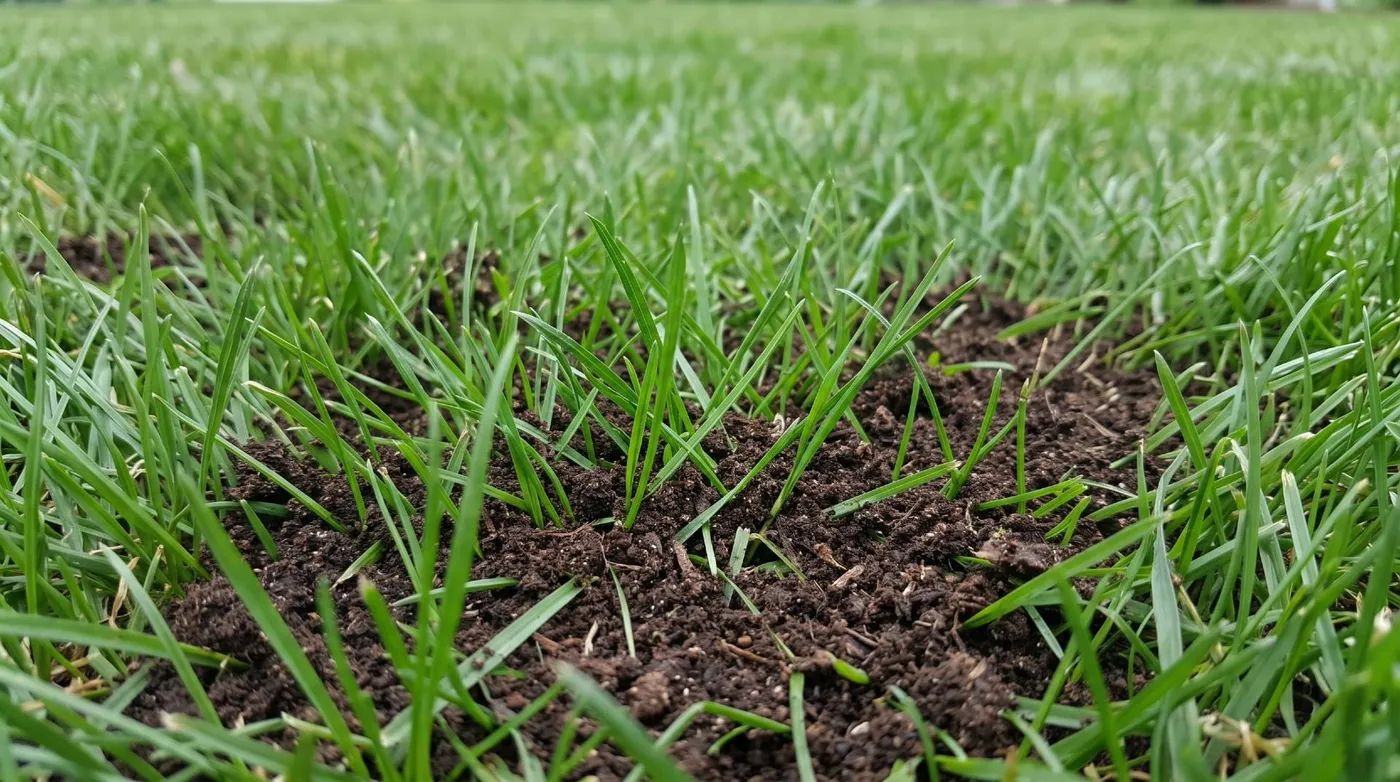 Tips & MaintenanceSynthetic Fertilizer vs. Building Soil: Rent or Own Your Lawn?Spray-on fertilizer buys a few weeks of green; soil organic matter keeps a lawn thick for years. The cost per year, runoff and results compared for a ¼-acre lawn.

Explore the system
The mowers and pages behind this topic — see them sized to your yard.