
Soil Tilth and the O Horizon: Why Your Lawn Stays Thin

You fertilize. You overseed. You water. And by July the lawn is thin again.
When that happens year after year, the grass usually isn’t the problem. The soil underneath it is. Specifically, its tilth, and whether it has an O horizon at all. Those two ideas came up again and again when we sat down with soil scientist Eric Toedter of MYCOguard in Kennett Square, and they explain a lot of frustrating lawns in Chester County.
What is soil tilth?
Tilth is the physical condition of the soil: how crumbly it is, how well it holds air and water, and how easily roots push through it. Pick up a handful of healthy topsoil and it breaks into small, rounded crumbs. Pick up a handful from a struggling lawn and it either holds together in a hard clod or falls apart like dust.
Five things make up good tilth:
- Soil aggregates. Mineral particles glued into stable crumbs by organic matter and soil life.
- Pore space. The gaps between crumbs, holding a balance of air and water.
- Organic matter. Decomposed plant and animal material that feeds microbes and holds nutrients.
- Drainage. Excess water moves down instead of pooling on top or running off.
- Root penetration. Roots can grow deep and reach moisture in a dry spell.
The top six inches is where it happens. That’s the tilth layer, and it’s where nearly all of a lawn’s roots live.
The O horizon: your soil’s skin
Soil scientists describe soil in layers called horizons. The top one, the O horizon, is the organic layer. Walk into a forest and kick the leaves aside: the dark, spongy, sweet-smelling layer underneath is the O horizon.
Most suburban lawns have very little of it. When a house is built, the topsoil is often stripped, stockpiled or buried, and the lawn is seeded or sodded on top of compacted subsoil. The grass grows, but it’s growing on bare bones.
Eric put it this way:
“It’s the skin of your soil system, if you will. You don’t just want meat and bones. You need some skin on top of it to protect it, to hold moisture, to hold in those nutrients.” — Eric Toedter, MYCOguard
That layer works like a sponge. Without it, rain runs off, fertilizer washes away with it and roots stay shallow. With it, water soaks in, nutrients are held where roots can use them and released slowly, and the soil stays cooler and moister through summer.
Three tests you can do this weekend
You don’t need a lab to get a good read on your soil.
1. The screwdriver test (compaction)
A day or two after a good soaking rain, push a long screwdriver into the lawn by hand in several spots. In healthy soil it slides in six inches without a fight. If it stops hard in the first couple of inches, the soil is compacted, and roots are hitting the same wall.
2. The shovel test (structure and roots)
Dig out a six-inch-deep slice of lawn and look at it from the side.
| What you see | What it means |
|---|---|
| Dark top layer, crumbly soil, roots 4+ inches deep | Good tilth and organic matter |
| Pale, dense soil that breaks into hard clods | Low organic matter, likely compacted |
| Roots only in the top inch | Shallow rooting; the lawn will brown fast in dry weather |
| A spongy mat between grass and soil | Thatch building up, often from soil life that can’t keep up |
3. The worm count (soil life)
In spring or fall, when the soil is moist, count the earthworms in that same shovelful. Several is a healthy sign. None at all suggests there’s little for them to eat. Earthworms are free aeration crews: their tunnels open pore space and their castings build crumb structure.
For actual numbers, pH and nutrients, send a sample to the Penn State Agricultural Analytical Services Laboratory or your state extension lab. It’s inexpensive and tells you exactly what the lawn is short on before you buy anything.
How to rebuild tilth under a lawn you already have
You don’t have to tear the lawn out. Tilth builds from the top down, a little at a time.
- Add organic matter. Top-dress with 1/8 to 1/4 inch of quality compost. You should still see grass blades poking through when you’re done. Fall is the best window for cool-season lawns. (Our step-by-step top-dressing guide.)
- Core aerate compacted spots first. Pulling plugs opens channels, and spreading compost right after fills them with organic matter. (When aeration helps, and when it doesn’t.)
- Leave the clippings. A robot mower’s daily micro-clippings feed the soil life that builds crumb structure.
- Keep heavy equipment off wet ground. One pass of a riding mower or a truck on soggy soil undoes seasons of work. A light battery robot doesn’t rut or compact.
- Repeat, don’t pile on. Eric’s rule is “less is more.” A thin layer every six months to a year beats one thick layer that smothers the grass.
After a couple of seasons, most lawns treated this way need less water, less fertilizer and less reseeding, and the shovel test looks completely different.
Where a robot mower fits
Tilth is slow to build and quick to lose. Daily robotic mowing helps keep what you’ve built: no heavy machine compacting the soil every week, clippings returned as a steady trickle of food for soil life, and a mower that works fresh compost down into the turf as it passes. That’s why we think of robot mowing and soil health as one plan, not two.
Want help reading your lawn?
When we map your lawn, we look at the whole property, not just whether a mower will fit. If you’re within 30 miles of Kennett Square, we can also deliver and spread Organic Lawn Builder, the Penn State-tested compost we carry from MYCOguard. Call or text 844-445-2969.
Frequently asked
What is soil tilth?
Tilth is the physical condition of the soil: how crumbly it is, how much room it has for air and water, and how easily roots grow through it. Good tilth breaks into small rounded crumbs in your hand. Poor tilth is dense and clod-like, or loose and dusty.
What is the O horizon?
Soil scientists describe soil in layers called horizons. The O horizon is the organic layer on top. In a forest it's the dark layer under the leaves. Many suburban lawns have little or none of it, because topsoil was stripped or buried during construction.
How do I improve soil tilth under an existing lawn?
Add organic matter a little at a time. Core aerate compacted areas, top-dress with 1/8 to 1/4 inch of quality compost (fall is the best window for cool-season lawns), leave the clippings on the lawn and keep heavy equipment off wet ground. Tilth builds over a couple of seasons.
How do I test my lawn's soil at home?
Push a long screwdriver into moist soil to check compaction, dig a 6-inch slice to look at color, structure and root depth, and count the earthworms in that shovelful. For pH and nutrients, send a sample to Penn State's lab or your state extension lab.
Keep reading
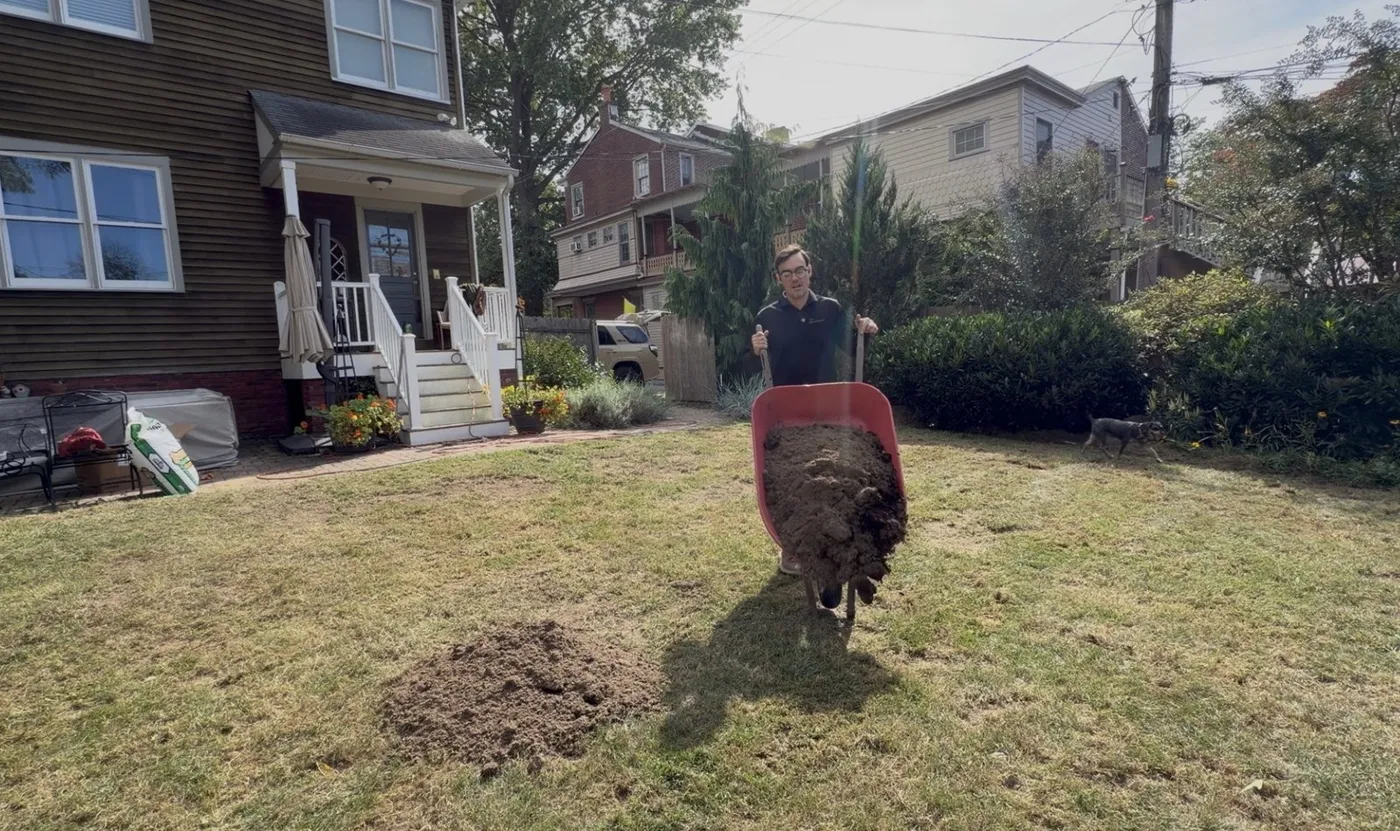 Tips & MaintenanceThe Long-Term Lawn: Robotic Mowing and Soil Health, TogetherQuick fixes keep a lawn on life support. Daily robotic mowing plus soil you build each fall makes it better every year. How the two work together, and the payoff.
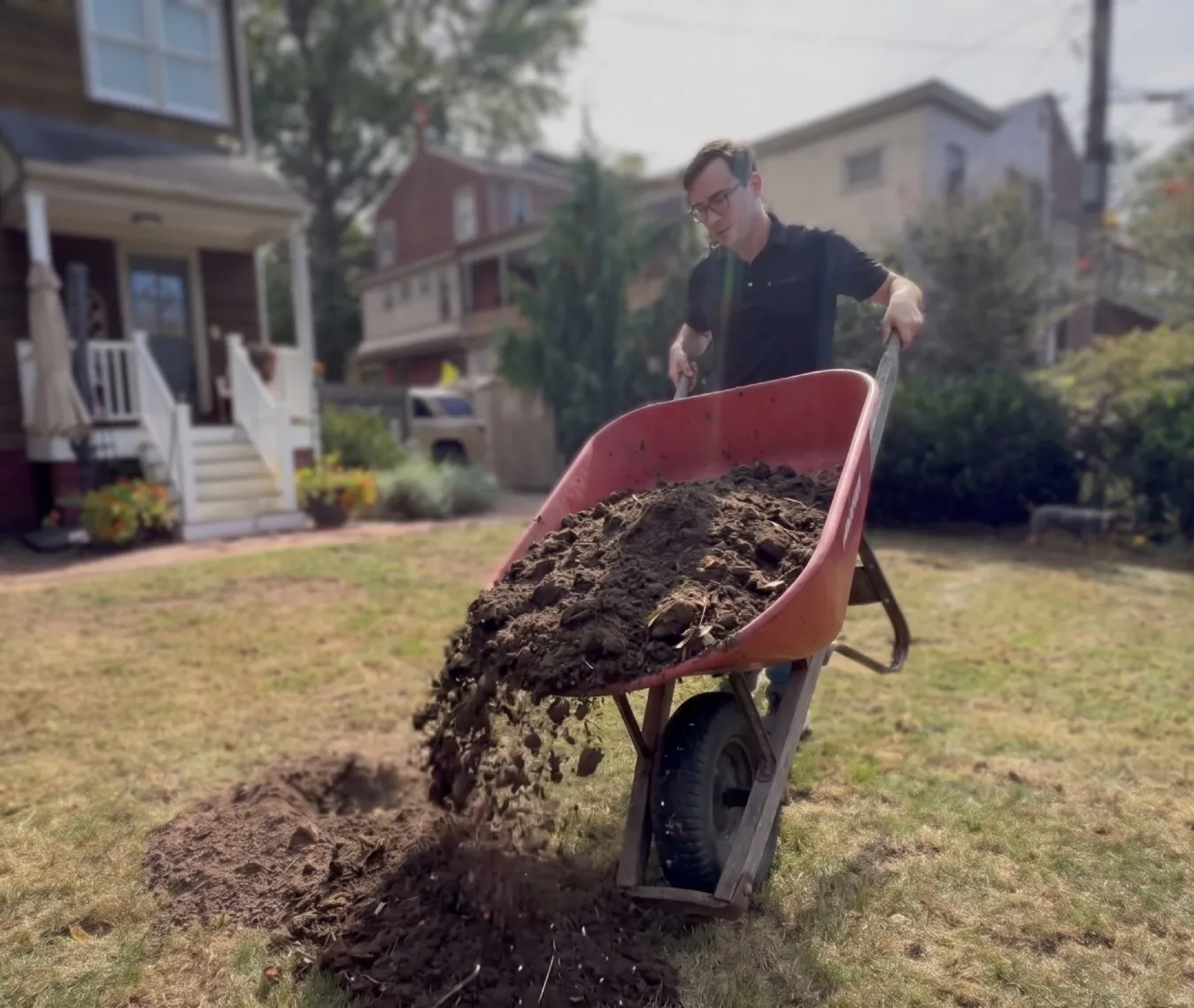 Tips & MaintenanceFall Compost Topdressing With a Robot Mower: When & HowHow to topdress a lawn with compost when a robot mower lives on it: best timing, how much material, pausing and restarting the mower, and pairing with aeration.

Explore the system
The mowers and pages behind this topic — see them sized to your yard.