
Can Robot Mowers Mow in the Rain? (And Should They?)
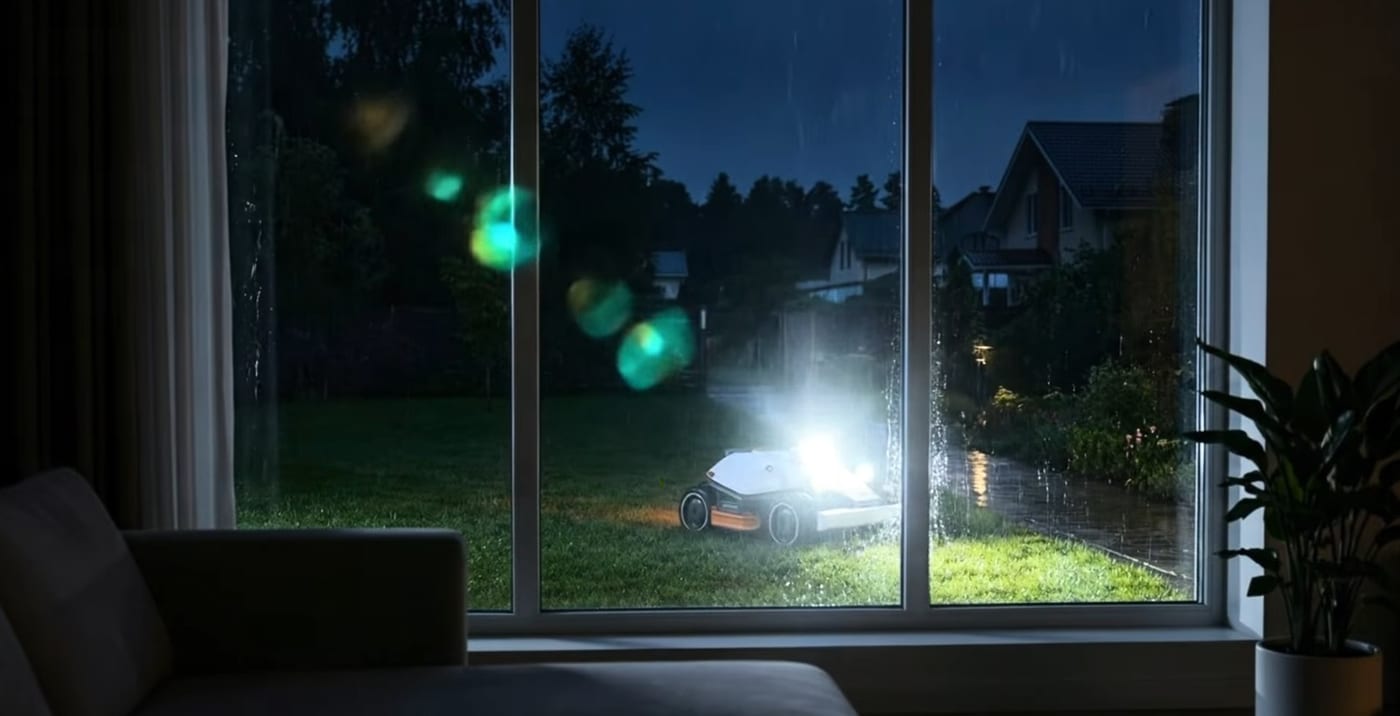
It starts raining, the robot’s mid-job, and you’re at the window wondering if you should go rescue it.
You don’t. But the full answer is more useful than that, because “can it mow in the rain” is actually two questions — can it (yes, comfortably) and should it (mostly no, and not for the reason people think). Here’s both, plus the settings that handle all of it automatically.
Can a robot mower get rained on?
Yes. It lives outside — rain is in the job description. Your mower sits at its dock through every storm of the season, and the housings and seals are designed to shed rain and dew. The heavier-duty machines make it formal: the Navimow Terranox is IP66-rated, with a rain sensor and a weather-forecast hold built in.
The irony worth knowing: the water that kills robot mowers almost never falls from the sky. It comes from pressure washers — the seals handle rain, not a focused 2,000-PSI jet — and from standing water, which we’ll get to.
Should it mow wet grass, though?
Mostly no — and the casualty isn’t the mower, it’s your lawn. Cutting soaked grass causes a cascade we see constantly on service calls:
- Clumps. Wet clippings stick together and drop in wads instead of mulching back invisibly.
- A packed deck. Damp clippings compact under the deck, adding drag that eats battery and tears the cut.
- Faster-dulling blades and higher motor load — wet mowing is simply harder work per square foot.
- Disease. A mower rolling through wet grass spreads fungal disease across the property, with fresh-cut blade tips as the open door.
On big properties we schedule around what we call the moisture window — roughly 10am to 10pm, after dew burns off and before it re-forms. That one scheduling habit, plus a dry-hours window in general, prevents most of the list above. (It’s also the main honest argument against overnight mowing — night is when grass is wettest.)
What does rain delay actually do?
It pauses scheduled mowing when rain is detected and waits for things to dry before resuming. Turn it on — it’s in the settings checklist for a reason.
Two things owners learn the hard way:
- It’s a silent schedule killer. If the mower mysteriously skipped its session, a triggered rain delay is one of the usual suspects, along with the 90% battery rule. Nothing is broken.
- It doesn’t know about your sprinklers. Irrigation is rain the mower didn’t see coming — schedule mowing away from your watering windows yourself.
The one hard line: standing water
Damp grass, fine. Standing water, never. Puddles, a flooded low spot, a yard still holding water after a big storm — that’s the water that gets into motors and electronics and kills machines. If your yard floods, pause the mower until it drains, and give any spot that holds water regularly a permanent no-go zone.
Slopes get a stricter rule
Traction drops hard on wet grass, and even a slope-rated mower can slip below its rating on a damp bank. Schedule your steep zones for the driest part of the day and let the flat zones absorb the marginal hours. On hills, “can it mow wet” and “should it” stop being different questions — neither.
The wet-spring silver lining
Here’s the flip side that surprises people: in a soggy spring, a robot is the gentle option. A weekly crew’s heavy machines on saturated turf leave ruts and torn ground — it’s exactly what pushed one Villanova homeowner to switch — while a light robot waits out the rain delay and resumes with a fraction of the ground pressure. The rain problem mostly solves itself when the machine weighs forty pounds instead of a thousand.
Get help with your robot mower
Zippy Lawnz is an authorized dealer and service center for Segway Navimow, Mammotion, and Yarbo, with nationwide sales and remote support and hands-on installs across Pennsylvania, New Jersey, Maryland, Delaware, Virginia, and Colorado. Wet yard, shady corners, a spot that never quite drains — tell us, that’s what the site assessment is for.
- 📍 Check my lawn — free — your lawn’s real size, slope and satellite sky view, measured in about two minutes.
- 🗺️ Book a free site assessment — we’ll pull up your address, plan the antenna and dock, and quote the whole install.
- 📞 Call or Text Us: 410-725-7500
The rules: rain on the mower — fine · wet grass — skip it (clumps, dull blades, disease) · rain delay ON · 10am–10pm moisture window · standing water — never · wet slopes — strictest of all
Frequently asked
Can a robot mower get rained on?
Yes — these machines live outside at their docks all season and are built to shed rain and dew. Higher-end models are formally weather-sealed (the Navimow Terranox is IP66, with a rain sensor and a weather-forecast hold). Rain falling on a robot mower is a non-event. The one water rule that actually matters: never point a pressure washer at one — the seals are designed for rain, not a focused jet.
Is it bad for a robot mower to cut wet grass?
It's bad for the cut, more than for the mower. Wet clippings clump on the lawn instead of mulching, pack the deck (adding drag that eats battery), dull blades faster, and spread fungal disease across the yard with the mower as the vector. The machine survives wet mowing fine; your turf and your cut quality are the casualties. Use the rain delay and aim the schedule at dry hours.
What does a robot mower's rain delay setting do?
When rain is detected, the mower pauses scheduled mowing and waits for things to dry before resuming — turn it on. Two things to know: it's one of the 'silent schedule killers,' so if your mower mysteriously skipped a session after a shower, the rain delay is often why; and it doesn't know about your sprinklers, so schedule mowing away from irrigation windows yourself.
What about a yard with standing water?
That's the hard line. Damp grass is fine — these machines are built for it — but puddles, flooded low spots, or a yard still holding water after a storm can get into motors and electronics and kill the machine. If your yard floods, pause the mower until it drains, and map a no-go zone over any spot that holds water regularly.
Keep reading
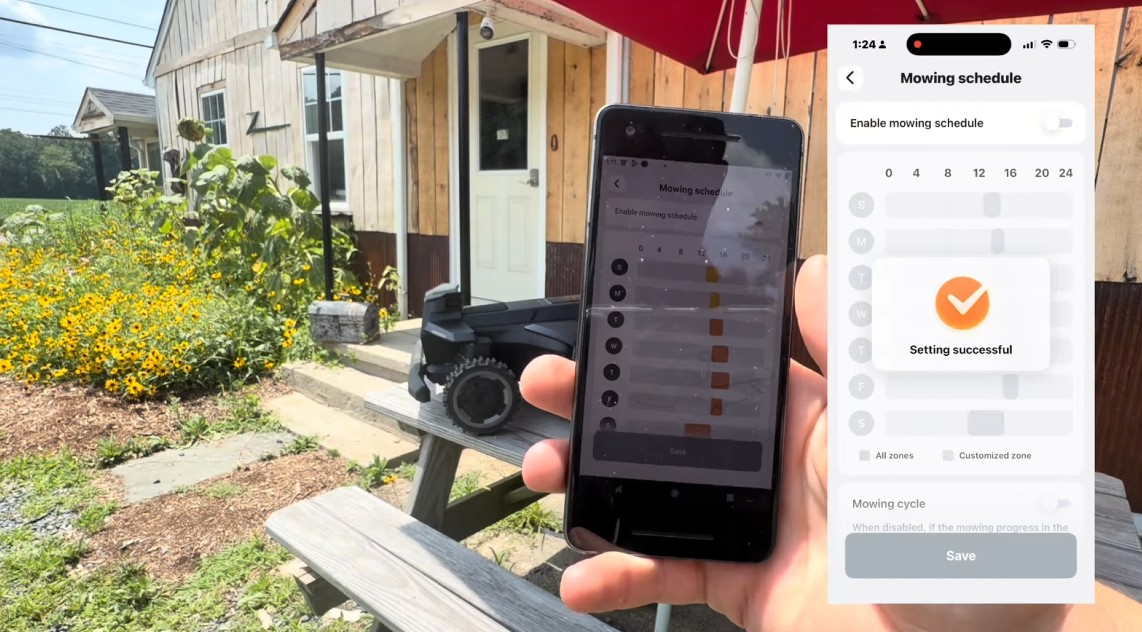 Tips & MaintenanceNavimow Scheduling Explained: End Times, Cycles & ZonesHow Navimow mowing schedules really work — the end-time trap, the Mowing Cycle toggle, the 90% battery rule, and how to build a zone-based weekly schedule.
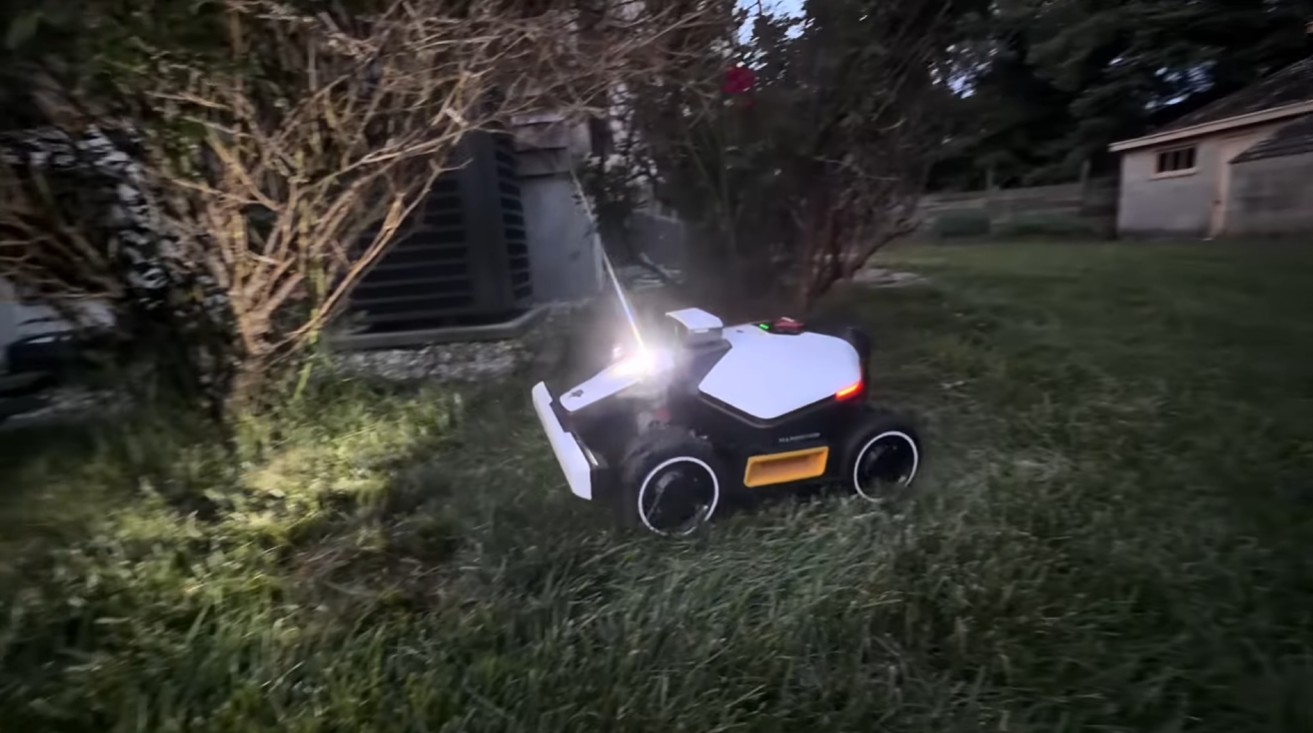 Tips & MaintenanceShould Your Robot Mower Mow at Night? Wildlife, Dew & LiDARNight mowing is quiet and satisfying — but should your robot mower do it? The honest truth on wildlife, why vision mowers fail in the dark, and how LiDAR fixes it.
 Tips & MaintenanceHow to Clean Your Navimow Robot Mower (Deck & Grass Clumps)Learn how to clean a Segway Navimow robot mower the right way — cleaning mode, an air brush for the deck, and why you should never use a pressure washer.
Explore the system
The mowers and pages behind this topic — see them sized to your yard.