
Navimow Terranox: The Real Math Behind 6 Acres — and How to Get There
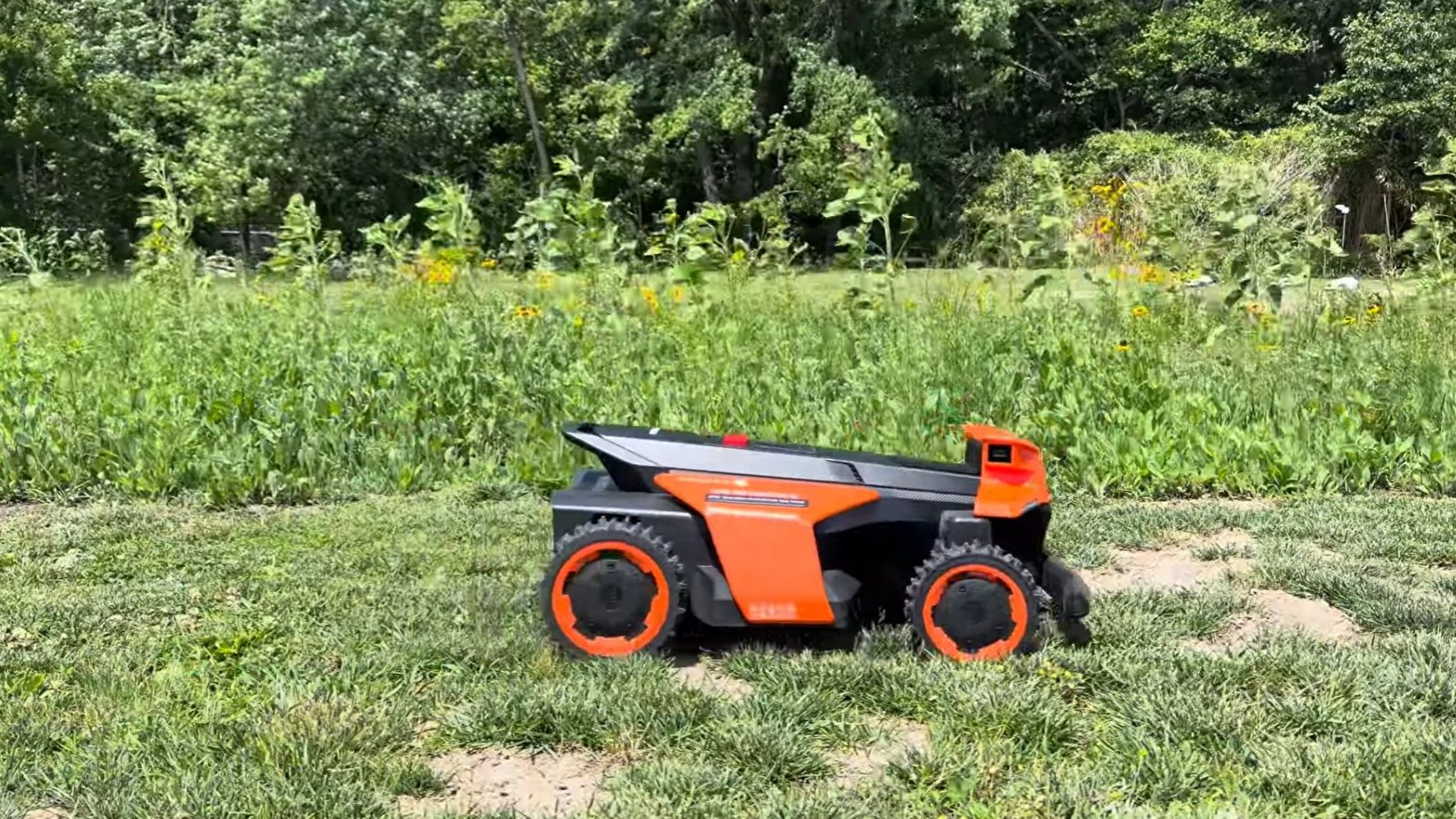
The Segway Navimow Terranox CM240M1 is rated to mow up to 6 acres. That’s the number on the spec sheet, and it’s an honest number — Segway isn’t hiding anything. But if you’re deciding whether one machine can hold your property — whether you’re a grounds manager, a landscape contractor, or a homeowner with serious acreage — “6 acres” is not the number you should be planning around.
We run these machines ourselves (that’s our review unit in the photos, working an Eastern Shore field). Here’s the math behind the rating, and here’s how we actually spec them.
The spec sheet, straight up
Terranox CM240M1
- Maximum mowing area: 6 acres, within 72 hours
- Runtime: 180 minutes
- Charge time: 180 minutes
- Mowing area per charge: 0.5 acre
- Mowing speed: 2.2 mph
- Cutting width: 17 in (dual disc, 12 blades)
- Cutting height: 0.75–4 in
- Drive: AWD, slopes to 40° (84%)
- Navigation: EFLS™ NRTK (Network RTK + 360° vision + VIO)
- Obstacle avoidance: VisionFence™ (360° RGB camera + ToF)
- Noise: 68 dB(A) — IP66 — 66 lb
Terranox CM120M1
- Maximum mowing area: 3 acres, within 40 hours
- Runtime: 145 minutes | Mowing area per charge: 0.37 acre | Speed: 2.0 mph
- Everything else — deck, navigation, AWD, VisionFence — is the same platform
How the Terranox covers so much ground
It isn’t speed. A 17-inch deck at 2.2 mph is not a fast machine by any traditional measure — a 60” zero-turn will lap it all day long.
The Terranox wins on hours, not horsepower. It doesn’t stop for lunch, it doesn’t need a trailer, and it doesn’t go home at 4:30.
But run the arithmetic on that 72-hour figure:
- 180 minutes mowing + 180 minutes charging = a 6-hour cycle
- Each cycle produces 0.5 acre
- 4 cycles per day = 2 acres per day
- 3 days × 2 acres = 6 acres in 72 hours
The spec checks out perfectly — if the machine runs 24 hours a day for three straight days.
Segway’s own footnote is right there on the page: that time includes charging, and it’s tested on a flat, obstacle-free lawn. Real numbers vary with shape, slope, obstacle density, and cut height.
So the 6-acre rating isn’t a lie. It’s a ceiling measured under conditions your property does not have.
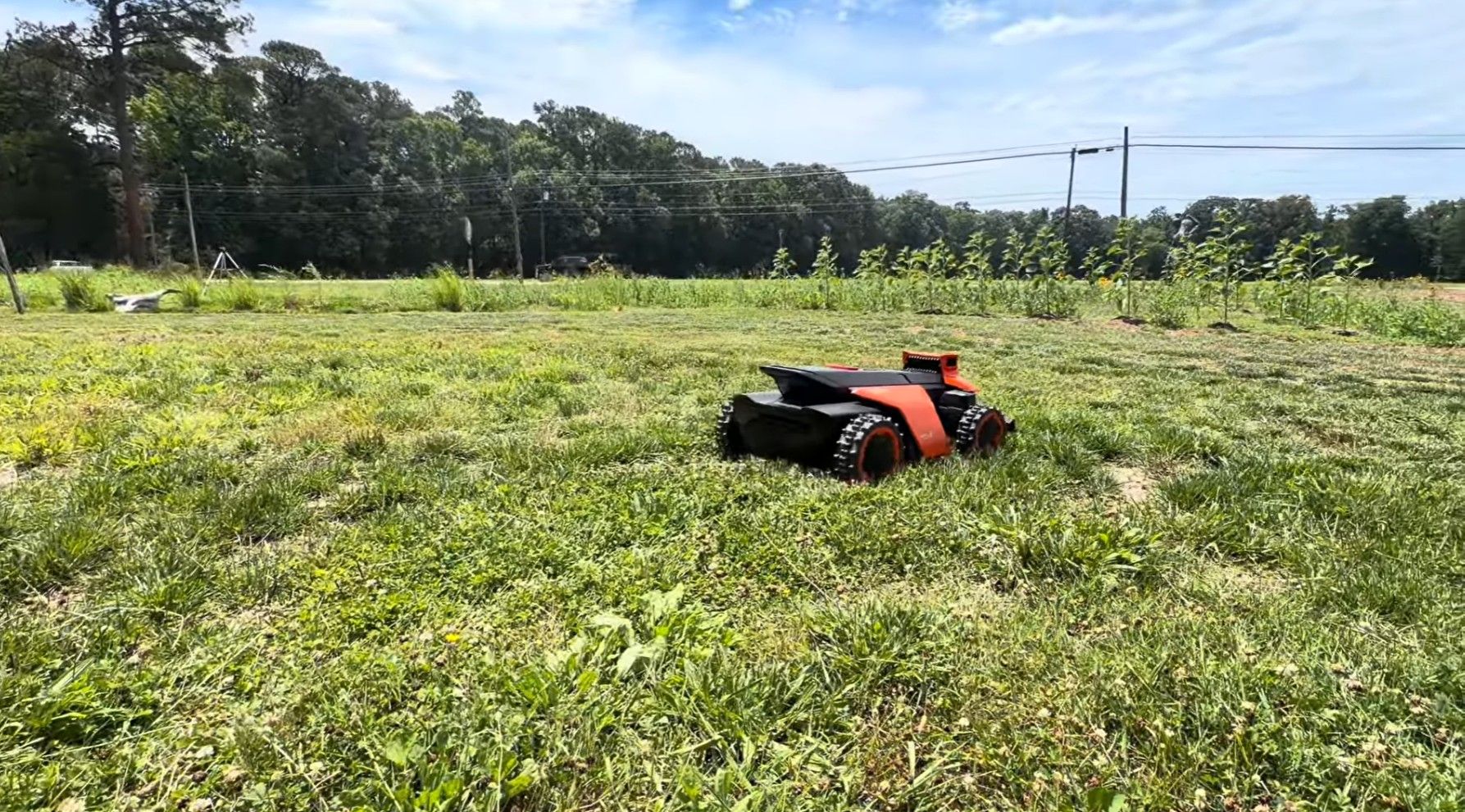
Why we don’t run machines 24 hours a day
Here’s the part most spec-sheet comparisons miss.
You should not be mowing in dew.
Across the Mid-Atlantic — Chester County, the Brandywine Valley, Delaware, the Eastern Shore — summer nights are humid. Dew sets in a couple of hours after sunset and doesn’t burn off until mid-morning. Mowing wet turf gets you:
- Clumped, matted clippings instead of clean mulch
- A loaded, packed deck
- Faster blade dulling and higher motor load (which costs you area per charge)
- Fungal disease spread across the whole property, because the machine is now a vector
The Terranox is IP66 and it has a rain sensor and weather-forecast hold. It will survive wet grass just fine. That’s not the issue. The issue is that your turf won’t, and your cut quality won’t.
The 68 dB(A) noise rating is a genuine Terranox advantage — you can absolutely run past dark next to occupied buildings without a single complaint. But we cut the schedule around the moisture window, not around the noise limit. On a typical dry summer day in our service area, that’s roughly a 10am to 10pm operating window. Call it 12 usable hours.
Which changes the math completely:
| Spec sheet (24/7) | Real world (12-hr dry window) | |
|---|---|---|
| Cycles per day | 4 | 2 |
| Acres per day | 2.0 | 1.0 |
| Days to cover 6 acres | 3 | 6 |
One CM240M1 on a true 6-acre property, mowed only in dry conditions, needs six days to complete a single pass. That leaves you one day of margin in the week. One rain day, one service call, one dead spot in RTK coverage, and you’re behind — and on a robotic mowing program, “behind” compounds. The grass gets long, the machine works harder, area-per-charge drops, and you fall further behind.
Try it on your own property
Drag the sliders — the cycle math comes straight from the machines’ published numbers, and the verdict is the same margin rule we use when we spec real fleets.
–
ℹ️ 24 hrs/day is the spec-sheet scenario — mowing through overnight dew, which we don't recommend for turf health.
Flat-lawn cycle math — slope, obstacles and layout only subtract. Profile the property for real numbers →
Redundancy beats maxing out a single machine
This is the core of how we spec Terranox deployments at Zippy Lawnz.
Do not buy one machine sized exactly to your property. Buy capacity with margin.
On a 6-acre site, two units running at roughly 50% load each will beat one unit pinned at 100% on every metric that matters:
- A full pass in 3 days instead of 6, with four days of slack for weather, service, and touch-up
- No single point of failure. One unit down is a slower week, not a failed property. One unit down when it’s your only unit is a property that goes to seed while you wait on parts.
- Better turf. More frequent passes mean the machine takes a smaller bite each time, which is exactly how robotic mowing is supposed to work.
- Shorter transit. Two docks placed at two centers of gravity means far less time walking to and from the charging station — and remember, that walk happens twice per cycle, every cycle.
It’s also worth pricing two CM120M1 units against one CM240M1. Same 6 acres on paper, two docks, two independent machines, full redundancy. For a lot of properties — especially split sites, or campuses with a road or building between turf areas — that’s the better configuration, not the compromise. (We ran the same one-big-vs-two-small question for residential machines in two X450s vs one Terranox.)
Commercial grade doesn’t mean commercial only
“Commercial” describes the machine, not the customer.
If you own 5, 10, even 20 acres of home turf, everything above applies to you just as directly as it does to a property manager — you have a commercial-scale mowing problem, and the honest answer is a commercial-grade platform. The duty cycle that holds a corporate campus is the same duty cycle that holds a big rural property: IP66 sealing, AWD to 84% slopes, VisionFence obstacle handling, and a machine built to run every day, all season, without being babied.
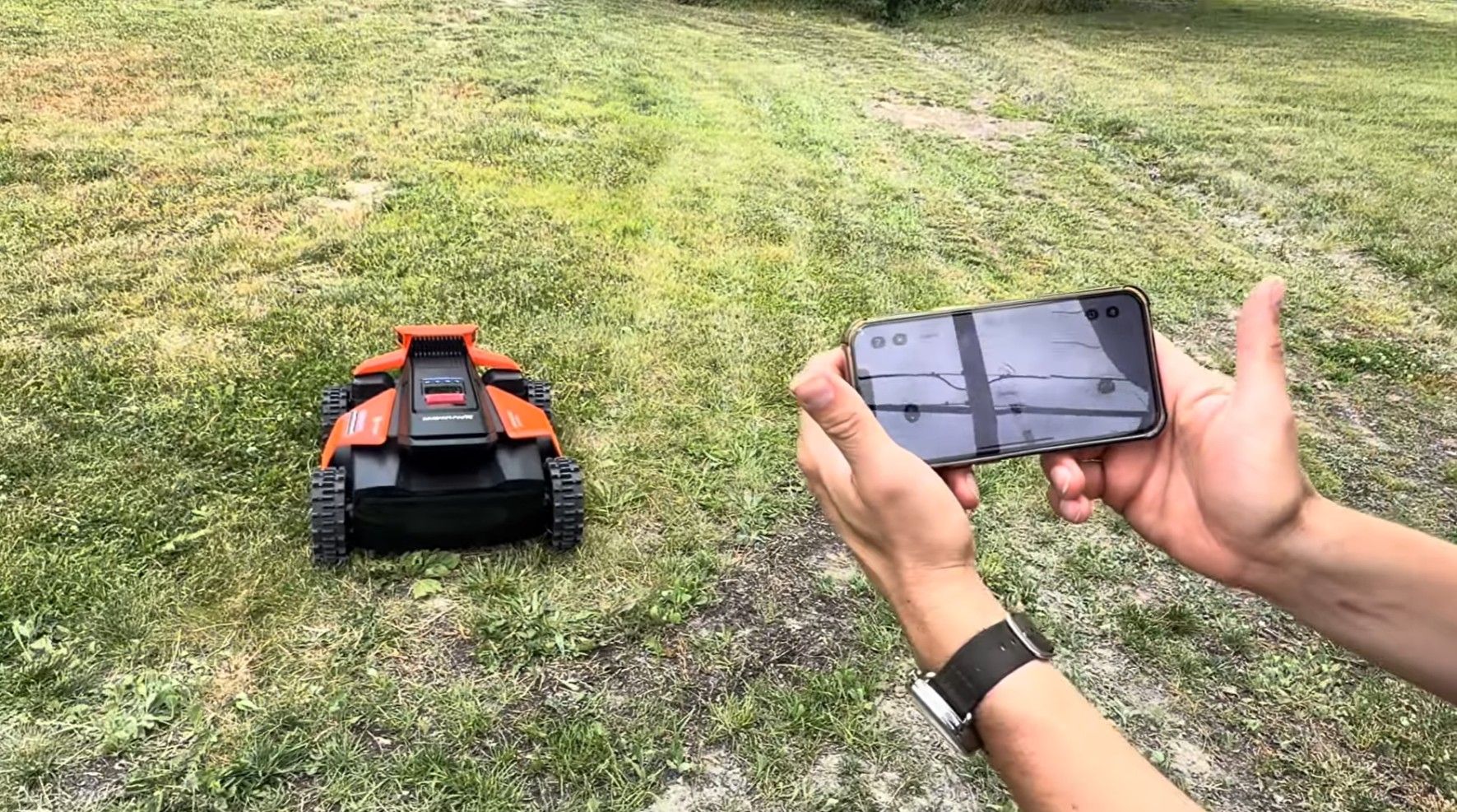
A 20-acre homestead pencils out exactly the way the calculator above shows: at a realistic acre per day per unit, that’s a fleet of five or six machines, planned with the same redundancy logic, docks placed at centers of gravity, and NavimowFleet™ running the whole operation from one phone. That’s not overkill — it’s what replaces the twelve hours a week you (or the crew you’re paying) currently spend on a tractor. And a fleet of robots never calls out sick during the spring flush.
We spec big-homeowner fleets and commercial fleets the same careful way, because they’re the same problem.
Before you spec anything: profile the site
Acreage on a tax map is not mowable acreage, and RTK coverage on a marketing map is not RTK coverage at your dock location.
Run the property through our free lawn mapping software before anyone quotes you a machine count. Measure the actual turf, look at the zones, look at the layout, and get a real number to plan against. A commercial robotic mower lives or dies on its site assessment — everything downstream (unit count, dock placement, no-go zones, schedule) depends on getting this part right.
Blades: the cheapest capacity you will ever buy
Dull blades cost you area per charge. That’s the whole story.
A dull blade means higher motor load, which means less acreage before the machine goes back to dock, which means fewer acres per day, which means you miss your window. People obsess over slope ratings and navigation stacks and then run four-month-old blades and wonder why coverage slipped.
Our recommendation: change blades every 4 weeks during the season. Not “when they look dull.” Every four weeks, on a calendar, like an oil change. (Here’s the full blade guide — the new-screws rule applies to the Terranox too.)
And swap the disc, not the blades. The Terranox runs a dual-disc system with 12 blades. Changing 12 individual blades in the field is a chore — it’s fiddly, it’s slow, and it’s the kind of job that quietly doesn’t happen when a crew is busy. Keeping cutting discs with blades pre-attached on the shelf turns a 20-minute job into a two-minute swap: pull the disc, drop in the fresh one, go. Recondition the old discs on the bench when you have time.
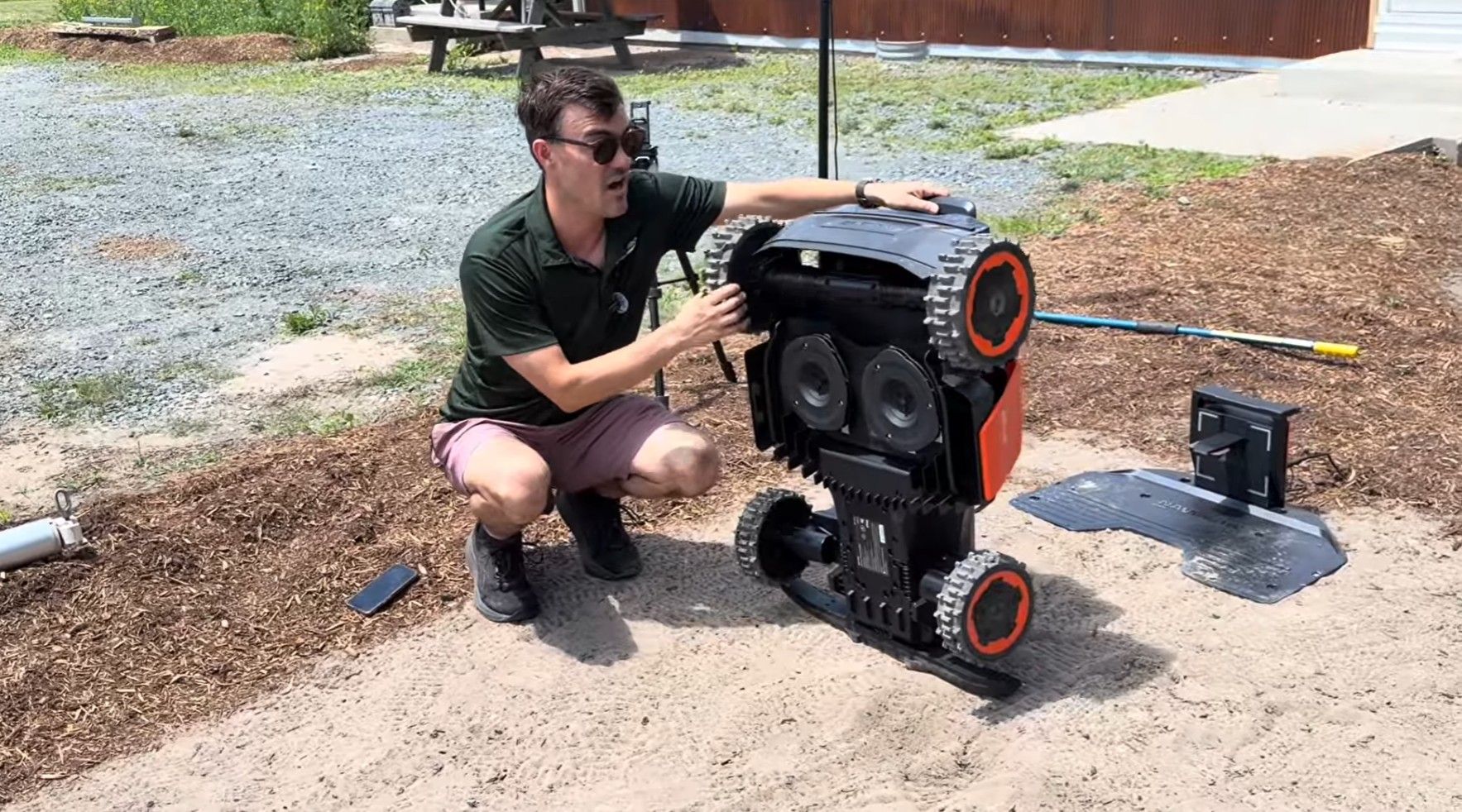
Make it easy and it gets done. Make it fiddly and your capacity slowly bleeds out over the season.
The short version
- 6 acres in 72 hours is a 24/7 lab number on flat, obstacle-free turf
- Cut the dew hours and you’re realistically at 1 acre per day, per machine
- Spec for redundancy, not for the ceiling — two machines at half load beat one at full load
- Profile the site first — free, from satellite
- Fresh blades every 4 weeks, swapped as pre-loaded discs
The Terranox is a genuinely strong commercial platform. AWD to 84%, antenna-free NRTK, VisionFence obstacle handling, and NavimowFleet™ for managing multiple units from one dashboard — it does what it says. Just spec it against the property you actually have, not the property on the footnote.
We sell, install and service Terranox fleets across PA, NJ, MD, DE, VA and CO — for estates and big rural properties just as much as campuses and HOAs. Here’s how a fleet rollout works, or call/text 410-725-7500 and we’ll run your property’s numbers with you.
Frequently asked
Can the Navimow Terranox really mow 6 acres?
Yes — under the conditions of the rating. The CM240M1's 6-acre figure assumes the machine cycles 24 hours a day for 72 straight hours on a flat, obstacle-free lawn: 180 minutes mowing plus 180 minutes charging per 0.5-acre cycle. It's an honest ceiling, not a planning number. Cut the overnight dew hours and one unit realistically covers about 1 acre per day.
How many acres per day does a Terranox actually cover?
In a realistic 12-hour dry window — roughly 10am to 10pm on a Mid-Atlantic summer day — a CM240M1 completes about 2 six-hour cycles at 0.5 acre each: about 1 acre per day. On spec-sheet 24/7 conditions it's 2 acres per day, but that means mowing through overnight dew, which we don't recommend.
Should a robot mower run at night through dew?
The machine survives it — the Terranox is IP66 with a rain sensor. Your turf doesn't: wet mowing clumps clippings, packs the deck, dulls blades faster, raises motor load (costing area per charge), and spreads fungal disease across the property with the mower as the vector. We schedule around the moisture window, roughly 10am–10pm.
Is one CM240M1 or two CM120M1 units better for 6 acres?
Price both. Two 120s give you two docks, two independent machines and full redundancy on the same 6 paper acres — often the better configuration on split sites or campuses, not the compromise. The core principle either way: two units at roughly half load beat one unit pinned at 100% on pass time, failure tolerance and turf quality.
How often should Terranox blades be changed?
Every 4 weeks in season, on a calendar — not 'when they look dull.' Dull blades raise motor load, which cuts area per charge, which costs you acres per day. And swap complete pre-loaded cutting discs instead of 12 individual blades: a two-minute swap instead of a 20-minute chore, so it actually happens.
Is the Terranox only for commercial properties?
No — commercial grade describes the machine, not the customer. If you own 5, 10 or 20 acres of home turf, the Terranox is exactly the platform we'd put on it: the same duty cycle, AWD and fleet software that hold a corporate campus hold a big rural property. A 20-acre homestead is a fleet of several units, planned the same way — and NavimowFleet runs the whole thing from one phone.
Keep reading
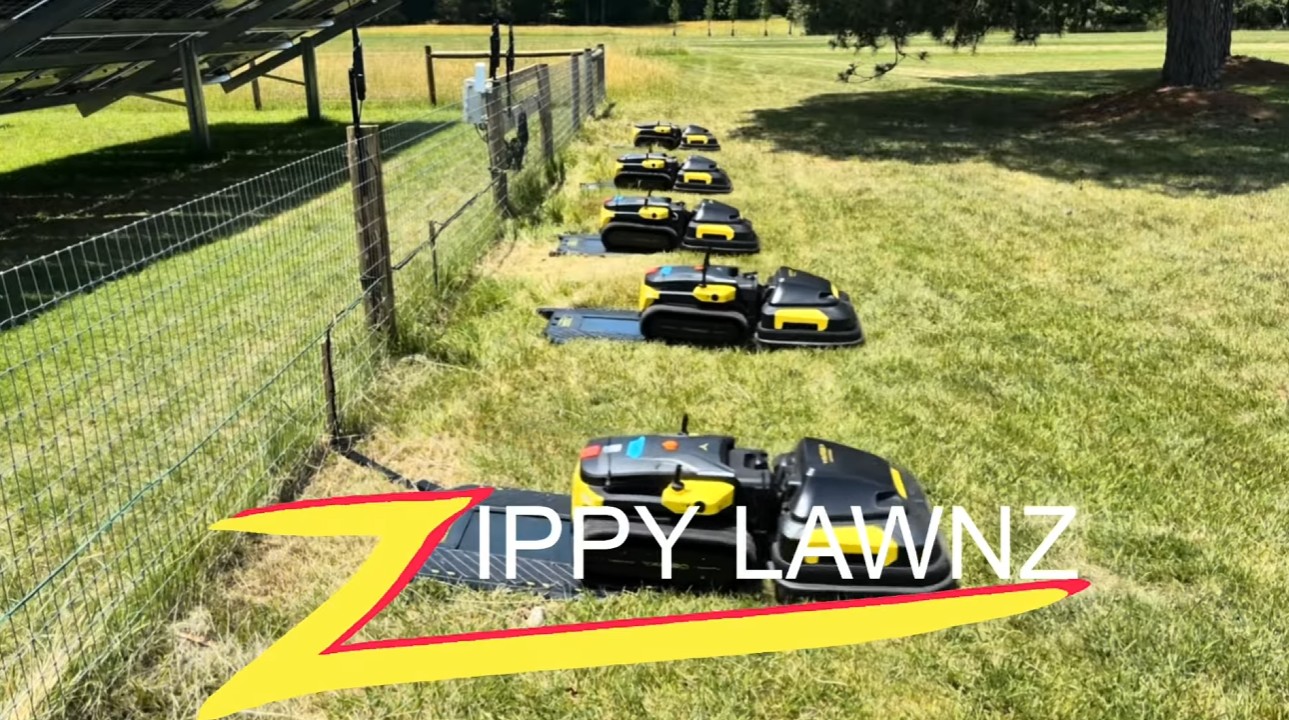 Buying guideBest Robot Mower for Large Lawns (2026): Yarbo vs Navimow vs MammotionThe best robot mowers for large lawns and acreage — LUBA 3, Navimow X450, Yarbo Pro and the commercial Terranox — matched to your acres, from 1 to 6+.
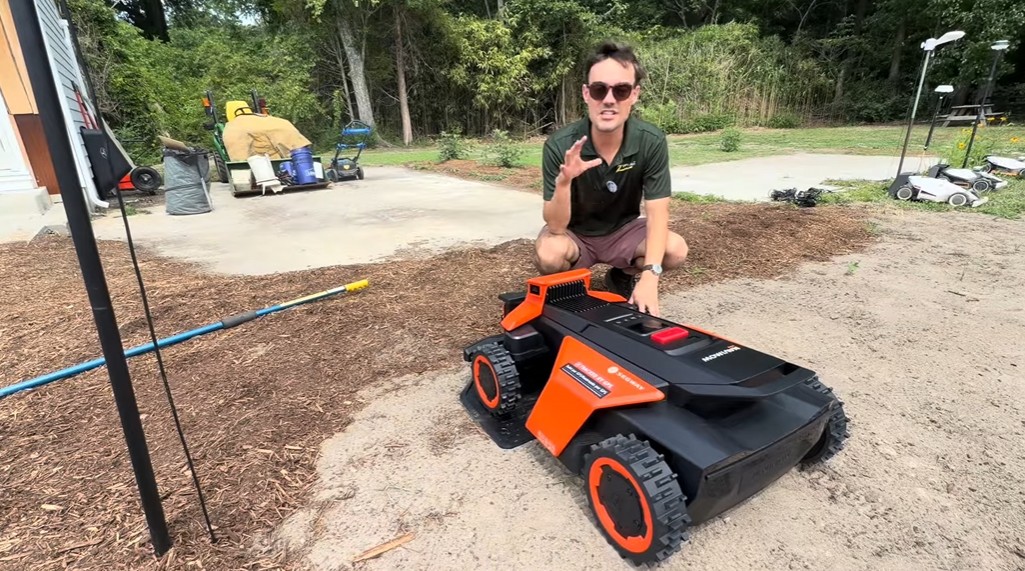 Commercial & Sports FieldsSegway Navimow Terranox Review: 3-Acre vs 6-Acre Commercial MowerHands-on Navimow Terranox review from an authorized dealer — the 3-acre CM120M1 & 6-acre CM240M1 commercial robot mowers: setup, mapping & verdict.
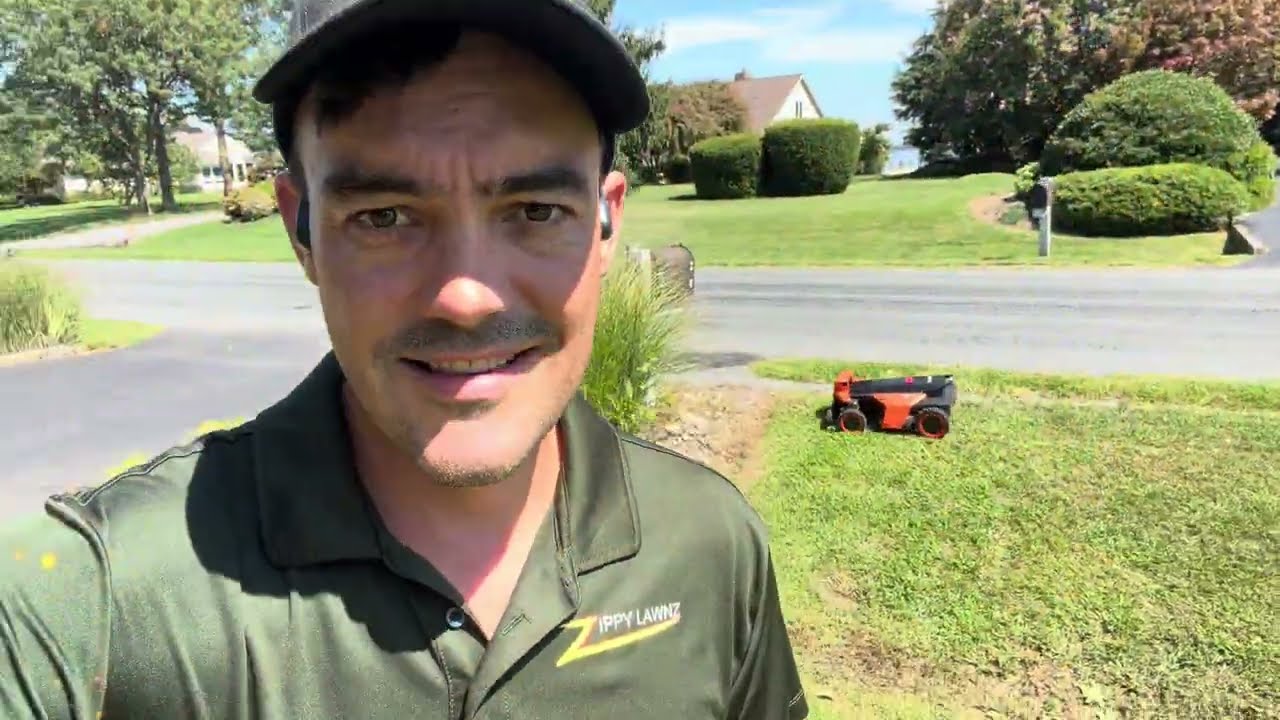 Customer InstallsNavimow Terranox vs. Parked Cars: A 3-Acre Install in Chester, MDA Segway Navimow Terranox on a 3-acre Chester, MD lawn: why oversizing is the right call, a 33% blade upgrade for thick turf — and mowing around parked cars.
Explore the system
The mowers and pages behind this topic — see them sized to your yard.