
How to Clean Your Navimow Robot Mower (Deck & Grass Clumps)

The #1 thing that hurts a robot mower’s cut quality isn’t dull blades or bad mapping — it’s wet grass packed under the deck. And it’s a five-minute fix.
Robotic mowers are about as close to “set it and forget it” as lawn care gets. You schedule it, it mows, it goes home and charges. But there’s one piece of maintenance people skip — and it’s the one that quietly costs them cut quality, battery runtime, and eventually blade motors.
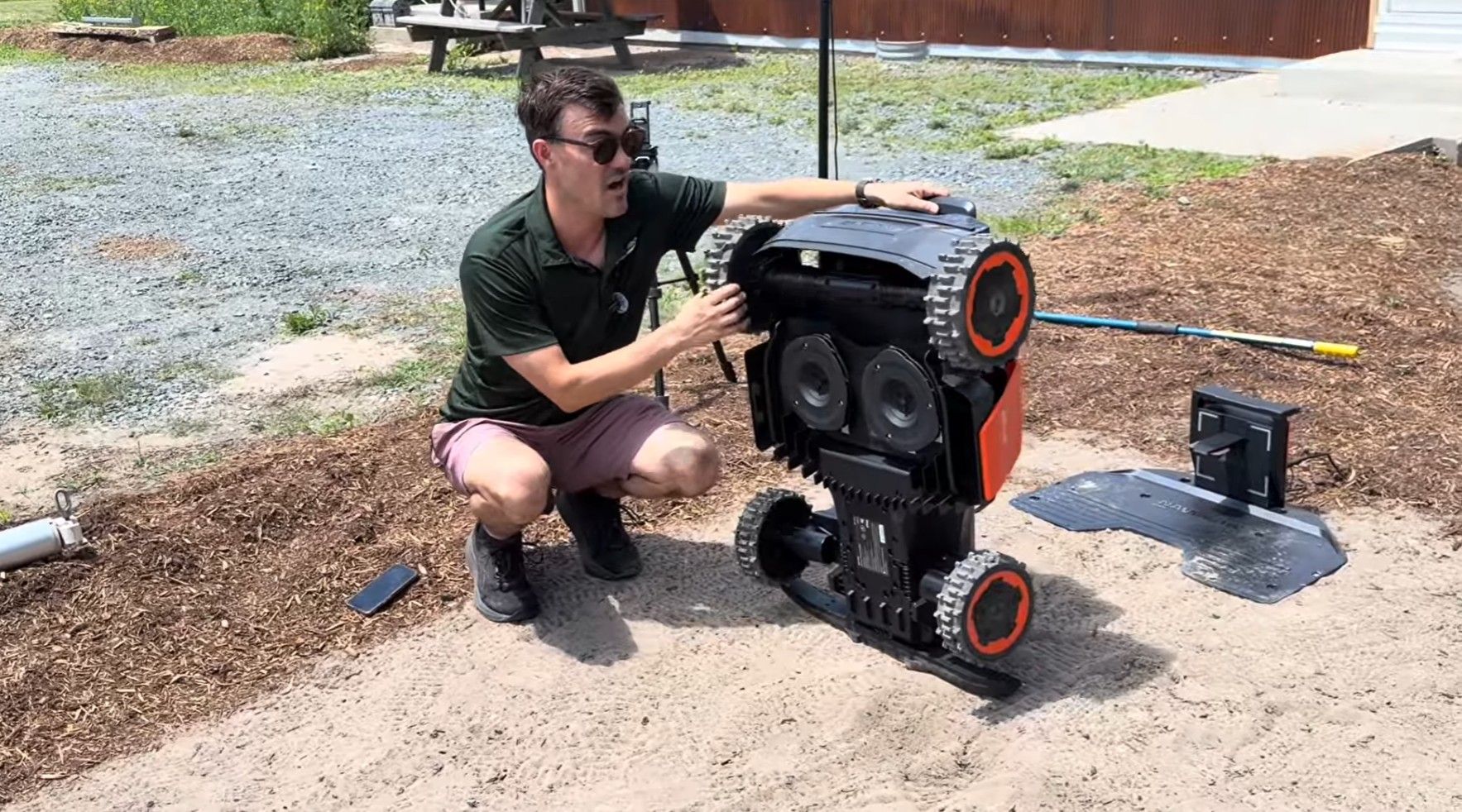
Cleaning the underside of the deck.
If you own a Segway Navimow, here’s exactly how we clean them at Zippy Lawnz, why grass clumps up in the first place, and the one tool you should absolutely never point at your mower.
Why does a packed deck matter so much?
Because a robot mower doesn’t cut like a traditional mower. Instead of one big blade taking off a couple of inches at a time, a Navimow uses small razor blades on a spinning disc, shaving off a tiny amount of grass every single day. Those clippings are supposed to fall right back into the lawn as mulch.
When the underside of the deck is packed with wet, compacted clippings, a few things start going wrong:
- The blade disc can’t spin freely. Buildup creates drag, which pulls more current and eats into your runtime.
- Clippings stop falling through. Instead of mulching back into the turf, they pack tighter and tighter.
- Cut quality drops. A blade dragging through a wall of packed grass isn’t cutting cleanly — it’s tearing.
- Moisture stays trapped. Wet grass sitting against the deck and around the motor shafts is not what you want long term.
The good news: cleaning it takes about five minutes, and during growing season you only need to do it every week or two.

Step 1: Put the mower into cleaning mode
Don’t flip the mower over on the driveway. The Navimow has a cleaning mode built in for exactly this reason.
Cleaning mode drops the cutting deck down and safely disables the blades, so you get clear access to the underside without wrestling the whole machine around — and without any risk of a blade disc spinning while your hands are near it.
Put it into cleaning mode from the app or the on-unit controls, wait for the deck to lower, and you’re ready to work. It’s a small feature, but it turns deck cleaning from an awkward job into a genuinely quick one.
Always confirm the blades are disabled before you put your hands underneath. Cleaning mode handles this for you, but it’s worth a visual check every time.
Step 2: Blow the deck out with an air brush
Our go-to tool is an air brush — a handheld electric blower with a bristled nozzle. You get the mechanical action of a brush and the air pressure to blast packed clippings out of the corners at the same time.

Work around the blade discs, into the recessed areas of the deck, and around the edges where clippings collect first. Dried, packed grass comes off in sheets.
If you don’t have an air brush, you’ve got good alternatives:
- A shop air compressor with a blow gun attachment
- Canned compressed air — the same kind you’d use on a computer keyboard
- A stiff-bristled brush, plain and simple, for knocking loose the bulk of it
Take a look at the blades while you’re under there. Navimow razor blades are wear items — if they’re dull, nicked, or bent, swap them. They’re inexpensive, fresh blades make an obvious difference in how the lawn looks, and here’s exactly how often and how to do it (short version: new screws, every time).
Why does grass clump up? It’s moisture, not your grass
Here’s the part most owners don’t figure out until they’ve lived with a robotic mower for a season: if your mower is clumping badly, the problem usually isn’t your grass or your mower. It’s when you’re mowing.
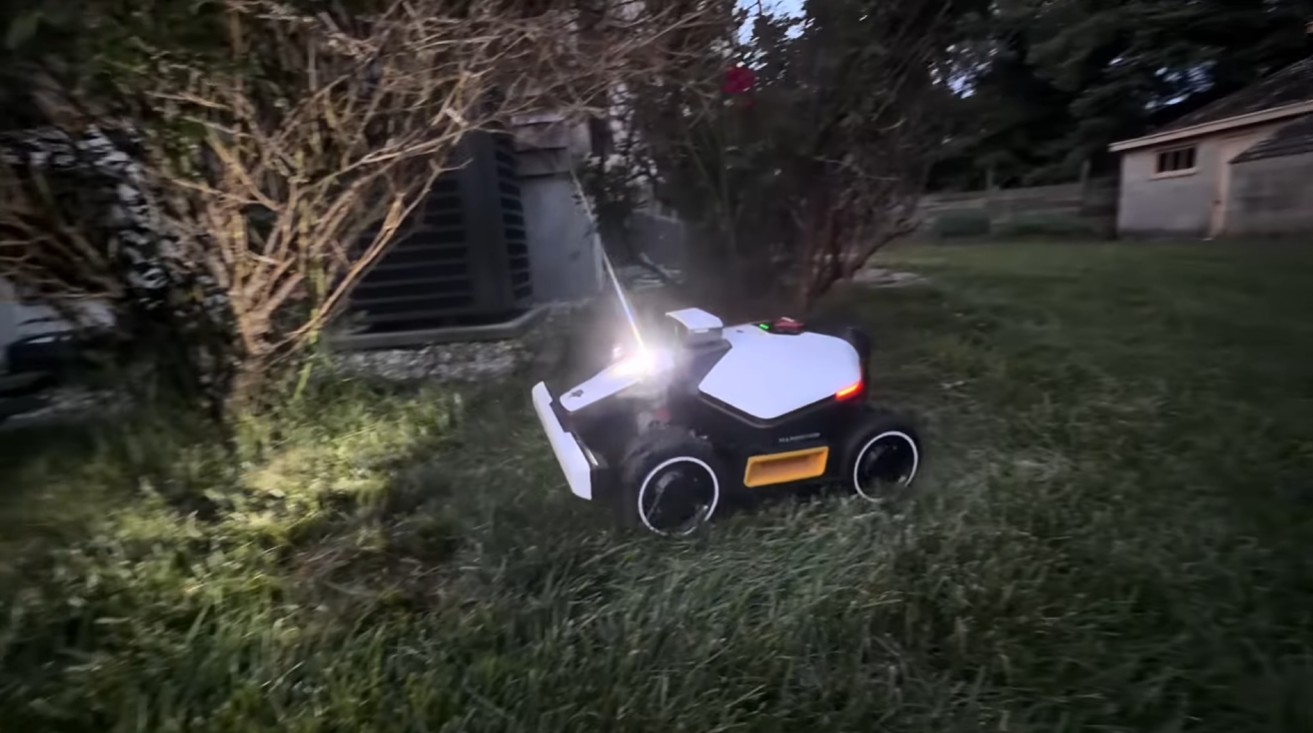
A lot of people schedule their robotic mower to run overnight or first thing in the morning — it’s quiet, it’s out of the way, and the lawn is free. Makes total sense. But early mornings and late nights are exactly when dew is heaviest (one of several reasons we’re not fans of night mowing).
Wet clippings behave completely differently than dry ones. Dry clippings are light and powdery and fall straight through the deck into the turf, which is exactly what you want. Damp clippings stick — to each other, to the deck, to the blade discs — and they pack down into a dense mat that hardens as it dries.
Mow in the dew every night and you’ll be scraping the deck constantly. Shift the schedule and the problem often disappears on its own.
What to do about it:
- Shift your mowing window to the drier part of the day — late morning through afternoon is ideal.
- Avoid running right after rain or irrigation. Give the lawn time to dry.
- In heavy dew seasons — spring and fall — pull the schedule back from those overnight runs.
- Check the deck more often during wet stretches, less often in dry ones.
Navimow units handle damp conditions fine — this isn’t about protecting the mower from water. It’s simply that a dry lawn cuts cleaner and leaves you with a lot less cleanup.
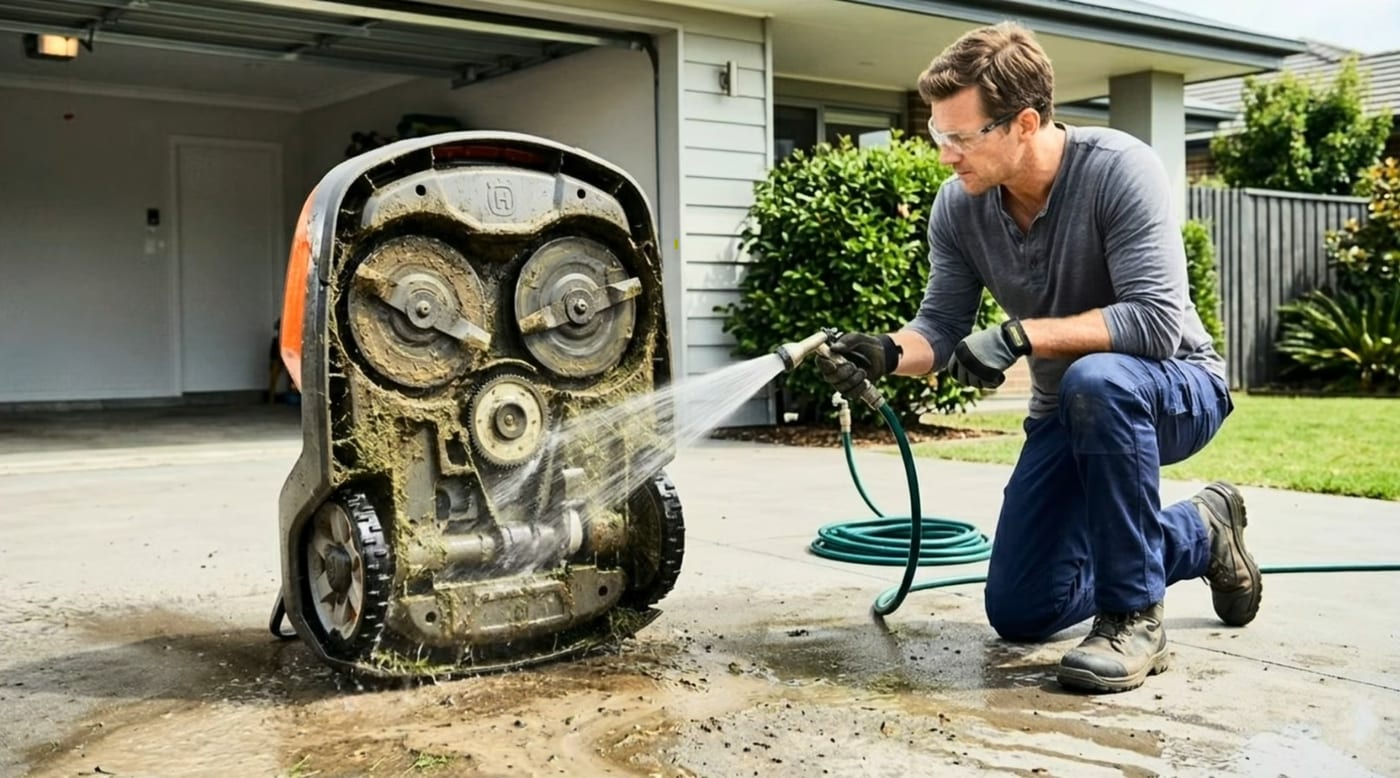
Never use a pressure washer on a robotic mower
This is the one that causes real damage, and we see it every season.
A pressure washer seems like the obvious tool — it’s fast, it’s right there in the garage, and it blasts everything off in seconds. Don’t do it.
A robot mower is a sealed electronic device packed with motors, sensors, GPS/RTK antennas, wiring, and a battery. Those seals are designed to shed rain and dew. They are not designed to stand up to a focused jet of water at 2,000+ PSI. Pressure washing forces water past the seals and directly into places it will never fully dry out — bearings, motor housings, connectors, and the electronics bay.
The failures often don’t show up immediately, either. Water gets in, corrosion starts, and weeks later you’ve got a sensor fault or a blade motor that won’t spin. That’s an expensive repair on a machine that only needed a brush and thirty seconds of air.
Stick with dry cleaning methods:
| ✅ Use this | ❌ Not this |
|---|---|
| Air brush | Pressure washer |
| Air compressor with blow gun | Garden hose sprayed into the deck |
| Canned compressed air | Soaking or submerging the mower |
| Stiff-bristled brush | Harsh solvents or degreasers |
| Damp cloth for the outer shell | Scraping with metal tools |
If you need to clean the outside of the housing, a damp cloth is plenty. Wipe it down, let it dry, put it back on the dock. (Pressure washing isn’t the only ownership mistake we see repeatedly — here are the other nine.)
What does a good maintenance rhythm look like?
You don’t need a complicated schedule. Here’s what we recommend to our customers:
Every 1–2 weeks in growing season: cleaning mode, air brush the deck, quick look at the blades.
Monthly: wipe down the housing, clean the charging contacts on the mower and the dock, check the wheels and treads for packed debris.
Every 4–6 weeks of daily mowing (stretch it to 6–8 on lighter schedules): replace the razor blades — with new screws. Sharp blades, clean cut, healthier lawn.
End of season: full clean, fresh blades, and proper winter storage.
Five minutes every couple of weeks is the difference between a mower that runs beautifully for years and one that slowly gets worse until something breaks.
Need a hand?
Zippy Lawnz is an authorized dealer and service center for Segway Navimow, Mammotion, and Yarbo, with nationwide sales and remote support and hands-on installs across Pennsylvania, New Jersey, Maryland, Delaware, Virginia, and Colorado. We handle professional installation, seasonal service, blade replacement, and warranty support — and we’re happy to answer maintenance questions even if you didn’t buy from us.
Have a robotic mower that’s clumping, cutting poorly, or just due for a checkup? Reach out — and if you’re still robot-mower-curious, start with your own lawn:
- 📍 Check my lawn — free — your lawn’s real size, slope and satellite sky view, measured in about two minutes.
- 🗺️ Book a free site assessment — we’ll pull up your address and plan the right mower and install for it.
- 🛠️ Your Navimow dealer & service center — sales, installation, blades, seasonal service and warranty support.
- 📞 Call or Text Us: 410-725-7500
The routine: cleaning mode → air brush the deck → check the blades · Time: about 5 minutes · Cadence: every 1–2 weeks in season · Never: a pressure washer
Frequently asked
Why is my Navimow leaving clumps of grass on the lawn?
Almost always moisture, not the mower. Damp clippings stick to each other and to the deck instead of falling back into the turf as mulch, so they build into clumps that drop in wads on the lawn. The usual culprits: the mower is scheduled to run overnight or at dawn when dew is heaviest, it's running right after rain or irrigation, or the grass got too long between cuts. Shift the schedule to a drier window — late morning through afternoon — increase mowing frequency, and clean the packed buildup out of the deck, and the clumping usually disappears on its own.
How often should I clean the deck on a robot mower?
Every one to two weeks during growing season — weekly during peak spring growth, every two weeks the rest of the season. It's about a five-minute job with cleaning mode and an air brush. If you're seeing clumps on the lawn or a visibly packed deck sooner than that, clean more often and look hard at your mowing schedule: mowing in dew or right after rain is what packs a deck fast.
Can I use a pressure washer on a robot mower?
No — never. A robot mower is a sealed electronic device full of motors, sensors, antennas and a battery. Its seals are designed to shed rain and dew, not to survive a focused 2,000+ PSI jet, which forces water past the seals into bearings, motor housings, connectors and the electronics bay. The damage often shows up weeks later as corrosion — a sensor fault here, a blade motor that won't spin there. Clean dry instead: an air brush, an air compressor with a blow gun, canned air, or a stiff-bristled brush, plus a damp cloth for the outer shell.
Can I hose off my Navimow?
The outer shell tolerates light rinsing — these machines live outside in the rain, after all — but we don't recommend making a habit of it, and you should never spray water up into the deck or at the underside where the blade motors and seals live. Dry methods (air brush, compressor, canned air, stiff brush) actually do a better job on packed clippings anyway, and a damp cloth handles the housing.
Do I have to use an air brush to clean a robot mower?
No. A stiff-bristled brush and a can of compressed air will get you 90% of the way there, and a shop compressor with a blow gun works great too. The air brush — a blower with bristles on the nozzle — is just the fastest option: you get the mechanical scrubbing and the air blast in one pass, and it reaches into the recessed corners of the deck where clippings pack in first.
Keep reading
 Tips & MaintenanceNavimow Blade Replacement: How Often, How To, and TitaniumHow often to replace Segway Navimow blades (4–6 weeks daily mowing), the new-screws rule everyone breaks, and our honest take on titanium-coated blades.
 Tips & MaintenanceRobot Mower Not Cutting Evenly? 7 Fixes for a Crisper LawnBrown tips, stragglers, missed strips? The 7 reasons a robot mower's cut stops looking crisp — dull blades, packed decks, wet schedules — and how to fix each.
 Tips & MaintenanceShould Your Robot Mower Mow at Night? Wildlife, Dew & LiDARNight mowing is quiet and satisfying — but should your robot mower do it? The honest truth on wildlife, why vision mowers fail in the dark, and how LiDAR fixes it.
Explore the system
The mowers and pages behind this topic — see them sized to your yard.