
How to Winterize a Robot Mower (Battery, Blades & Storage)
Every spring, we see the same two mowers come into the shop. One was cleaned, charged to storage level, and spent the winter on a shelf in the garage — it gets fresh blades and goes back to work like nothing happened. The other spent the winter at the dock under a tarp, and now its battery is done years early.
The difference is about thirty minutes of work in November. Here’s the routine we’d run on our own machines, step by step.
When should you stop mowing for the season?
When the lawn stops growing — not on a calendar date. In our Mid-Atlantic service area that’s typically late October into November, after the first hard frosts push cool-season grass into dormancy. You’ll see it in the mower’s own work: the daily pass is suddenly removing almost nothing.
Until then, keep the schedule running. The little-and-often rhythm is good for turf right up to dormancy, and a lawn that goes into winter cut clean and even comes out of it looking better too.
Step 1: The end-of-season deep clean
A deck packed with damp clippings is bad in July; in storage it’s trapped moisture sitting against your machine for four months. Before the mower goes anywhere:
- Cleaning mode, then an air brush or compressed air for the deck and discs — the full five-minute routine is here.
- A damp cloth for the shell, then let everything dry completely.
- Never a pressure washer — that rule doesn’t take the winter off. The seals are designed for rain, not a 2,000-PSI jet, and corrosion damage from forced-in water shows up weeks later.
Leave the worn blades on for storage if you like — you’re replacing them in spring anyway.
Step 2: Set the battery to its storage charge — this is the whole ballgame
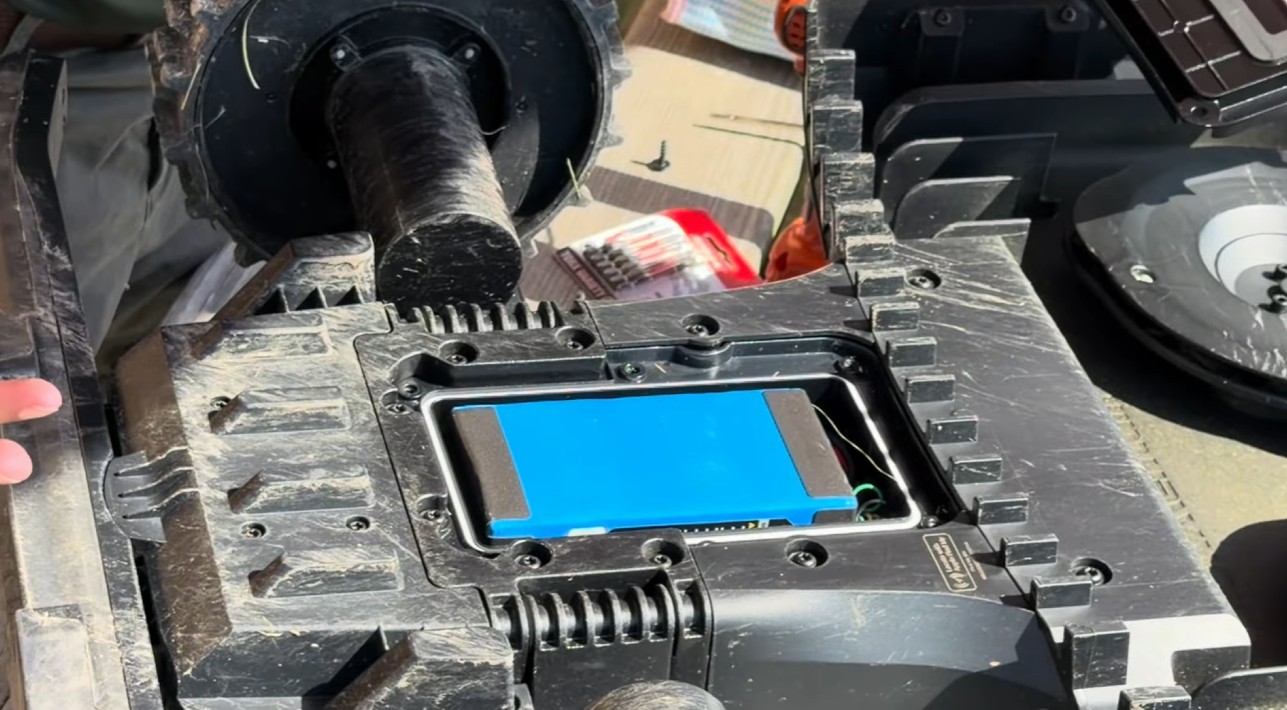
Store the battery around half charge — not dead-empty, not brimming full. A lithium pack parked for months at 0% or 100% ages far faster than one stored in the middle, and cold amplifies the damage. This single habit is the difference between a battery that quietly outlasts the mower and one that’s gasping by year three.
Run or charge the mower to roughly the middle of the gauge, and check your manual for the manufacturer’s exact storage recommendation — some models have a dedicated storage mode that handles it for you.
Step 3: Bring the mower somewhere dry
Garage, basement, shed with a real roof — anywhere dry that doesn’t swing through hard freeze-thaw cycles. Leaving a robot mower outside all winter is one of the ten classic ways owners kill them: the freeze-thaw cycling and constant moisture work on the housing while the cold works on the battery.
Off the floor on a shelf is ideal. Don’t stack anything on the shell.
What stays outside? The dock and the antenna
Leave them mounted. The charging dock and RTK antenna are outdoor-rated — these components live in the rain all season by design — and keeping the antenna exactly where it is protects the thing you spent real effort getting right: its placement. Move the antenna over the winter and your mapped boundaries can come back subtly wrong in spring.
With the mower indoors there’s nothing to charge, so unplugging the dock’s power supply for the season is a fine, cautious habit.
The 30-minute checklist
- ☐ Mow until growth actually stops (late Oct–Nov here)
- ☐ Deep-clean the deck — air, never water pressure
- ☐ Battery to ~half charge (or the manual’s storage level)
- ☐ Mower + battery indoors, dry, off the floor
- ☐ Dock and antenna stay mounted; power supply unplugged
- ☐ Calendar note for spring: fresh blades with new screws on day one
That spring note matters: after a winter on the shelf, the one thing your mower needs before its first cut is a new set of edges — the old ones ended the season 30 days past sharp no matter what they look like. We’ll publish the full spring-startup companion to this guide before the season turns.
Or make winter the robot’s best season
If your property fights you in winter too, the same automation logic extends to snow: a robotic snow blower against a plow contract is the identical math to a mower against a lawn service — and a Yarbo swaps modules to work the driveway all winter while the mower hibernates.
Get help with your robot mower
Zippy Lawnz is an authorized dealer and service center for Segway Navimow, Mammotion, and Yarbo, with nationwide sales and remote support and hands-on service across Pennsylvania, New Jersey, Maryland, Delaware, Virginia, and Colorado. Zippy Care customers get the whole end-of-season routine — pickup, cleaning, storage prep and spring redeployment with fresh blades — done for them.
- 📍 Check my lawn — free — your lawn’s real size, slope and satellite sky view, measured in about two minutes.
- 🗺️ Book a free site assessment — we’ll pull up your address, plan the antenna and dock, and quote the whole install.
- 📞 Call or Text Us: 410-725-7500
The routine: mow to dormancy · deep-clean dry · battery to ~half charge · mower indoors · dock & antenna stay put · fresh blades in spring
Frequently asked
Can a robot mower stay outside in winter?
No — bring it in. The mower is built to live outside during mowing season, but a winter of freeze-thaw cycles and constant moisture works on the housing and seals, and cold is brutal on a lithium battery sitting at the wrong charge. Leaving it out all winter is one of the classic avoidable ways owners shorten a machine's life. The dock and RTK antenna are a different story — they're outdoor-rated and usually stay put.
What charge should a robot mower battery be stored at?
Around half charge — not dead-empty and not brimming full. Lithium packs stored for months at 0% or 100% age much faster than packs stored in the middle, and cold amplifies the damage. Charge or run the mower to roughly the middle of the gauge, check your manual for the manufacturer's exact storage recommendation, and store the mower somewhere dry that doesn't freeze hard.
Do I need to unplug the charging dock for winter?
Leave the dock and RTK antenna mounted — they're outdoor-rated, and keeping them in place preserves the placement and mapping you dialed in. With the mower inside there's nothing to charge, so unplugging the dock's power supply for the season is a fine, cautious habit. Just don't relocate the antenna: a spring re-fix on a moved antenna is how mapped boundaries go subtly wrong.
When should I stop robot mowing for the season?
When the lawn stops growing — in the Mid-Atlantic that's typically late October into November, after the first hard frosts. You'll see it in the mower's own behavior: the daily cut is removing almost nothing. Keep the normal schedule until then; the little-and-often rhythm is good for the lawn right up to dormancy.
Keep reading
 Tips & MaintenanceHow to Clean Your Navimow Robot Mower (Deck & Grass Clumps)Learn how to clean a Segway Navimow robot mower the right way — cleaning mode, an air brush for the deck, and why you should never use a pressure washer.
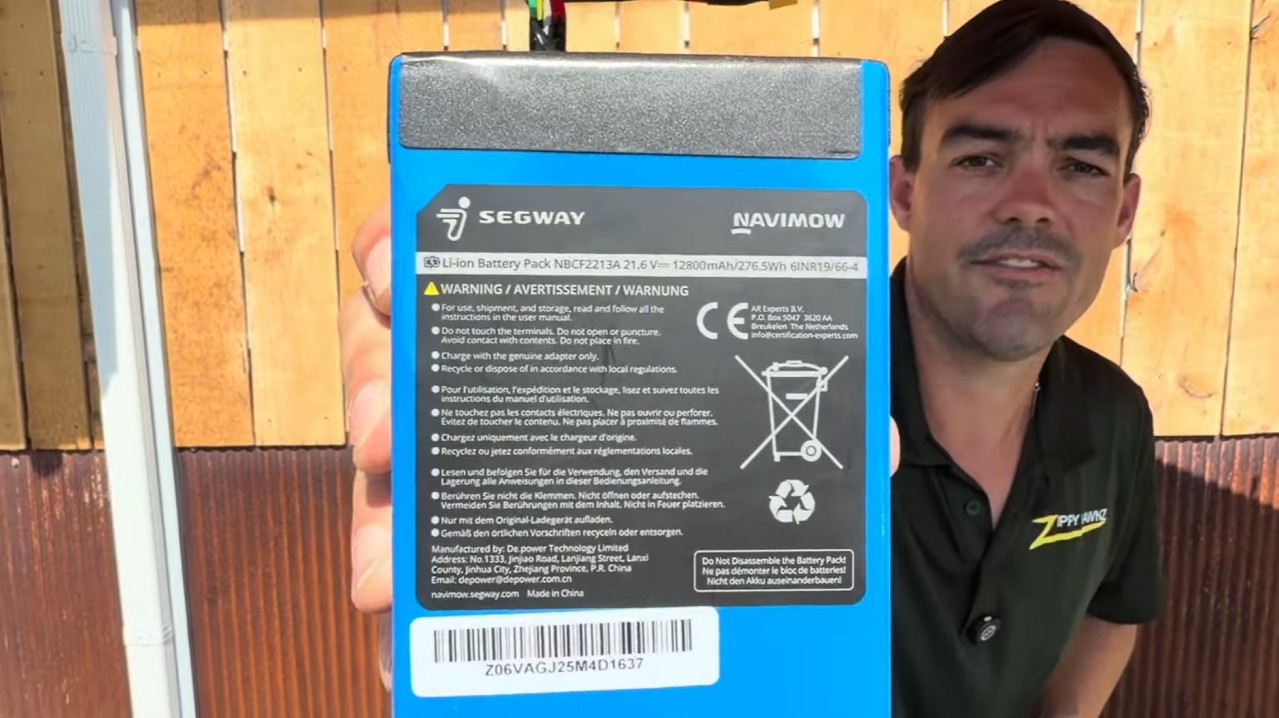 Buying GuidesHow Long Does a Robot Mower Battery Last? We Ran the NumbersA robot mower's lithium battery can outlast the mower on a small lawn — or fade in about 5 years on a big one. Here's the real cycle math, by lawn size.
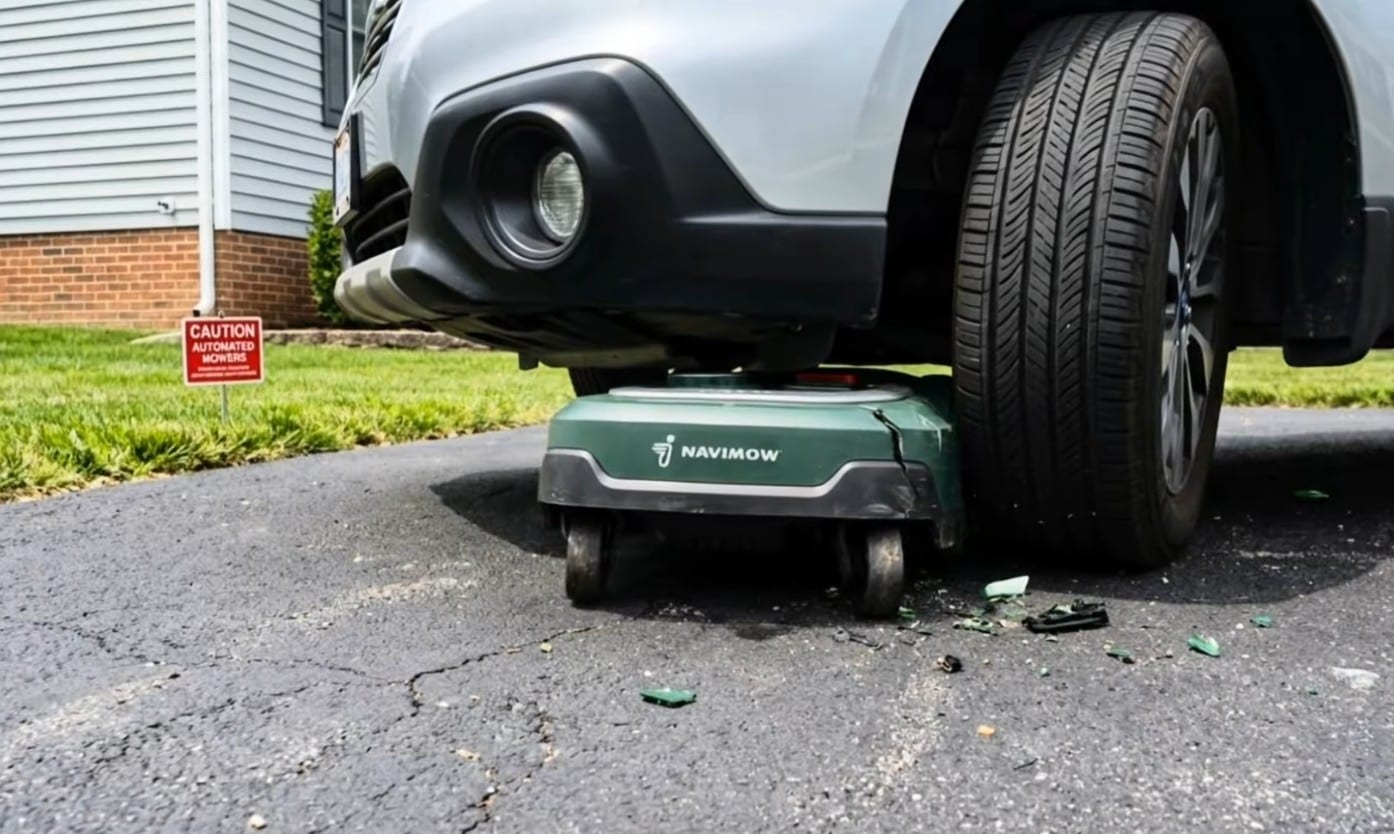 Tips & Maintenance10 Things You Should NEVER Do With a Robot MowerPeople destroy $3,000 robot mowers in totally avoidable ways. The 10 mistakes to never make — from night-mow complaints to standing water and winter storage.
Explore the system
The mowers and pages behind this topic — see them sized to your yard.