
How Long Do Robot Mowers Last? Battery, Blades & Body
“How long would it last?” is usually the last question before someone buys a robot mower, and it’s the right one. You’re paying $1,500 to $8,000 for a machine that works outside every day, in rain and summer heat, for years.
Here’s the honest answer: a robot mower is built to be kept running, not thrown away. The blades last weeks. The battery lasts about five years on a big lawn, and longer than the mower on a small one. The motors, chassis and electronics have no published life figure, and the wire-free RTK generation is only a few years old. What decides how long yours lasts is how hard it works and whether you replace the wear parts when they’re due.
How long does each part last?
| Part | How long it lasts | What replacing it costs |
|---|---|---|
| Blades | 4–6 weeks of daily mowing; 6–8 weeks on a lighter schedule | A few dollars a set — they’re thin razor blades, replaced, never sharpened |
| Cutting discs | Years. Replace if bent, cracked or out of balance | $125 for the Navimow X4 / Terranox disc set ($155 with blades fitted), $79 for a LUBA 3 AWD disc, $29 for a Yarbo disc and bolts |
| Battery | About 1,500 cycles near full on a Navimow pack. That’s ~3 years on 1½ acres, ~9 on ½ acre, and longer than the mower on ¼ acre | $220.79–$715.29 for Navimow packs, $209 for a LUBA mini 1500, $1,199 for the Yarbo Y Series |
| Tires and drive wheels | Wear items. Fastest where the mower crosses concrete, pavers or gravel every day | A service part, not a new mower |
| Motors and electronics | No manufacturer publishes a life figure, so we won’t invent one | Covered by warranty while it runs; a dealer repair after that |
| Software | As long as the maker supports the app and firmware | Usually free, and the real unknown for any connected product |
Blades: weeks, and that’s on purpose
A robot mower’s blades are small razor blades on a spinning disc. They cut a few millimetres a day instead of a third of the blade once a week, so each blade does light work. They still dull. With daily mowing, plan on fresh blades every 4–6 weeks. On a lighter schedule with clean, established turf, it’s more like 6–8 weeks. Sandy soil is the biggest blade killer, then sticks, acorns, pine cones and wet, heavy grass.
They cost a few dollars a set, swapping them takes minutes, and the fresh screws in every kit matter more than people think. Our blade replacement guide covers the how-to and the screw rule.
The discs underneath last for years. You replace one when it’s bent, cracked or vibrating, usually after it hits something, not because it wore out.
Battery: five years to forever, depending on your lawn
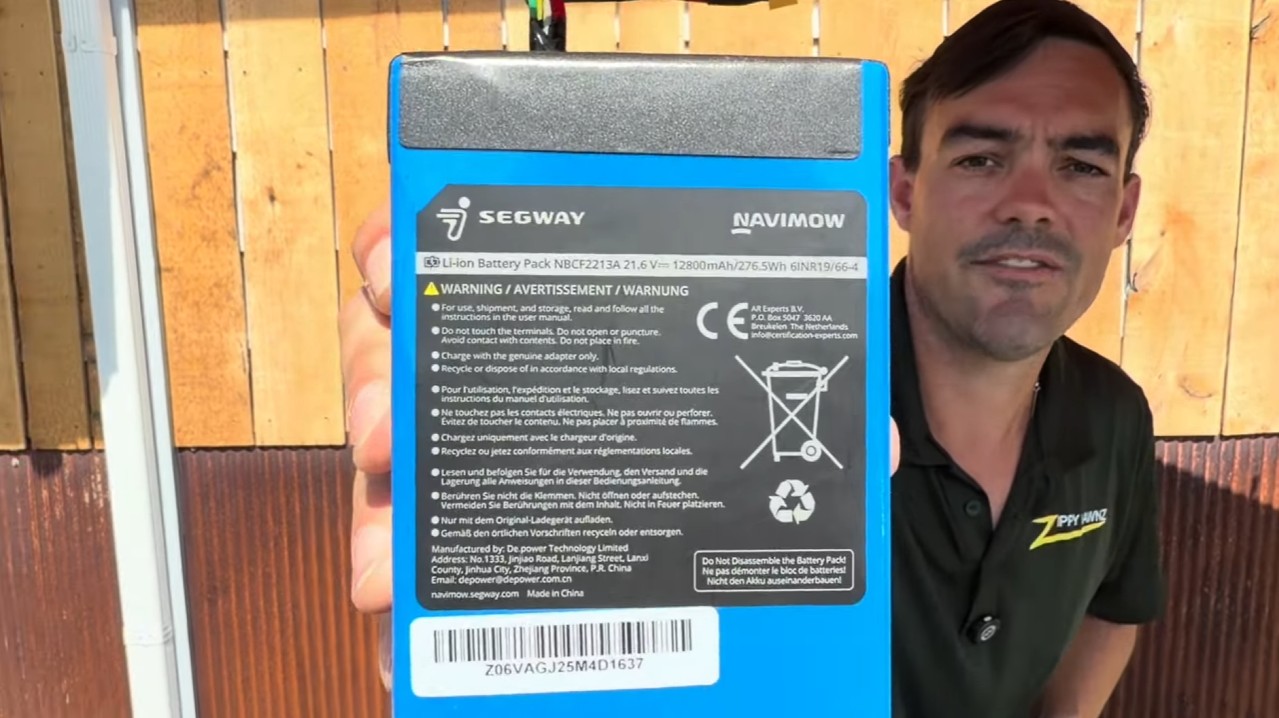
A lithium pack isn’t rated in years. It’s rated in charge cycles, and one recharge is roughly one cycle. Navimow rates its packs to stay near full capacity for about 1,500 cycles, then fade gradually.
So the battery’s lifespan is really a question about your lawn. Here is what our battery model returns for the 12.8Ah Navimow pack, mowing about three times a week over a 30-week season:
| Your lawn | Recharges per season | Near-full (no fade) | Until it dips under 80% |
|---|---|---|---|
| ¼ acre | ~85 | ~18 years | 30+ years (outlasts the mower) |
| ½ acre | ~165 | ~9 years | ~17 years |
| 1 acre | ~330 | ~4 years | ~8 years |
| 1½ acres | ~500 | ~3 years | ~5 years |
At 80% the mower still works. It just covers a little less per charge. The full battery math explains why robot mowers are gentle on their packs: they charge shallow and often instead of draining to empty.
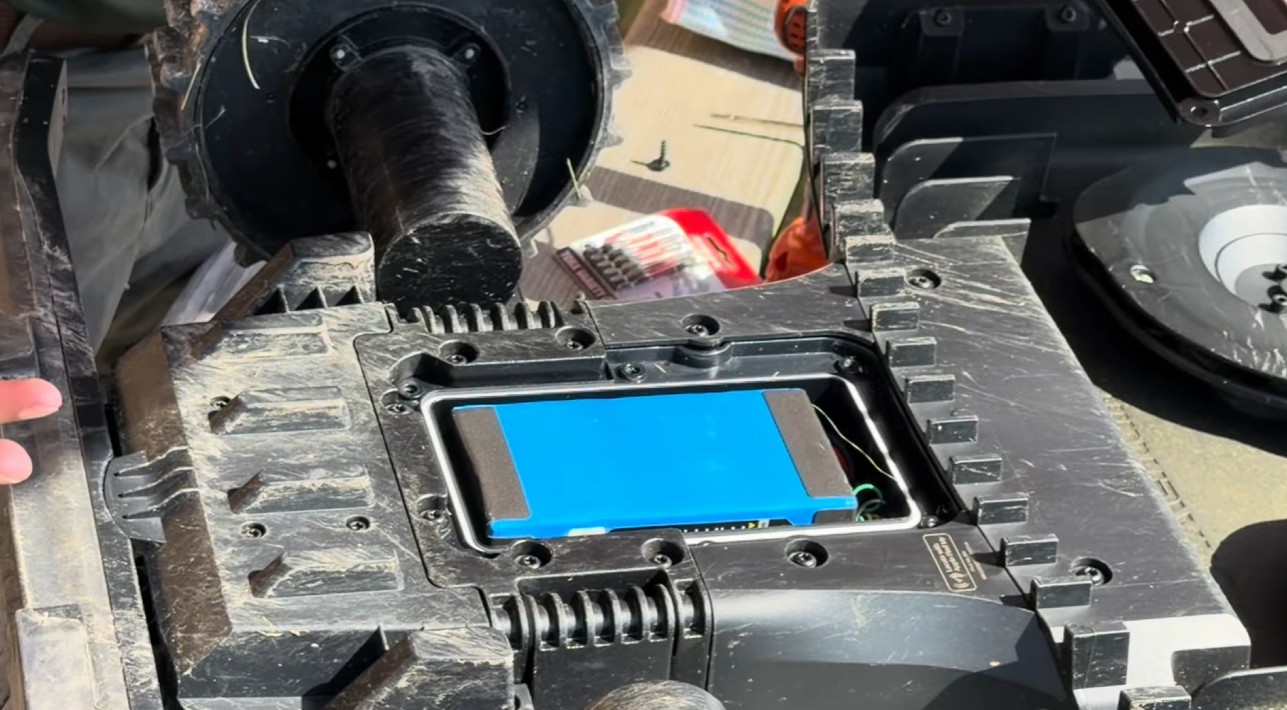
Can you replace it? Yes. On every machine we sell, the battery is a module, not glued into the chassis. On a Navimow X430 it’s a ten-minute job with a Torx bit. These are the replacement prices:
| Mower | Pack | Replacement price |
|---|---|---|
| Navimow X315 | 6Ah | $220.79 |
| Navimow X430 / X450 | 12.8Ah | $489.11 |
| Navimow Terranox CM120M1 (3 acres) | 20Ah | $645.96 |
| Navimow Terranox CM240M1 (6 acres) | 25Ah | $715.29 |
| Mammotion LUBA mini AWD 1500 | 6.1Ah | $209 |
| Yarbo Y40 / Y40P | 38.4Ah Y Series | $1,199 |
Tires, motors and the body: the parts nobody publishes
This is where most “how long do they last” articles start making numbers up. We won’t.
Tires and drive wheels wear like any tire. They wear fastest on a mower that crosses a driveway, a paver path or a gravel strip every day. When the tread is gone, you order a service part. You don’t buy a new mower.
Motors and electronics are sealed and electric. There’s no engine, carburetor, belt, oil or spark plug, which removes most of what kills a gas mower. No manufacturer we sell publishes a motor or board life figure, though. What you do get is a warranty (below) and a dealer who can diagnose and repair the machine when the warranty runs out.
The chassis is plastic and rubber, rated to live outside. Sun, freeze-thaw and clippings packed against the housing are its enemies, and all three are easy to manage (see the list further down).
The software is the real unknown
A modern wire-free mower is a connected product. It positions off satellites, gets corrections from a base antenna or over the cellular network, and you run it from an app. Its useful life depends on its maker supporting that app and firmware.
That’s not a reason to avoid one. It’s a reason to buy from a brand with a real dealer network and a track record of pushing updates, and from a dealer who will still answer the phone in year six.
What warranty do robot mowers come with?
| Brand / model | Warranty |
|---|---|
| Mammotion LUBA 3 AWD | 3 years |
| Lopkin L2500 | 3 years on the mower, 2 on the battery |
| Yarbo (Y40, Y40P) | 2 years standard, or 5 with the YarboCare 3-Year Extended Warranty |
| Navimow Terranox (commercial) | 2 years on the mower and charging station, 1 on the battery |
| Navimow residential (X4, i2) | 2–3 years depending on the model, so check the card in the box |
We’re an authorized dealer and service center, so a warranty claim goes through us start to finish. You don’t ship the mower overseas or argue with a marketplace seller.
Be honest: nobody has 15-year data yet
Robot mowers aren’t new. Boundary-wire machines have been on European lawns since the 1990s, and well-kept ones are known for long service lives with a battery swap along the way. The wire-free, RTK-positioned generation is different. It’s only been on American lawns for a few seasons, so nobody, us included, can show you one that has mowed for fifteen years.
What we can tell you is what we know: the cycle math on the battery, the wear schedule on the blades, and which parts are designed to be replaced. A robot mower holds up because each of its wear parts can be swapped, unlike a sealed appliance you throw away when one thing breaks.
How to make a robot mower last
- Size it with headroom. A mower working well under its rating recharges less often per week, and every recharge is a battery cycle. That makes this the biggest lever on battery life.
- Match the drive to the ground. On a sloped lawn, all-wheel drive climbs where two-wheel drive spins, and spinning tires wear tires.
- Fresh blades on schedule. Dull blades tear grass and make the motor work harder.
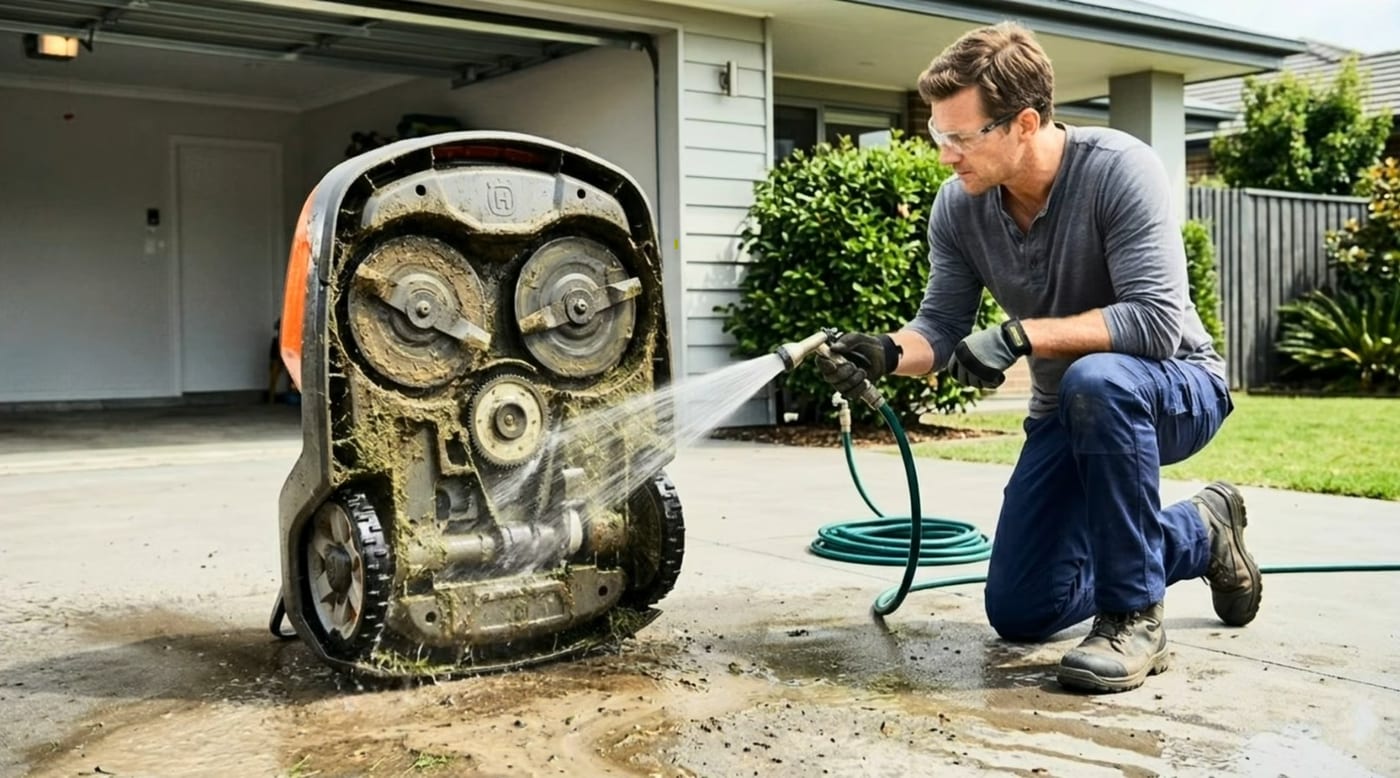
- Keep the deck clean. Packed clippings add drag on the blade motor and hold moisture against the housing. How to clean a Navimow.
- Shade the dock. Heat is lithium’s enemy. A garage or a spot out of the afternoon sun keeps the pack cooler, and a rubber mat under the charging station stops the wheels from digging ruts into the approach.
- Store it right for winter. Clean it, store it indoors, and leave the battery at about half charge, not full or empty. Winterizing, step by step.
- Install the updates. Firmware updates are free, and they’re how the maker keeps improving the mower you already own.
What it costs to keep one running for ten years
Add it up honestly: blades a few times a season, electricity at a few dollars a month, and one battery pack somewhere in the middle. Our ROI calculator conservatively models a fresh pack every three years, which is more often than most lawns need. The total still usually comes in well under ten years of a lawn service, and the breakdown is in are robot mowers worth it?.
Want the number for your own lawn? Map it free. The tool measures your mowable area, sizes the mower to it, and runs the battery model on your lawn, so you see the year your pack would cross 80% before you buy.
Frequently asked
How long do robot lawn mowers last?
Think of it part by part. Blades last 4–6 weeks of daily mowing and cost a few dollars. The battery stays near full for about 1,500 charge cycles — roughly 3 years on a 1½-acre lawn, 9 on a half acre, and longer than the mower itself on a quarter acre — and it's a swappable pack. The chassis, motors and electronics have no published life figure. The wire-free RTK generation is only a few years old, so nobody, us included, has 15-year field data on it yet.
Can you replace the battery in a robot mower?
On the machines we sell, yes. The pack is a module, not glued in. On a Navimow X430 it's a ten-minute job with a Torx bit. Replacement packs run $220.79 for a Navimow X315, $489.11 for the X430/X450 pack, $645.96 and $715.29 for the two Terranox packs, $209 for a LUBA mini 1500, and $1,199 for the Yarbo Y Series pack.
How long do robot mower blades last?
About 4–6 weeks with daily mowing, and up to 6–8 weeks on a lighter schedule with clean, established turf. Sandy soil, sticks, acorns and wet heavy grass shorten that. The blades are thin razor blades that cost a few dollars a set, and you replace them rather than sharpen them.
What warranty do robot mowers come with?
It depends on the brand. Mammotion's LUBA 3 AWD carries 3 years. Lopkin's L2500 carries 3 years on the mower and 2 on the battery. Yarbo is 2 years standard, or 5 with the YarboCare 3-Year Extended Warranty. Navimow's commercial Terranox carries 2 years on the mower and charging station and 1 on the battery. Navimow's residential models run 2–3 years by model, so check the card in the box.
What's the most durable robot mower?
The one that isn't overworked. A mower sized with headroom recharges less often, and every recharge is a battery cycle. All-wheel drive on a sloped lawn spins its tires less than two-wheel drive does. A dock out of the afternoon sun keeps the pack cooler. The brand matters less than fitting the machine to the lawn.
Do robot mowers last longer than gas mowers?
They fail in different places. A robot mower has no engine, carburetor, belt, oil or spark plug, so the things that kill a gas mower aren't there. Its wear items are blades, the battery and the tires, and all three are replaceable. Its real long-term question is software: how long the maker keeps supporting the app and firmware.
Keep reading
 Buying GuidesHow Long Does a Robot Mower Battery Last? We Ran the NumbersA robot mower's lithium battery can outlast the mower on a small lawn — or fade in about 5 years on a big one. Here's the real cycle math, by lawn size.
 Tips & MaintenanceNavimow Blade Replacement: How Often, How To, and TitaniumHow often to replace Segway Navimow blades (4–6 weeks daily mowing), the new-screws rule everyone breaks, and our honest take on titanium-coated blades.
 Buying GuidesAre Robot Mowers Worth It? We Ran the Numbers (2026)Are robot mowers worth the money? The honest math on cost vs a lawn service, the time you get back, the hidden costs — and the lawns where they're NOT worth it.
Explore the system
The mowers and pages behind this topic — see them sized to your yard.