
Navimow X450 on a Virginia Farm: Gates, Paddocks, Tight Passages
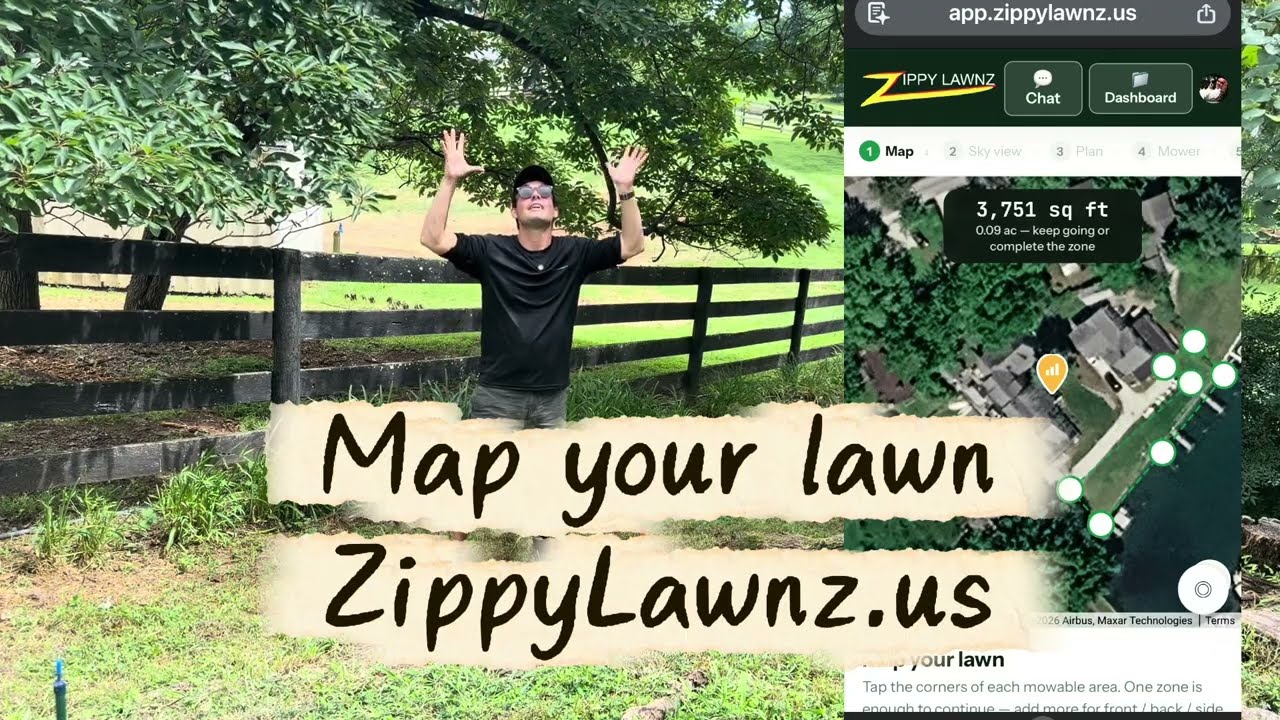
Can a robotic lawn mower really handle a working farm?
It’s one of the most common questions we get at Zippy Lawnz — and it’s a fair one. Farms aren’t manicured suburban lawns. They’re big, irregular, fenced-off, and full of the kind of obstacles that would stop most automation in its tracks: gates, paddocks, livestock areas, and tight passages between buildings.
We recently put the Segway Navimow X450 to work on a Virginia farm to answer that question in the real world. Here’s what we found.
Big acreage needs better positioning: RTK + cellular
The first challenge on any farm is simply scale. Traditional robotic mowers relying on boundary wire were never practical for large rural properties — burying wire around dozens of acres of pasture edges, fence lines, and outbuildings is a non-starter.
The Navimow X450 solves this with RTK (Real-Time Kinematic) satellite positioning, which delivers centimeter-level accuracy without a single foot of buried wire. On this property, we paired RTK with cellular connectivity so the mower stays in communication even when it’s working far from the house, behind a barn, or out near the tree line where Wi-Fi doesn’t reach.
For farm properties, that cellular link matters more than people realize. You can check mowing progress, adjust schedules, and get alerts from anywhere — the tractor seat, the feed store, or the kitchen table.
The gate problem: dogs in, mower through
Here’s the scenario every farm owner knows: you have fenced areas for a reason. Dogs need to stay in the yard. Horses need to stay in the paddock. But your mower needs to move between those areas — and leaving gates open defeats the whole purpose of the fence.
This is where the Navimow MowGate changes the game. The MowGate lets the X450 pass through a gated opening on its own while keeping the barrier intact for animals. The dogs stay where they belong, the horses stay in their pasture, and the mower quietly travels through to mow the next zone — no human required to open and close gates on a schedule.
On this Virginia farm, that meant the mower could handle the house yard, pass through into the pasture areas, and work the horse paddocks — all in one automated routine. For a property that would otherwise require someone to shuttle a mower (or ride one) between fenced zones, this is a massive workflow improvement. (It’s the same trick that solved a fenced pool area on a West Chester install — fences stay closed, mowing stays hands-off.)
Different grass, different zones, different heights
Farms rarely have one uniform grass type. This property had everything from finer turf near the house to thicker, coarser pasture grass — and each area benefits from a different approach.
With the X450, we set up multiple zones with their own settings:
- Mowing height — shorter near the house for a clean look, taller in pasture areas for healthier forage-adjacent turf
- Mowing direction and patterns — alternating directions between cycles for a healthier, more even cut
- Schedules per zone — high-visibility areas mowed more frequently, outer areas on a lighter rotation
Because the mower cuts a little at a time on a regular schedule, clippings are fine enough to disappear back into the turf — natural fertilization with no clumping, even on thicker grass.
No-go zones: mapping around a farm’s reality
Every farm has spots a mower shouldn’t touch: water troughs, equipment staging areas, gardens, muddy low spots, gravel aprons around barns. Instead of physically fencing these off, we simply drew no-go zones in the Navimow app.
The X450 treats these virtual boundaries like walls. It navigates around them, threads the tight passages between buildings, and handles the irregular shapes that make farm properties so different from a rectangular suburban lot. When the landscape changes — a new garden bed, a temporary corral — you just update the map from your phone.
The real payoff: time
Farmers are some of the busiest people we work with. Between animals, crops, equipment, and everything else a working property demands, mowing is hours of every week that produce nothing — it just has to get done.
That’s the real case for robotic mowing on a farm. It’s not a gadget; it’s labor you get back. The X450 works day after day, in the background, while you handle the work that actually needs you. The grass stays cut, the property stays presentable, and nobody spent Saturday on a mower.
Is a robotic mower right for your farm?
If your property has large open areas, fenced zones, mixed grass types, and more mowing than you have time for, the answer is very likely yes — especially with hardware like the Navimow X450 and the MowGate that are built for exactly these challenges.
Zippy Lawnz is an authorized Segway Navimow, Mammotion, and Yarbo dealer and service center serving Pennsylvania, New Jersey, Maryland, Delaware, Virginia, and Colorado. We handle site assessment, RTK placement, mapping, MowGate installation, and ongoing support — so your mower works from day one.
Ready to get your weekends back?
- 📍 Check my lawn — free — your property’s real mowable area and sky view, measured from satellite in about two minutes.
- 🗺️ Request a free site assessment — we’ll plan zones, gates and RTK placement for your actual property.
- 📞 Call or Text Us: 410-725-7500
Deployed: Segway Navimow X450 + MowGate · Location: Virginia farm · Highlights: RTK + cellular, MowGate between fenced zones, per-zone heights and schedules, no-go zones around farm hazards
Frequently asked
Can a robotic mower handle a working farm?
Yes — with the right hardware and the right setup. RTK positioning replaces boundary wire entirely, so scale stops being the blocker; a MowGate lets the mower travel between fenced areas on its own while the fences keep doing their job; and per-zone heights, patterns and schedules handle the mix of turf and pasture grass. On this Virginia farm, one Navimow X450 covers the house yard, the pasture areas and the horse paddocks in a single automated routine.
How does a robot mower get through farm gates and fences?
With a Navimow MowGate — a powered gate the mower passes through on its own while the barrier stays intact for animals. The dogs stay in the yard, the horses stay in the paddock, and the mower travels through to mow the next zone with no human opening and closing gates on a schedule. Without it, a fenced farm means shuttling a mower between zones yourself, which defeats the point of automation.
Do robot mowers need boundary wire on large rural properties?
Not anymore — and on a farm, wire was never practical. Burying wire around dozens of acres of pasture edges, fence lines and outbuildings is a non-starter. RTK (Real-Time Kinematic) satellite positioning gives the mower centimeter-level accuracy with zero buried wire, and areas it should never touch — water troughs, equipment staging, gardens, muddy low spots — become no-go zones drawn in the app. When the landscape changes, you update the map from your phone.
What if parts of the property have no Wi-Fi?
That's normal on a farm, and it's why we paired RTK with cellular connectivity on this install. The mower stays in communication even when it's working behind a barn or out near the tree line, far past Wi-Fi range — so you can check progress, adjust schedules and get alerts from the tractor seat, the feed store or the kitchen table. Cellular coverage varies property to property, which is one of the things we check during a site assessment.
Can different zones have different cutting heights and schedules?
Yes — and on a farm you want them to. On this property we set shorter heights near the house for a clean look and taller cuts in the pasture areas, alternating mowing directions between cycles for a healthier, more even lawn, with high-visibility zones on a frequent schedule and outer areas on a lighter rotation. Because the mower cuts a little at a time, the fine clippings disappear back into the turf — natural fertilization with no clumping, even on thicker grass.
Keep reading
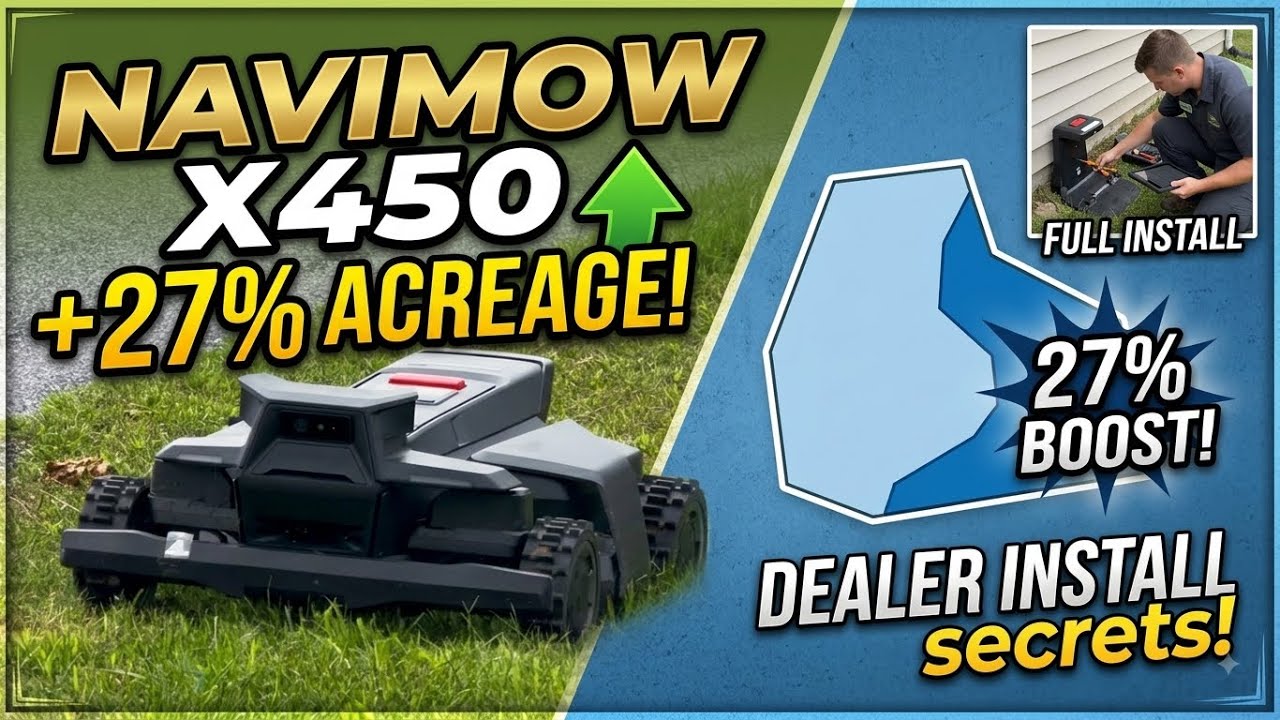 Customer InstallsNavimow X450 on 1.9 Acres: A Lewes, DE Install Beyond the Spec SheetThe Segway Navimow X450 is rated for 1.5 acres. On this Lewes, Delaware install we mapped 1.91 — how dealer-grade RTK setup, zoning and dock placement did it.
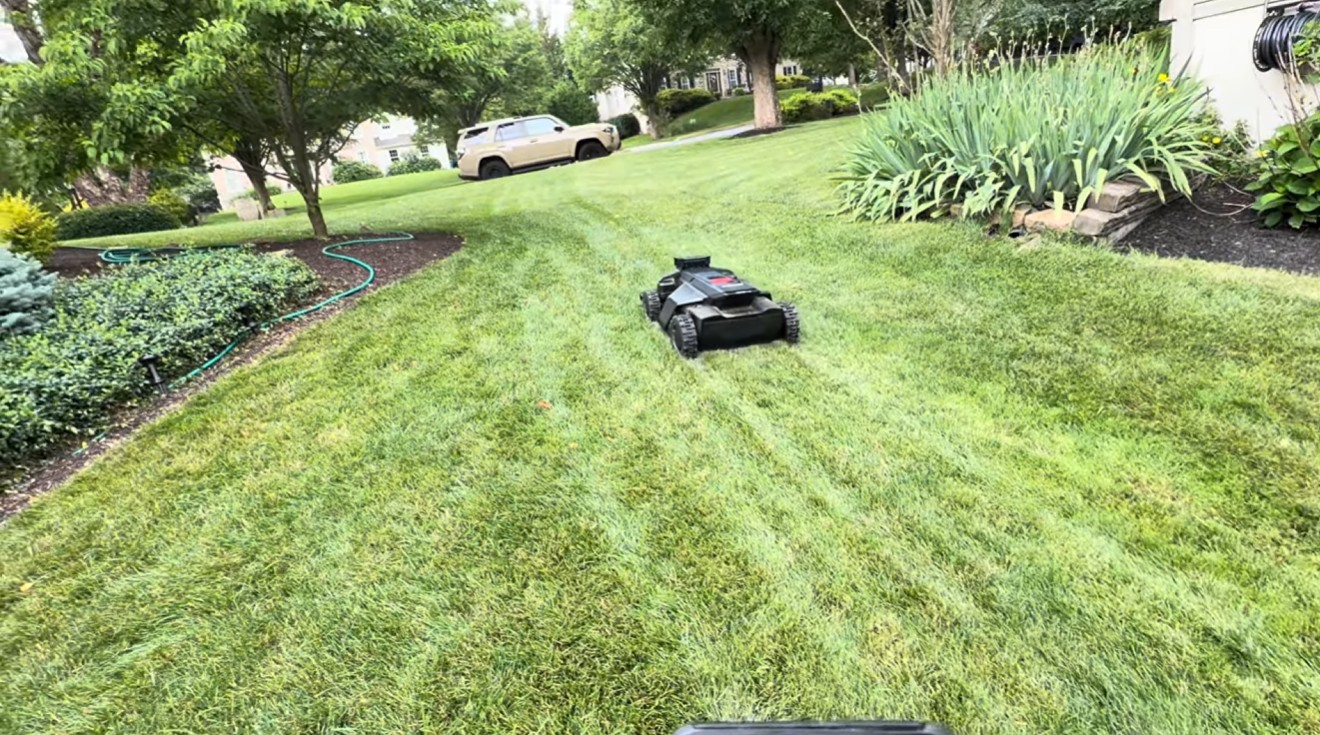 Customer InstallsNavimow X430 Review: A West Chester Homeowner's Take After 1 MonthWe installed a Navimow X430 for a West Chester, PA homeowner, then asked for his honest take 30 days later — including a tricky pool fence handled with a MowGate.
 Buying guideBest Robot Mower for Large Lawns (2026): Yarbo vs Navimow vs MammotionThe best robot mowers for large lawns and acreage — LUBA 3, Navimow X450, Yarbo Pro and the commercial Terranox — matched to your acres, from 1 to 6+.
Explore the system
The mowers and pages behind this topic — see them sized to your yard.