
Do Robot Mowers Work on Slopes and Hills?
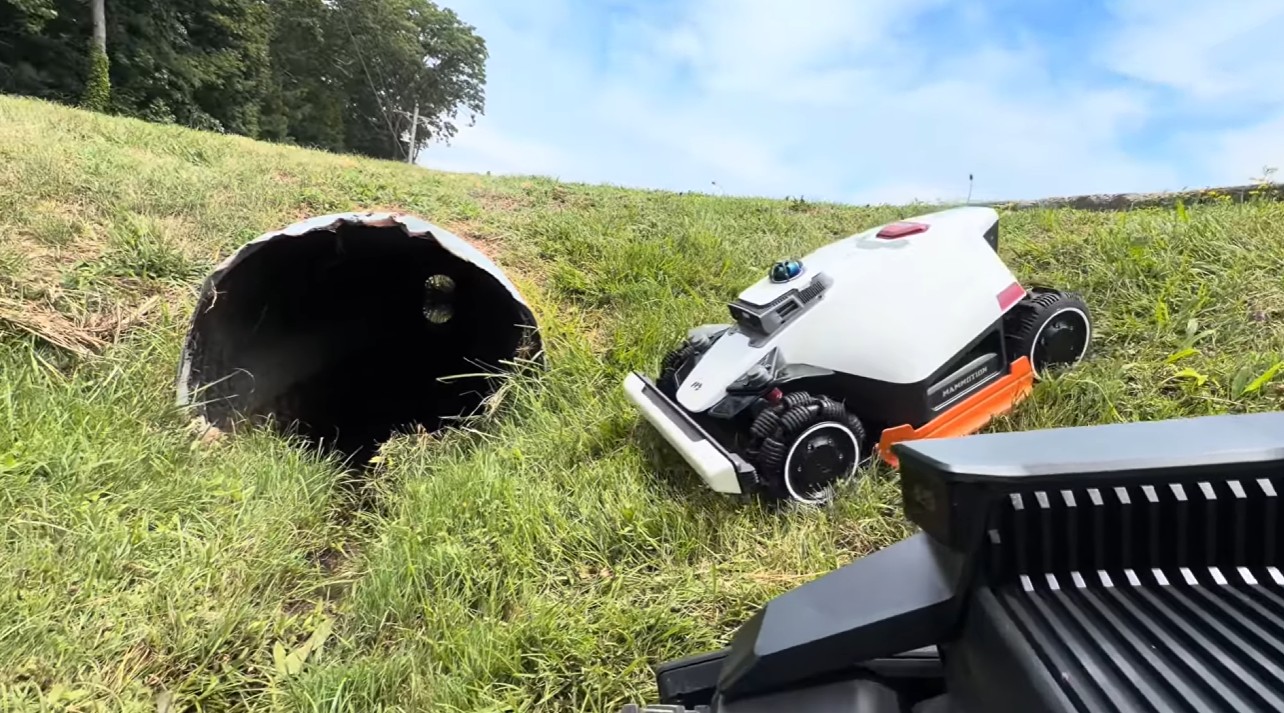
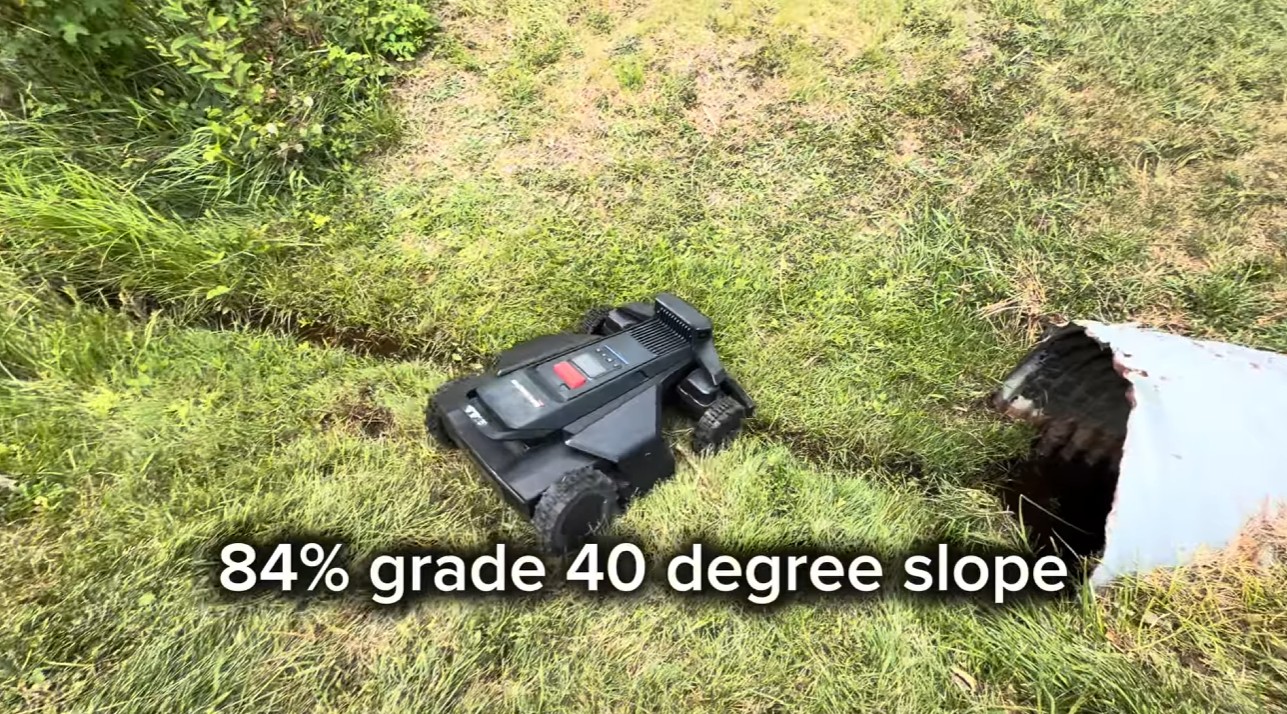
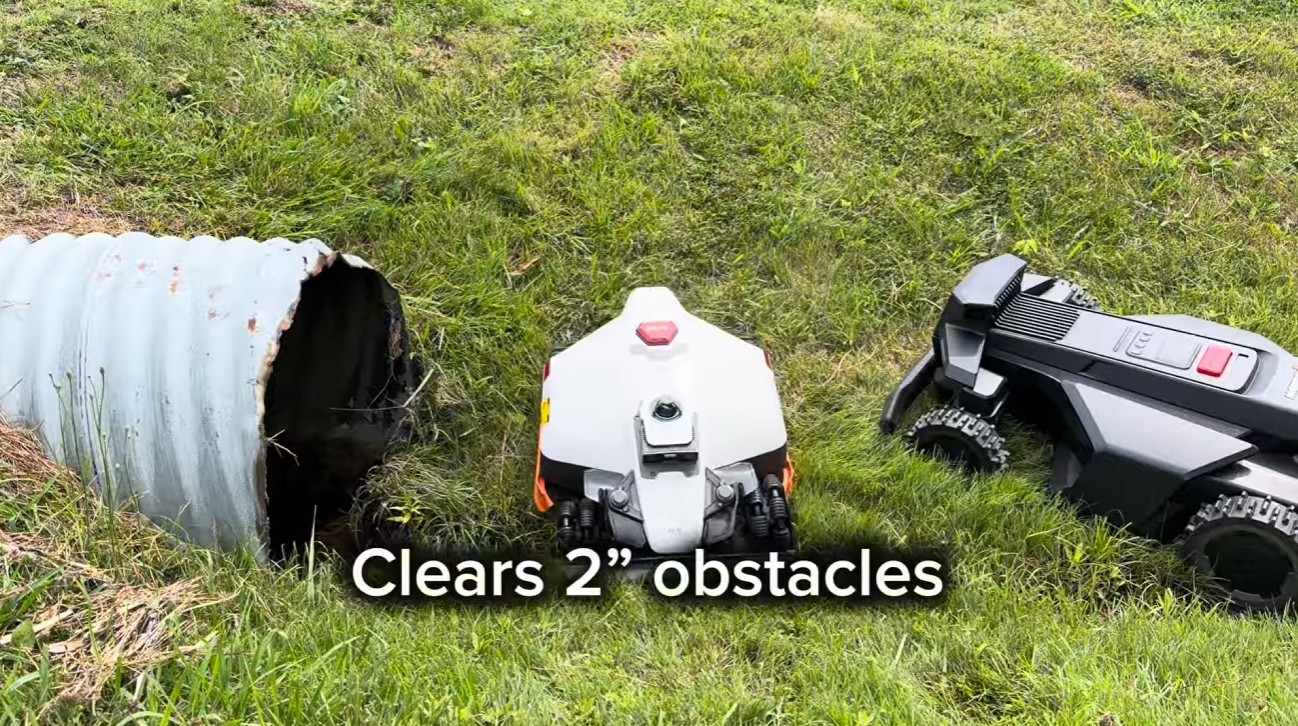
Short answer: yes — and modern all-wheel-drive robots handle far steeper ground than most people expect. A gentle roll is fine for almost any robot mower. A real hill needs all-wheel drive. And a genuinely steep bank needs a mower purpose-built for it — like the ones in the field test above, where a robot climbs an 84% grade (about a 40° slope) and clears 2-inch obstacles without getting stuck.
Here’s how to tell which camp your yard is in.
How steep is “too steep”?
Manufacturers quote slope capability as a percentage grade (rise over run), which isn’t the same as degrees. A quick translation:
- Up to ~20% (11°) — a gentle slope. Almost any robot mower manages it.
- 20–35% (11–19°) — a real slope. You want a slope-capable model with good traction.
- 35–45% (19–24°) — steep. All-wheel drive strongly recommended.
- 45–80%+ (24–40°) — a bank. Only true AWD or tracked machines belong here.
If you’re not sure, a simple test: if mowing a slope with a push mower feels like a workout and you brace against sliding, it’s steep enough to need all-wheel drive.
Why all-wheel drive matters
On a slope, a two-wheel-drive robot has two problems: the driven wheels slip (leaving uncut streaks and torn turf), and the whole machine slides sideways, breaking its navigation line. All-wheel drive keeps every wheel pulling, so the mower holds traction, cuts a clean line, and doesn’t scalp the crown of the hill.
Models like the Mammotion LUBA 3 AWD are built exactly for this — all-wheel drive rated for slopes up to about 80% grade, plus 360° LiDAR and camera vision that keep it oriented even where the ground falls away and satellites get blocked by trees or the slope itself.
Rough ground: bumps, sticks and roots
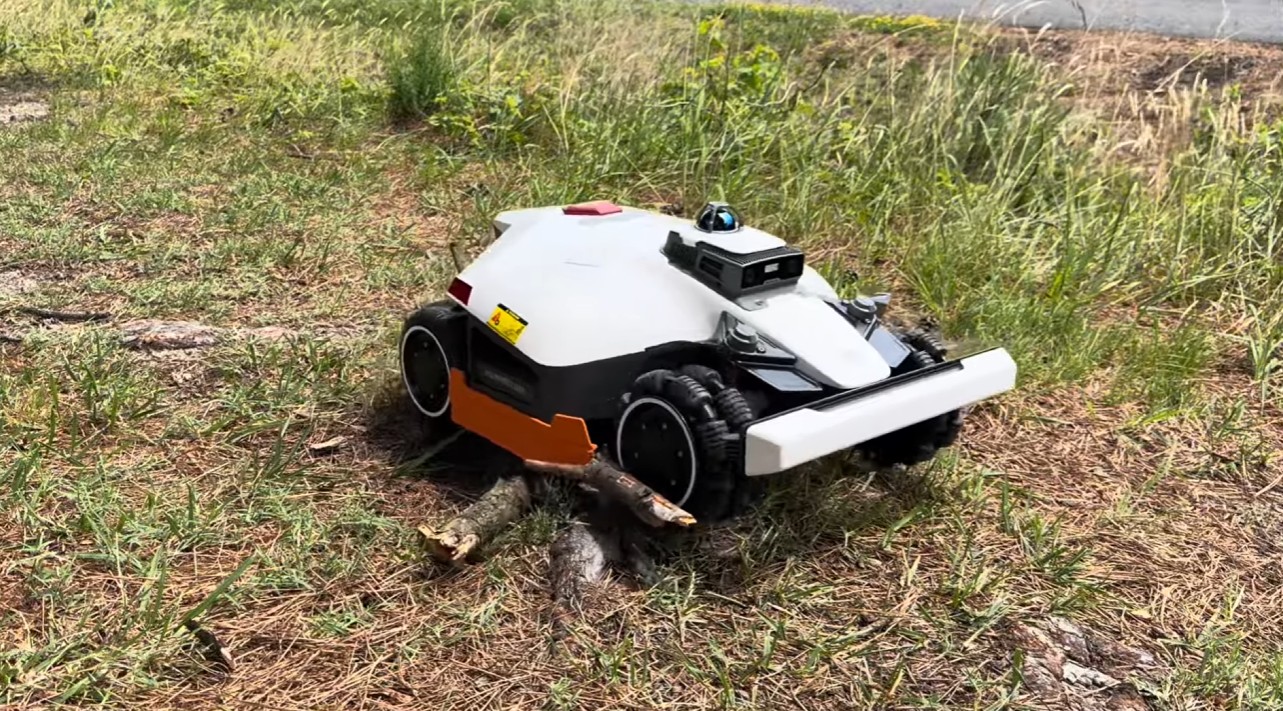
Slope isn’t the only thing that trips up a robot mower — uneven terrain does too. Ruts, exposed roots, fallen sticks and lumpy ground can beach a low-clearance machine. The rugged models handle it: in the field test, the mowers cleared 2-inch obstacles and kept going.
Two things that quietly decide success
- Traction, not just the rating. A slope rating assumes decent grip. Thin, wet, or sandy turf lowers the real limit. Mowing after the morning dew burns off keeps traction high.
- Navigation on the incline. Steep, tree-shaded banks are where a plain RTK mower can lose its satellite fix. A model with vision or LiDAR keeps its bearings where satellites alone struggle.
Check your actual slope before you buy
Guessing a slope by eye is unreliable. Our free lawn check estimates your yard’s grade from elevation data, flags the steep sections, and recommends a mower that can actually hold the hill — before you spend a dollar. If your yard needs all-wheel drive, we’ll tell you, and show you which models are rated for it.
Want to see what this looks like on real ground? We put an AWD Navimow X430 on the steepest lawn we’ve ever mapped — two huge Annapolis, MD hills that heavy gas equipment had been tearing up for years. And once you know your hill qualifies, our 12 robot mower tips for hilly yards are the setup playbook: cutting height, scheduling, exclusion zones and the details that keep a slope working.
Frequently asked
What slope can a robot mower handle?
Entry models handle gentle slopes up to about 20–30% grade. Mid-range mowers manage 35–45%. True all-wheel-drive models like the Mammotion LUBA 3 are rated for slopes up to around 80% grade (roughly 38–40°) as long as the ground has traction — as shown climbing an 84% grade in the field test above.
Do I need all-wheel drive for a hilly yard?
For anything beyond a gentle roll, yes. All-wheel drive (or tracked drive) keeps every wheel pulling so the mower doesn't slip, scalp the turf, or lose its navigation line on the incline. Two-wheel-drive models spin out and leave uncut streaks on real slopes.
Can a robot mower drive over bumps, sticks and roots?
The rugged models can. In the field test the mowers cleared 2-inch obstacles — sticks, roots and uneven ground — without getting hung up. Ground clearance and AWD are what make the difference on rough terrain.
Will wet grass affect a robot mower on a slope?
It can. Traction drops on wet or dewy grass, so even a slope-rated mower may slip. Scheduling cuts for later in the morning once the dew burns off — which most robot mowers let you set — keeps traction and cut quality high.
Keep reading
Buying guideBest Robot Mower for Hills & Steep Slopes (2026 Field Test)We tested the two most capable slope machines head-to-head on real rough ground: Mammotion LUBA 3 AWD (80%) vs Navimow X4 (84%) — and which tears up your turf. How-toRobot Mower Tips for Hilly Yards: 12 Ways to Win on SlopesTwelve field-tested robot mower tips for hilly yards: cutting height, wet-grass scheduling, exclusion zones, dock placement and slope-proof mapping from a dealer.
 Customer InstallsNavimow X430 vs. Maryland's Steepest Lawn: Annapolis InstallThe steepest lawn we've ever installed on: gas crews tore up this hilly Annapolis, MD property for years. How an AWD Navimow X430 made it 100% autonomous.
Explore the system
The mowers and pages behind this topic — see them sized to your yard.