
12 Acres, 10 Robots, Zero Gas Mowers: Our Biggest System Yet
Most people find out about robotic lawn mowers because they want to stop pushing one around a quarter-acre yard on Saturday mornings. That’s a great reason. But it also sells the technology short — because the bigger the property, the bigger the case for going robotic.
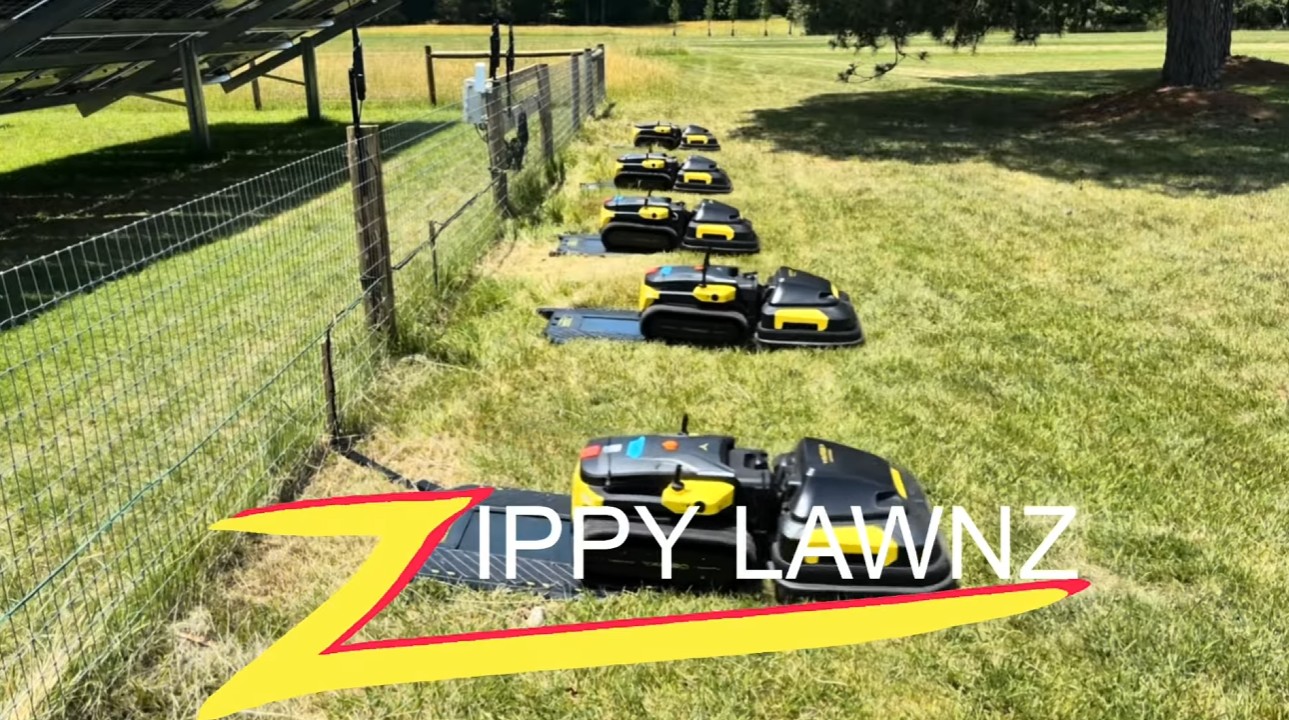
We just wrapped the largest system Zippy Lawnz has installed to date: 12 acres on Maryland’s Eastern Shore, maintained entirely by 10 robotic mowers. No crew. No trailers. No gas cans. Just a fleet of robots quietly keeping a sprawling waterfront estate — including a private grass airstrip — looking like a golf course.
Here’s how we designed it, why we used two different robot platforms on one property, and what the homeowner actually gets out of it.
The property: fields, lawns, and a runway
Eastern Shore properties have a particular character. Wide open acreage, big skies, and a lot of turf that has traditionally required either a very expensive lawn service or a very long afternoon on a zero-turn.
This property broke down into two distinctly different mowing environments:
The open acreage. Large fields plus a private grass airstrip. Long, uninterrupted runs. Terrain that varies. The kind of ground where you need coverage speed and range more than finesse.
The residential zones. Lawns and landscaped areas immediately around the homes. Tighter geometry, more obstacles, more foot traffic — and, critically, this is where people actually sit outside with a cup of coffee.
Those are two different jobs. So we specified two different machines.
Why we split the property between Yarbo and Mammotion
A lot of dealers will try to make one robot do everything. We’d rather match the machine to the mission.
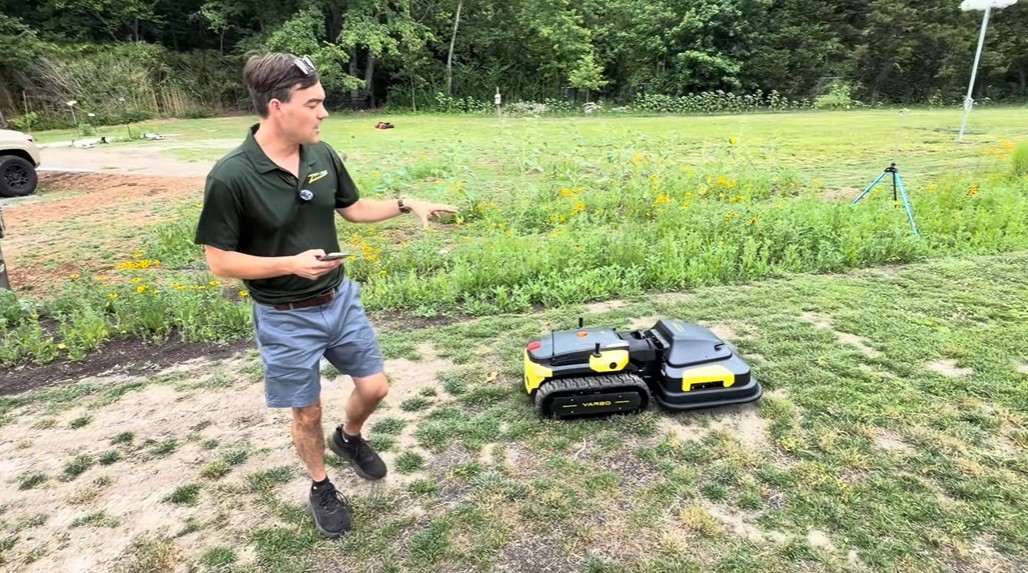
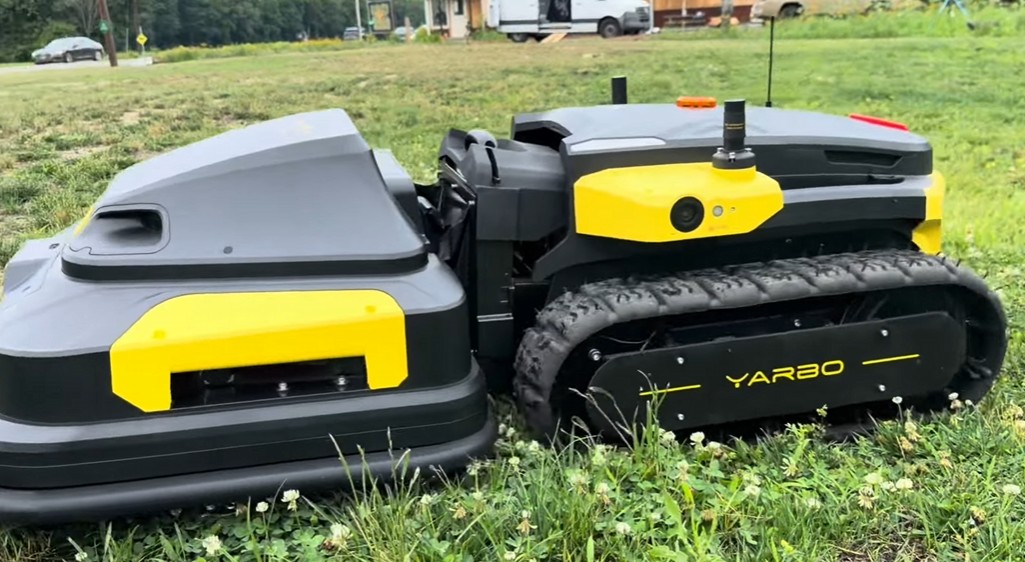
5 Yarbo units — the fields and the airstrip
The Yarbos handle the wide-open work. They’re the larger, more capable platform in our lineup, and out in the fields and along the runway, their size is an asset — more coverage per hour, more capable across varied terrain, and no neighbors within earshot to care about the extra decibels. Five units divide the acreage into manageable zones so no single robot is working an impossible schedule.
5 Mammotion LUBA 3 units — the areas near the homes
Closer to the houses, the priorities flip. The homeowner specifically wanted the Mammotion LUBA 3 here, and for two very practical reasons:
- Smaller footprint. The LUBA 3 navigates tighter residential landscaping more gracefully than a larger machine.
- Quieter operation. This is the one that matters most. You barely notice a LUBA 3 working. That’s exactly what you want on the lawn outside your porch.
The result is a system where each robot is doing the job it’s actually best at — and the homeowner never has to think about any of it.
What 12 acres of robotic mowing actually delivers
1. Thousands in savings, every single season
This is the number that gets people’s attention. Twelve acres of professionally maintained turf is not a small line item — it’s a recurring five-figure conversation for a lot of properties this size. A robotic system is a one-time capital investment that then runs on pennies of electricity. On an estate at this scale, the payback math isn’t close.
2. Silence
There is no polite way to say it: gas mowers are loud. A crew on a 12-acre property means hours of engine noise, string trimmers, and blowers — usually on the exact day you wanted to enjoy your yard.
Robotic mowers are close to silent. The homeowner gets their property back. So do the neighbors. On the Eastern Shore, where the whole point is the water, the birds, and the quiet, that’s not a minor perk. That’s the reason.
3. Straight lines and a genuinely manicured look
Modern RTK-guided robots don’t wander randomly the way early models did. They mow in systematic, straight-line patterns — the same disciplined stripes you’d expect from a professional crew that cares. Except the robots do it every few days instead of once a week, so the property never goes through that shaggy “day six” phase.
4. Micro-cutting: a healthier lawn, not just a shorter one
This is the benefit most people don’t know about until they see it.
Because robotic mowers cut frequently, they only take a tiny amount off the top each pass. Those clippings are so fine they fall back into the canopy and break down almost immediately — returning nitrogen and moisture straight to the soil. No bagging. No clumps.
Two things happen over a season:
- The turf gets lusher and thicker. You’re continuously feeding the lawn instead of hauling its nutrients to the curb.
- Thatch buildup goes down. Fine clippings decompose rather than accumulating into the dense layer that chokes healthy growth and forces you into dethatching.
Traditional mowing removes a big chunk of grass once a week and stresses the plant. Micro-cutting is a constant light trim that the lawn barely notices — and it shows.
5. It just runs
Once the maps are built and the RTK is dialed in, the system works on its own schedule. Rain, heat, weekends, holidays — the robots handle it. The homeowner’s involvement is checking an app if they feel like it.
What this means for large Eastern Shore properties
If you own acreage on the Shore — an estate, a farm, a B&B, a church campus, a commercial property — the assumption has always been that robotic mowers are a suburban toy that can’t handle real land.
This install is the counter-argument. Twelve acres. An airstrip. Ten robots. One system. It works, and it works beautifully.
The key is designing it properly: understanding the terrain, zoning the property intelligently, placing RTK correctly, and choosing the right machine for each area rather than forcing one robot to be everything. That’s the part a good dealer earns their keep on.
Thinking about a robotic mowing system for your property?
Zippy Lawnz is an authorized dealer and service center for Yarbo, Mammotion, and Segway Navimow, with nationwide sales, shipping and support — and hands-on install, mapping and service across Pennsylvania, New Jersey, Maryland, Delaware, Virginia, and Colorado, including a store right on the Eastern Shore in Easton, MD. We don’t just drop-ship a box — we assess the site, design the system, install it, map it, and support it.
Whether you’ve got a half-acre yard or a hundred acres with a runway on it, we can tell you honestly whether robotic mowing makes sense for you.
👉 Map your property and size your fleet — free — our tool measures your acreage from satellite and tells you how many machines the job actually takes.
🎥 Watch the full video walkthrough of this 12-acre system on our YouTube channel — and catch more conversations like this on The Robot Lawn Mower Podcast.
Zippy Lawnz — authorized robotic mower dealer & service center. Serving PA, NJ, MD, DE, VA, and CO.
Frequently asked
Can robotic mowers really handle a large property or estate?
Yes — with the right design. This 12-acre Eastern Shore install runs entirely on 10 robots: 5 Yarbo units on the open fields and a private grass airstrip, 5 Mammotion LUBA 3 units on the residential lawns around the homes. The key is zoning the property intelligently, placing RTK correctly, and matching each machine to its area rather than forcing one robot to do everything.
How many robotic mowers do you need for 10–12 acres?
It depends on terrain, obstacles and how often you want everything cut, but this 12-acre system uses 10 units so no single robot works an impossible schedule. Larger platforms like Yarbo cover more ground per unit on open acreage; smaller, quieter machines make more sense near the house. Our free mapping tool sizes a multi-mower fleet for your specific acreage.
Why use two different robot brands on one property?
Because the property has two different jobs. Open fields and a runway reward coverage speed, range and capability across varied terrain — that's the Yarbo. Tight residential landscaping next to porches rewards a smaller footprint and near-silent operation — that's the LUBA 3. Matching the machine to the mission beats making one robot do everything.
Do robotic mowers actually save money on a large property?
On an estate at this scale, professional turf maintenance is a recurring five-figure conversation, every season, forever. A robotic system is a one-time capital investment that then runs on pennies of electricity — so the payback math isn't close. The quiet and the every-few-days golf-course look come free with it.
What is micro-cutting and why does it make a lawn healthier?
Robots cut frequently, taking only a tiny amount off the top each pass. The fine clippings fall back into the canopy and break down almost immediately, returning nitrogen and moisture to the soil — so the turf gets thicker over a season while thatch buildup goes down. Weekly gas mowing removes a big chunk at once and stresses the plant; micro-cutting is a constant light trim the lawn barely notices.
Keep reading
 Buying guideBest Robot Mower for Large Lawns (2026): Yarbo vs Navimow vs MammotionThe best robot mowers for large lawns and acreage — LUBA 3, Navimow X450, Yarbo Pro and the commercial Terranox — matched to your acres, from 1 to 6+.
 Customer InstallsNavimow Terranox vs. Parked Cars: A 3-Acre Install in Chester, MDA Segway Navimow Terranox on a 3-acre Chester, MD lawn: why oversizing is the right call, a 33% blade upgrade for thick turf — and mowing around parked cars.
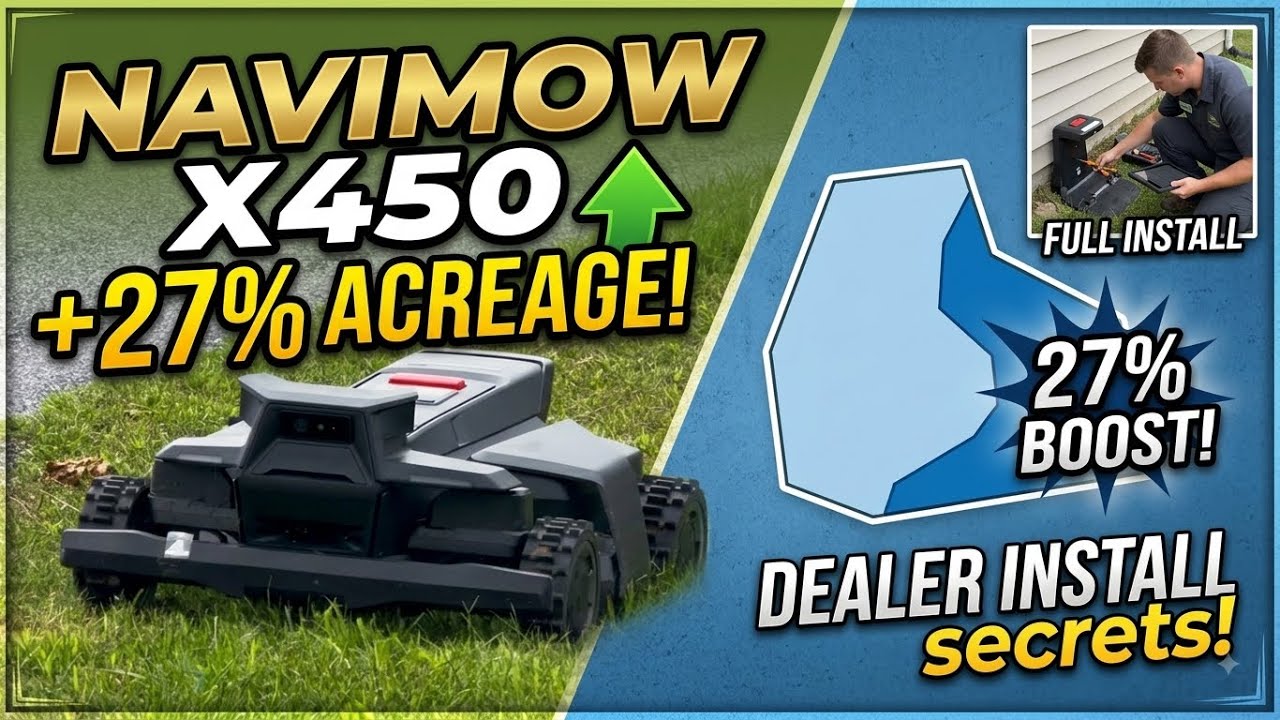 Customer InstallsNavimow X450 on 1.9 Acres: A Lewes, DE Install Beyond the Spec SheetThe Segway Navimow X450 is rated for 1.5 acres. On this Lewes, Delaware install we mapped 1.91 — how dealer-grade RTK setup, zoning and dock placement did it.
Explore the system
The mowers and pages behind this topic — see them sized to your yard.