
How to Make Stripes in Your Lawn With a Robot Mower

Do you like lawnz with stripes? 🌱 Because a robot mower makes them all day.
Those crisp, ballpark-style stripes you see on pro sports fields? Your robot can lay them down while you’re inside with your feet up. The Mammotion LUBA 2 mows in clean, consistent lines — no operator, no sweat, no weekends lost to the mower. Same yard, zero effort, stripes that make the neighbors look twice.
Here’s exactly how lawn striping works with a robot mower — and how to dial it in.
What lawn stripes actually are
Stripes aren’t paint and they aren’t a special cut height. They’re light. When grass blades bend away from you they catch the sun and look light; when they bend toward you they look dark. Mow one pass in one direction and the next pass in the opposite direction and you get alternating light/dark bands — the classic stripe.
The whole trick is consistency: the grass has to be bent the same way, in straight lines, every single time. That’s the one thing a robot mower does better than any human with a push mower — it never gets bored, never wobbles, and never skips a week.
Why a robot mower is great at it
A push-mower stripe is only as straight as your walking. A satellite-guided robot like the LUBA 2 mows in dead-straight, parallel passes using RTK positioning, and it does it every day — so the grass gets trained to lay in the pattern and the stripes only get crisper over time.

How to set up stripes on a Mammotion LUBA 2
1. Use a straight-line mowing pattern
Make sure the zone is set to mow in efficient straight lines (not the random/irregular pattern). RTK mowers do this by default — it’s what produces parallel passes in the first place.
2. Pick your mowing direction (the dial)
This is the important one. In the app’s mowing settings there’s a direction dial — a compass with angle options around it. Choose the angle that runs the long way across your lawn, so your stripes are long and unbroken instead of short and choppy.

3. Select multiple directions to alternate (and avoid ruts)
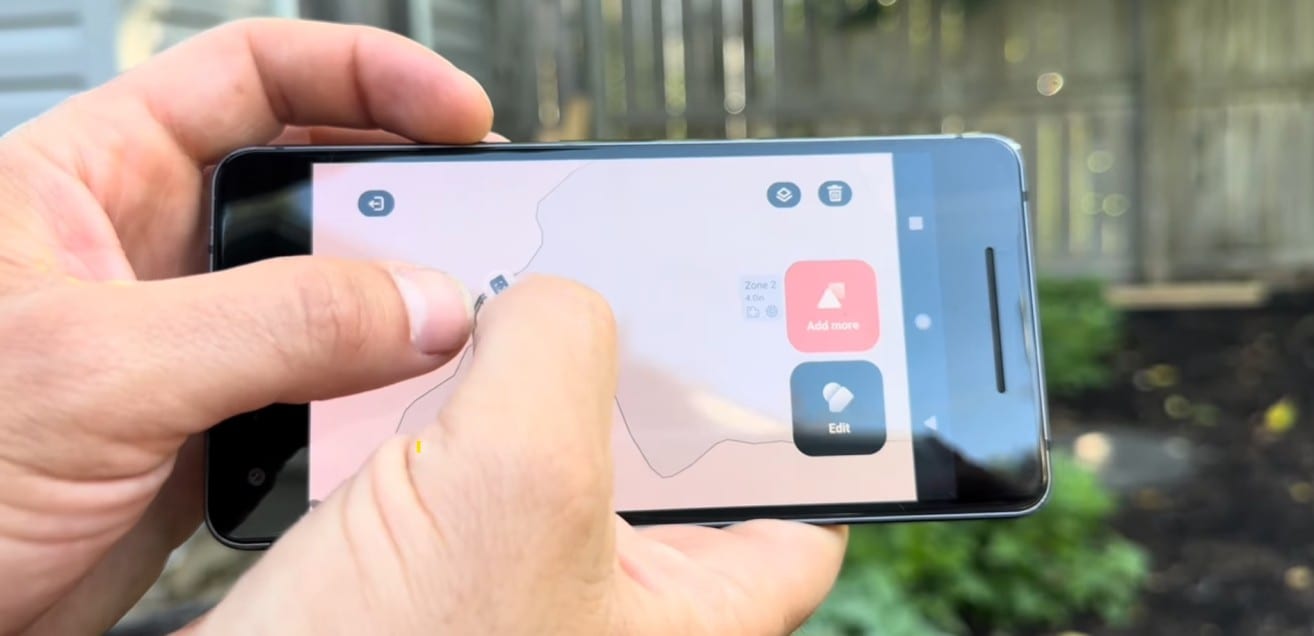
See how several directions are selected in the app above? That tells the mower to rotate its angle each session. This does two things at once: it keeps the wheels from wearing one exact groove (no ruts), and over a few mows it builds a crosshatch or checkerboard — the fancier pattern you see on ballfields.
4. Keep the cut consistent and blades sharp
Sharp blades give a clean cut and a crisp bend, which means higher-contrast stripes. Dull blades tear the grass and muddy the pattern. A slightly taller cut height also shows stripes more dramatically than a very short cut.
5. Let it run — the pattern trains in
Stripes deepen over about one to two weeks of regular mowing as the grass learns to lay in the pattern. This is the robot’s superpower: it mows a little every day, so the training never stops and the lawn always looks freshly striped.
The grass matters too
Here in PA, NJ, MD, DE and VA, most lawns are cool-season grasses — fescue, ryegrass, Kentucky bluegrass — and those stripe beautifully. Stiff warm-season grasses (Bermuda, zoysia) hold a stripe far less. If you’ve got cool-season turf, you’re already set up to win.
Stripes with zero weekends
That’s the real pitch: a push mower and a striping kit gets you stripes and a lost Saturday. A robot mower gets you the same stripes — arguably straighter ones — while you do literally anything else.
- 📍 Check my lawn — free — see your lawn measured and get matched to a mower (like the LUBA 2) that’ll stripe it, in about two minutes.
- 🗺️ Book a free site assessment — we’ll help you pick the right striping machine and set it up. Authorized dealer for PA, NJ, MD, DE, VA and CO.
Want stripes that make the neighbors look twice? Let the robot do it.
Frequently asked
Can a robot mower actually make stripes?
Yes. Stripes come from grass blades being bent in a consistent direction so they reflect light differently — nothing is painted. A robot mower that cuts in straight, parallel lines (like the Mammotion LUBA 2) bends the grass the same way on every pass, which produces the classic ballpark striping. The key is a mower that mows in efficient straight lines and lets you set the mowing direction, not one that wanders randomly.
How do I set the mowing direction for stripes on a LUBA 2?
In the Mammotion app, open the zone's mowing settings and choose the mowing angle/direction from the direction dial. Pick an angle that runs the long way across the lawn for the cleanest lines. You can also select multiple directions so the mower alternates its angle each session — that both prevents ruts and builds a crosshatch/checkerboard look over time.
Do I need a striping roller or kit?
Usually not for cool-season lawns. The consistent, repeated passes of a robot mowing daily train the grass to lay in the pattern on their own. A rear roller can deepen the effect, but the biggest factors are a consistent cut, sharp blades, and mowing the same lawn often — all of which a robot does automatically.
Which lawns stripe the best?
Cool-season grasses — fescue, ryegrass, and Kentucky bluegrass, which are common across PA, NJ, MD, DE and VA — stripe far better than stiff warm-season grasses like Bermuda or zoysia. Taller cutting heights also show stripes more dramatically than very short cuts.
Will striping every day hurt my lawn or cause ruts?
No — as long as you vary the mowing direction periodically. Driving the exact same line forever can wear a track, so selecting a few alternating directions in the app keeps the wheels off one groove while still producing a sharp pattern. Frequent light mowing is actually great for lawn health.
Keep reading
 Buying guideBest Robot Mower for Large Lawns (2026): Yarbo vs Navimow vs MammotionThe best robot mowers for large lawns and acreage — LUBA 3, Navimow X450, Yarbo Pro and the commercial Terranox — matched to your acres, from 1 to 6+.
 Buying GuidesWill a Robot Mower Work for Your Lawn? Try Our Free ToolNot sure a robot mower will handle your yard? Our free tool measures your lawn from satellite, checks slope, sky-view and signal, then recommends a model.
Explore the system
The mowers and pages behind this topic — see them sized to your yard.